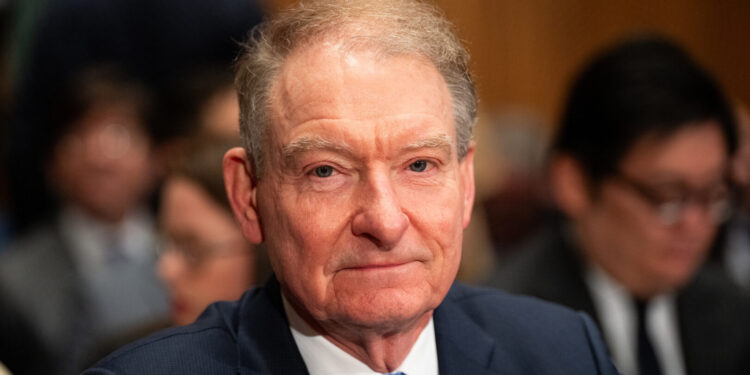
SEC Charts New Course for Crypto: Paul Atkins Proposes ‘Token Taxonomy’ Based on Howey Test
In a significant move poised to redefine the landscape of digital asset regulation, U.S. Securities and Exchange Commission (SEC) Chairman Paul Atkins has announced plans to establish a comprehensive “token taxonomy.” This framework aims to provide much-needed clarity on “which cryptocurrencies should be characterized as securities,” forming the bedrock of the SEC’s future regulatory approach for the burgeoning crypto market.
Speaking at a fintech conference hosted by the Federal Reserve Bank of Philadelphia on Wednesday, Atkins revealed that this foundational taxonomy would be built upon the long-established Howey Test.
Editor’s Note: The Howey Test, stemming from a landmark 1946 U.S. Supreme Court ruling, has historically been the SEC’s primary tool for determining whether an asset qualifies as an “investment contract” and is, therefore, subject to securities regulation.
Atkins elaborated on the initiative: “In the coming months, the SEC expects to develop a token taxonomy, with the long-standing Howey investment contract securities analysis as its core basis, while also acknowledging the inherent limitations of the scope of existing laws and regulatory norms.”
The Evolving Nature of Digital Assets: Beyond Static Classification
A crucial aspect of Atkins’ vision is the recognition that a cryptocurrency’s nature isn’t static. While an asset might initially be classified as an “investment contract,” its characteristics can evolve over time. He articulated this dynamic perspective:
“(Blockchain) networks will gradually mature, code will be deployed, and control will decentralize over time. Eventually, the role of the issuer will gradually fade or even disappear. At some point, buyers will no longer rely on the operation and management of the issuing team, and most token transactions now are no longer based on the reasonable expectation of a team continuously steering the ship.”
This nuanced understanding suggests a departure from a rigid, one-size-fits-all classification, paving the way for a more adaptive regulatory framework that acknowledges the inherent decentralization trajectory of many blockchain projects.
Shifting Gears: From Enforcement-First to Framework-Driven Regulation
The current SEC leadership marks a notable pivot in cryptocurrency policy, diverging sharply from the enforcement-heavy stance prevalent during the Biden administration under former Chairman Gary Gensler. Gensler’s tenure was characterized by the assertion that “most cryptocurrencies are securities” and a strategy of regulation through enforcement, leading to numerous high-profile lawsuits against major crypto firms and considerable market contention.
Under Paul Atkins’ guidance, the SEC has embarked on a different path. Not only has the commission withdrawn several crypto-related investigations, but it has also launched “Project Crypto,” a significant regulatory reform initiative spearheaded by Commissioner Hester Peirce. This project involves a series of roundtable discussions aimed at fundamentally reshaping the SEC’s regulatory framework for digital assets.
During his address, Atkins clarified the SEC’s ongoing purview: assets categorized as “tokenized securities” (e.g., stock tokens on a blockchain) will unequivocally remain under the SEC’s regulatory umbrella. However, he also delivered a stern warning regarding illicit activities:
“I want to make it clear that this framework does not mean the SEC will relax enforcement. Fraud is fraud.”
This statement underscores the SEC’s commitment to protecting investors while simultaneously fostering innovation through a clearer regulatory environment.
Envisioning the Future: Super Apps and Exemption Mechanisms
Looking ahead, Paul Atkins reiterated his vision for “super apps”—financial platforms capable of facilitating multi-asset trading and custody under a single regulatory license. He has tasked the SEC team with developing practical recommendations to explore how certain “tokens tied to investment contracts” could be traded on platforms regulated by other bodies, such as the Commodity Futures Trading Commission (CFTC) or state governments.
Furthermore, Atkins expressed a desire for the SEC to concurrently explore an “exemption mechanism.” This scheme would aim to establish a more flexible issuance system for crypto assets that, while part of an investment contract, might benefit from tailored regulatory pathways.
Collaborating with Congressional Legislative Efforts
The SEC’s proactive stance comes as the U.S. Congress actively pursues comprehensive legislation for the cryptocurrency industry. While the House version passed this summer, the Senate is deliberating two distinct versions, with the latest introduced by the Senate Agriculture Committee this week, highlighting ongoing debates and coordination challenges.
Atkins emphasized that the SEC’s proposed token taxonomy is designed to “complement” rather than “replace” these congressional legislative efforts. He affirmed:
“Our vision is consistent with and aims to complement, not replace, the bills currently under deliberation in Congress. Commissioner Hester Peirce and I both prioritize supporting Congress’s legislative process and will continue to promote this cooperation.”
This collaborative approach signals a unified effort across U.S. regulatory and legislative bodies to bring much-needed clarity and stability to the rapidly evolving world of digital assets.
Disclaimer: This article is for market information purposes only. All content and views are for reference only and do not constitute investment advice, nor do they represent the views and positions of BlockBeats. Investors should make their own decisions and trades, and the author and BlockBeats will not bear any responsibility for direct or indirect losses resulting from investor transactions.