China’s Central Bank Reaffirms Crypto Ban, Labels Stablecoins as High-Risk Threats
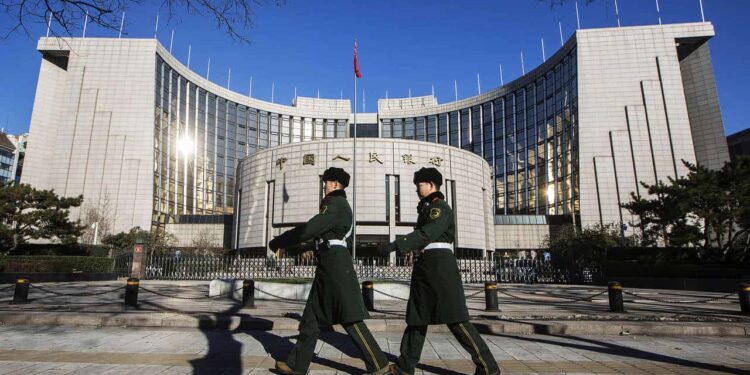
The People’s Bank of China (PBOC), the nation’s central bank, delivered its most forceful public statement on virtual currencies since the sweeping ban of 2021. Following a high-level multi-department meeting last Friday, the PBOC unequivocally reiterated its “prohibitory policy on virtual currencies,” vowing to persist in its “crackdown on illegal financial activities” within the sector. A key focus of this renewed push is the explicit targeting of stablecoin risks, marking a significant escalation in regulatory scrutiny.
The PBOC’s official statement underscored that “virtual currencies” fundamentally lack the legal status of fiat currency and are not recognized as legal tender. Consequently, they “should not and cannot” be circulated or utilized as currency within the market, with all related business activities deemed illegal financial operations.
This latest pronouncement emerged from a pivotal “Coordination Mechanism Meeting on Cracking Down on Virtual Currency Trading and Speculation,” convened by the PBOC on November 28. The gathering brought together a formidable alliance of 13 government bodies, including top-tier representatives from the Ministry of Public Security, the Cyberspace Administration of China, the Central Financial Commission, and the Supreme People’s Court.
China’s stringent stance on cryptocurrencies is not new, with a comprehensive ban on trading dating back to 2017, followed by a complete prohibition on mining in 2021. The PBOC affirmed that since 2021, concerted efforts by various departments have successfully “rectified the chaos of virtual currencies,” yielding “significant results.” Yet, the central bank acknowledged a recent resurgence in “virtual currency speculative trading” and “related illegal criminal activities,” driven by various factors. This resurgence, it warned, poses “new situations and challenges” for effective risk prevention and control.
Stablecoins, in particular, were singled out as a critical area of concern. The PBOC expressed grave doubts about their ability to “effectively meet requirements for customer identification and anti-money laundering.” This deficiency, the bank asserted, exposes stablecoins to significant risks of exploitation for illicit purposes, including money laundering, fundraising fraud, and unauthorized cross-border fund transfers.
Looking ahead, the PBOC emphasized that all participating government agencies are committed to upholding the prohibitory policy against virtual currencies. This commitment translates into a sustained crackdown on illegal financial activities, enhanced information sharing, and a significant boost in monitoring capabilities. The ultimate goal remains to rigorously combat criminal activities, safeguard public assets, and preserve the stability of China’s economic and financial order.
In stark contrast to mainland China’s unwavering ban, Hong Kong has, over the past two years, aggressively pursued the development of its cryptocurrency industry. The special administrative region has introduced progressive licensing frameworks for exchanges and stablecoin issuers, successfully drawing in a host of international firms. Intriguingly, even Chinese tech giants like Ant Group and JD.com had signaled intentions to launch “offshore RMB” stablecoins within Hong Kong’s more permissive regulatory environment.
However, this divergence in policy has its limits. Following explicit directives from the PBOC and the Cyberspace Administration of China to “not proceed,” both Ant Group and JD.com have reportedly put their stablecoin ambitions on hold. Adding to this, Beijing had earlier instructed several Chinese-funded brokerages to suspend their Real World Asset (RWA) tokenization activities in Hong Kong, signaling a broader reach of mainland regulatory influence.
禁民炒幣不禁官?路透社:中國地方政府靠「賣幣」填補財政空缺

Disclaimer: This article provides market information only. All content and views are for reference only and do not constitute investment advice. They do not represent the views and positions of Blockcast. Investors should make their own decisions and transactions. The author and Blockcast will not be liable for any direct or indirect losses incurred by investors’ transactions.