Crypto KOL Elizabeth Embroiled in “Fake Donation” Scandal, Sparking Outrage
In the age of social media, the words and actions of cryptocurrency Key Opinion Leaders (KOLs) carry significant weight, particularly when it comes to charitable causes. Transparency and integrity are paramount. However, the crypto community has recently been rocked by a shocking “fake donation” scandal, casting a shadow over a prominent figure.
On the evening of December 1st, a well-known Chinese female KOL, “Elizabeth” (伊麗莎白), posted a donation screenshot on social platform X, claiming to have contributed HKD 200,000 to victims of the recent Hong Kong fire.
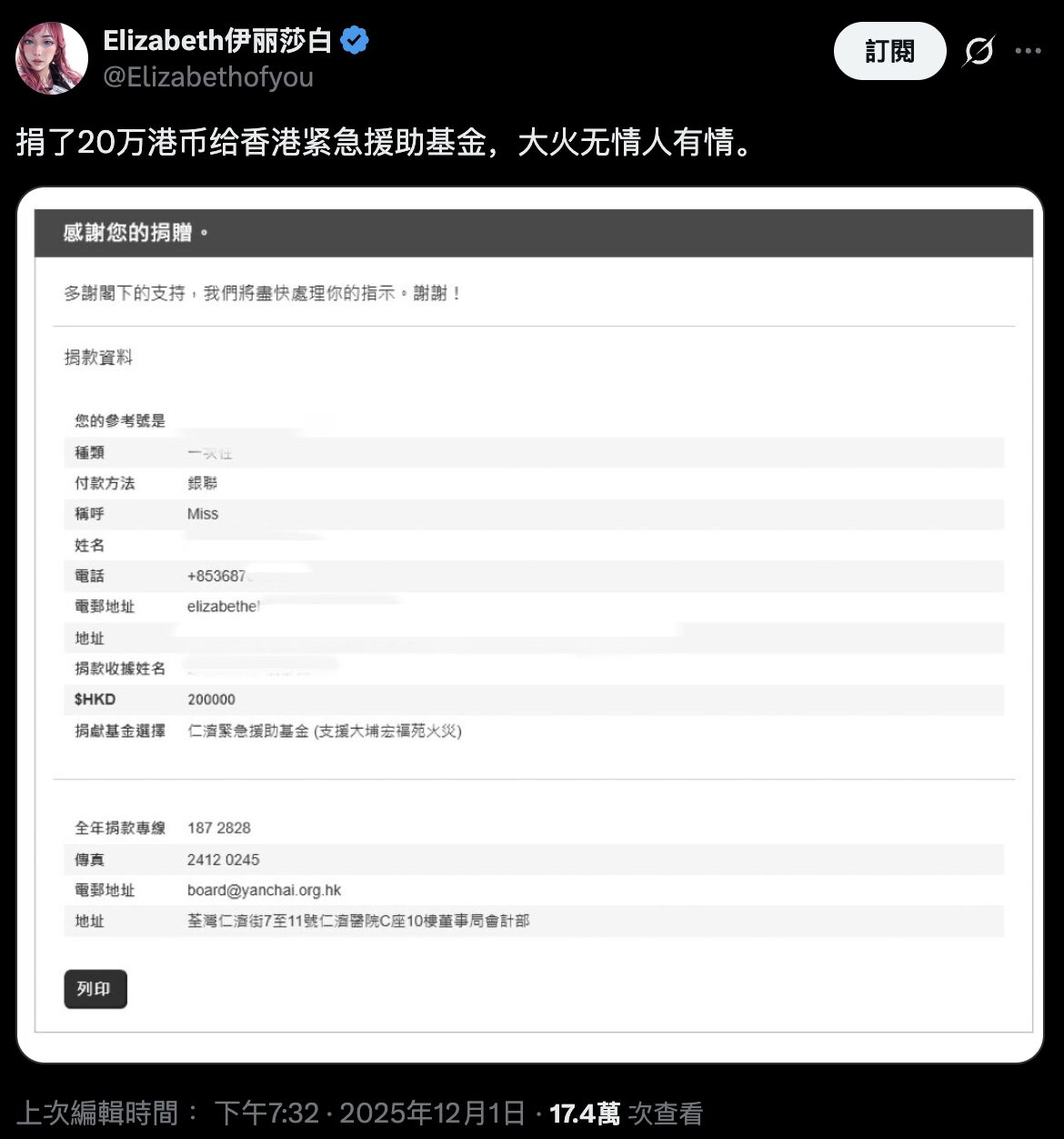
What initially appeared to be a commendable act of generosity quickly unraveled. Eagle-eyed netizens and technical analysts swiftly identified the screenshot as potentially manipulated using photo editing software. The incident ignited a firestorm across the crypto community, plunging the influencer—who had previously received a “Best Industry Contributor” award from Binance—into a crisis of credibility.
The Viral Donation Post: KOL Claims HKD 200,000 Contribution
The controversy began with Elizabeth’s posts on X and Telegram. In a seemingly heartfelt message, she wrote, “Fires are merciless, but people have compassion,” and “Compared to losses, at least I am still alive, and I have capital to bounce back.” She went on to criticize the crypto sphere as being full of “hollow people,” contrasting this with her own selfless act of charity. Her posts quickly garnered significant attention, with many fans commending her “kindness” and willingness to “extend a helping hand in times of adversity.”

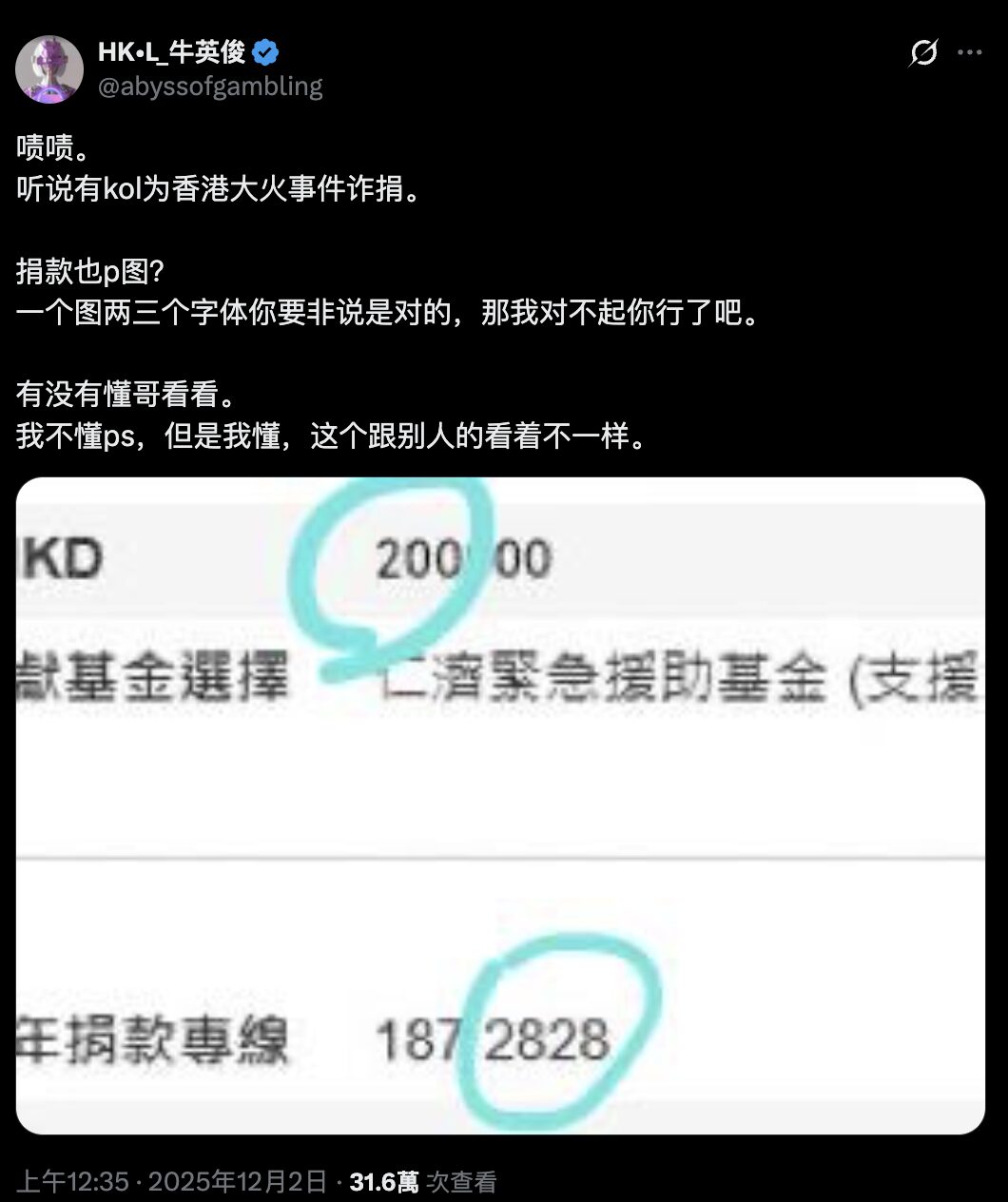
However, as the post circulated, skepticism began to emerge. Sharp-eyed netizens noticed that the font for the amount “200,000” in her donation screenshot appeared slightly irregular and inconsistent with standard official receipt styles. This immediately triggered the first wave of suspicion. The carefully crafted image of nobility lasted mere hours before crumbling due to a screenshot riddled with inconsistencies.
Font Discrepancies Ignite Accusations of “Photoshopped Donation”
The allegations escalated when Chinese netizen “Crypto Nyaru” publicly compared Elizabeth’s donation screenshot with authentic receipts, unequivocally pointing out clear signs of forgery. A detailed analysis revealed glaring inconsistencies: the fonts used for fields like “HKD” and “Annual Donation Hotline” were distinctly different from the font used for the donation amount, “200,000.” Specific anomalies included:
- The forged numeral “2” appeared noticeably thinner, and the curvature of its upper half was a pixel shorter than the standard font, creating an unnatural appearance—a tell-tale sign of manual modification.
- The alignment of the amount row failed to vertically match the phone number “187 2828” below it, indicating a clear typesetting error.
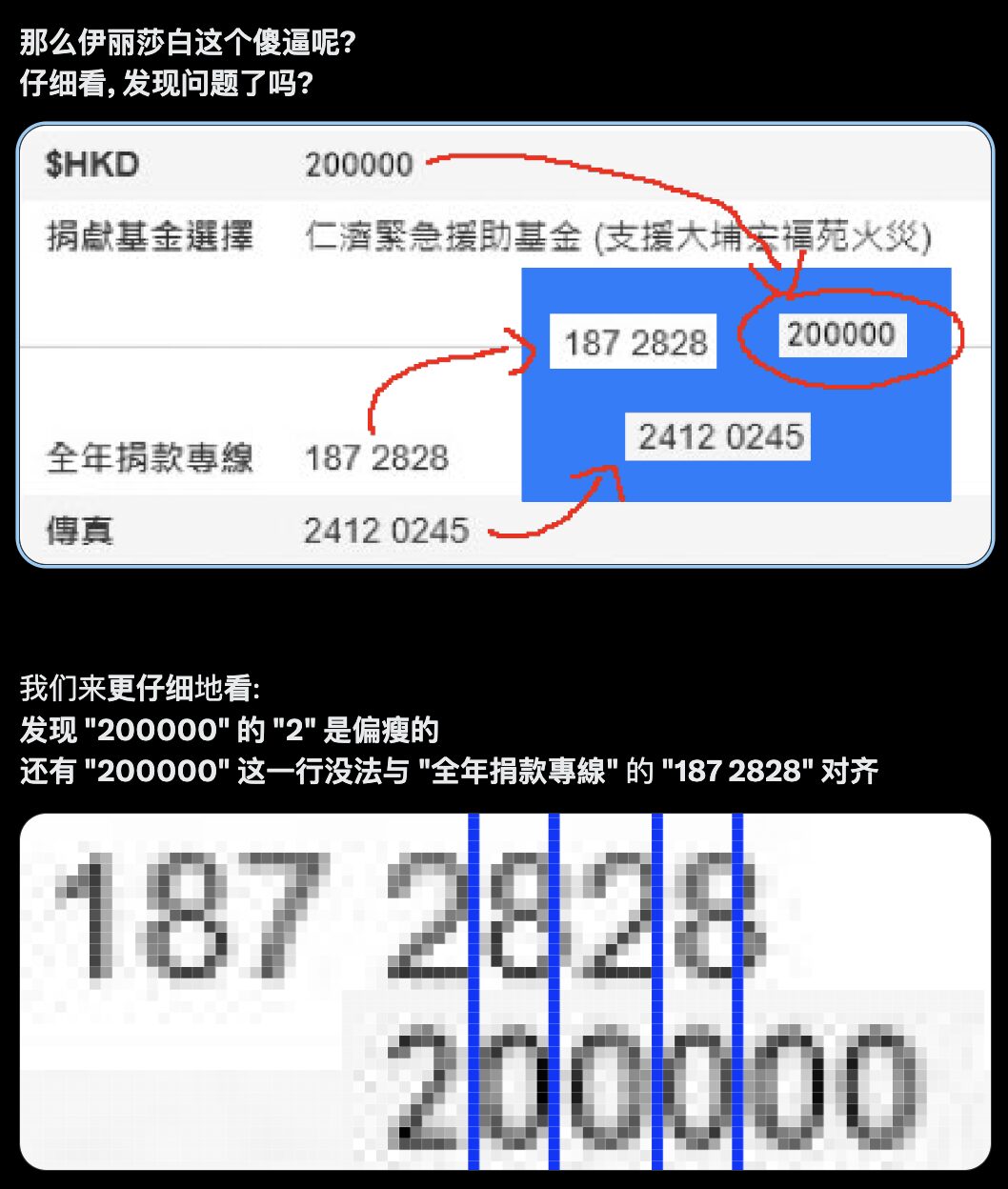
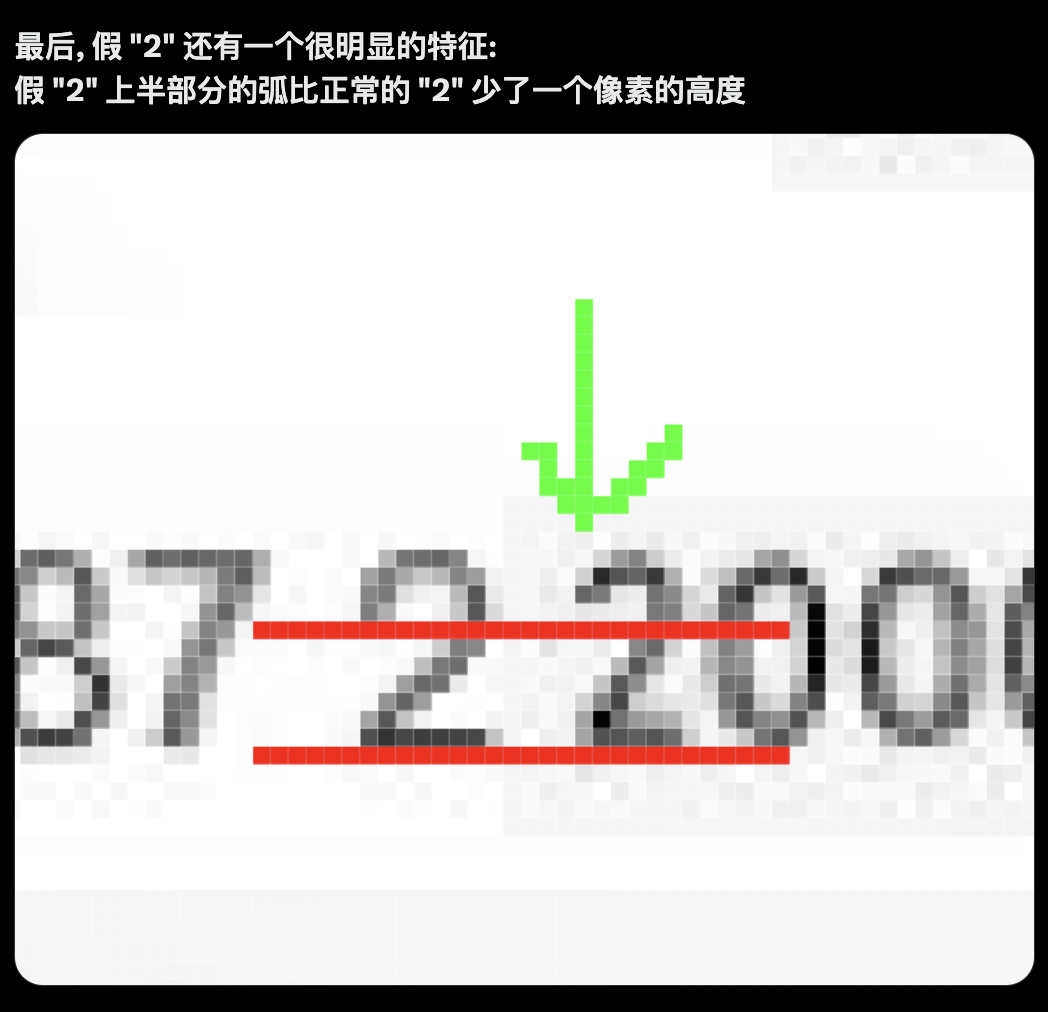
Another netizen, “Niu Yingjun,” joined the debunking effort, pointing out that Elizabeth’s receipt displayed “two or three different fonts,” asserting that genuine donation receipts maintain font consistency. He mocked the “self-created font” and condemned the act of exploiting human tragedy for traffic as utterly baseless.
As discussions intensified, users began to unearth the likely original source image. It was discovered that a Hong Kong psychological counselor had previously donated HKD 500, and their receipt image shared the exact composition and layout as Elizabeth’s posted version, with the only difference being the altered amount. Netizens concluded, “She directly stole the image and changed the number,” subsequently posting side-by-side comparisons highlighting identical backgrounds, positions, and shadows, with only the donation sum changed to “200,000.”
KOL’s Evasive Responses: “I Don’t Need to Prove Myself” Becomes a Focal Point
When confronted with the accusations, Elizabeth responded on Telegram, stating, “Everyone is watching everything. I don’t want to prove myself. Why should I prove myself?”

She later released a video, asserting, “All good intentions are clear conscience, and I will no longer discuss this.” She further revealed that her team had advised her against responding to the matter to avoid an endless cycle of self-justification.
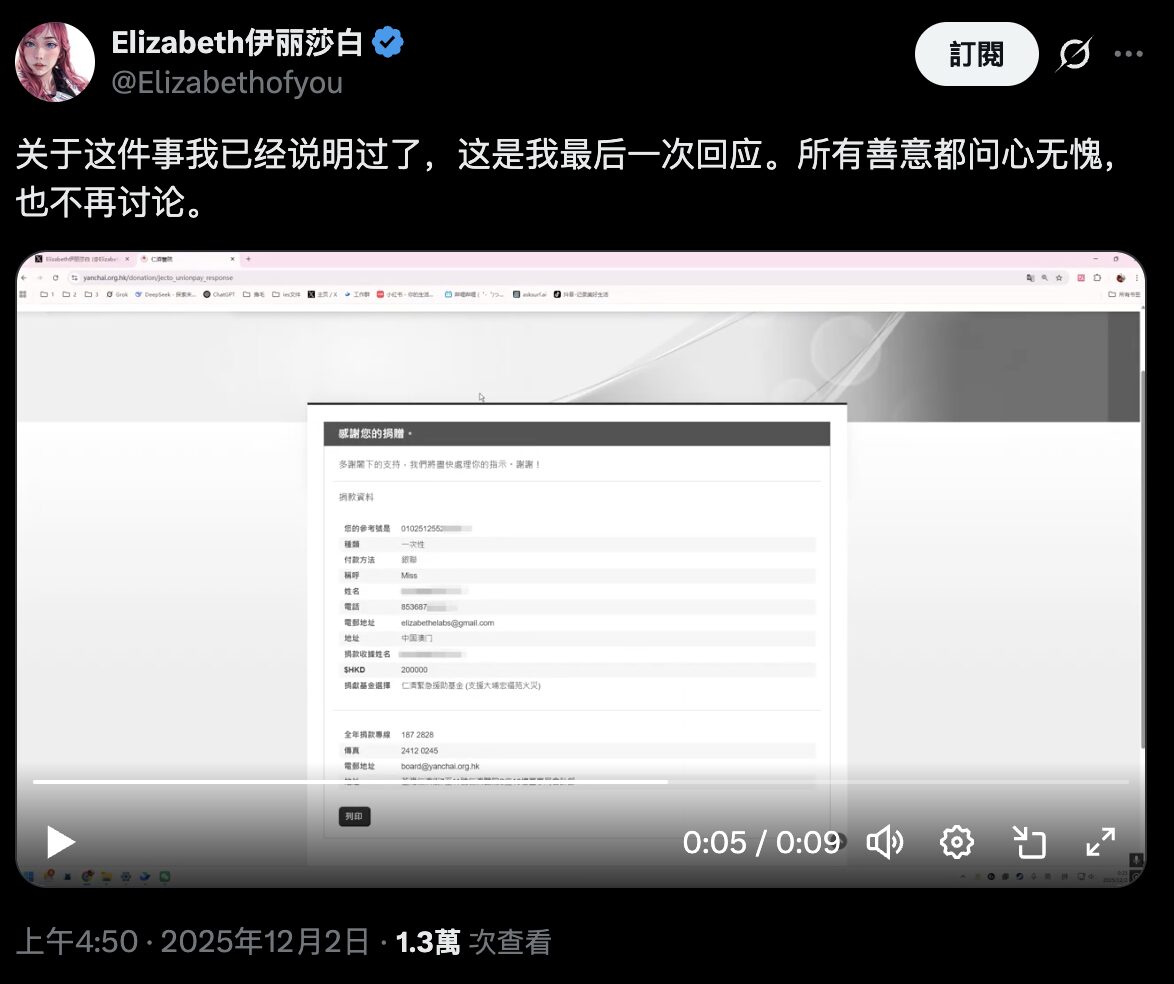
However, netizens were far from convinced. Niu Yingjun directly retorted, “You posted the image yourself, you changed the font yourself, and now you blame others for slandering you?” He sarcastically added, “Are you going to claim hackers photoshopped it? Or perhaps live stream your transaction records for everyone to see?” Niu Yingjun’s frustration was palpable in a subsequent post:
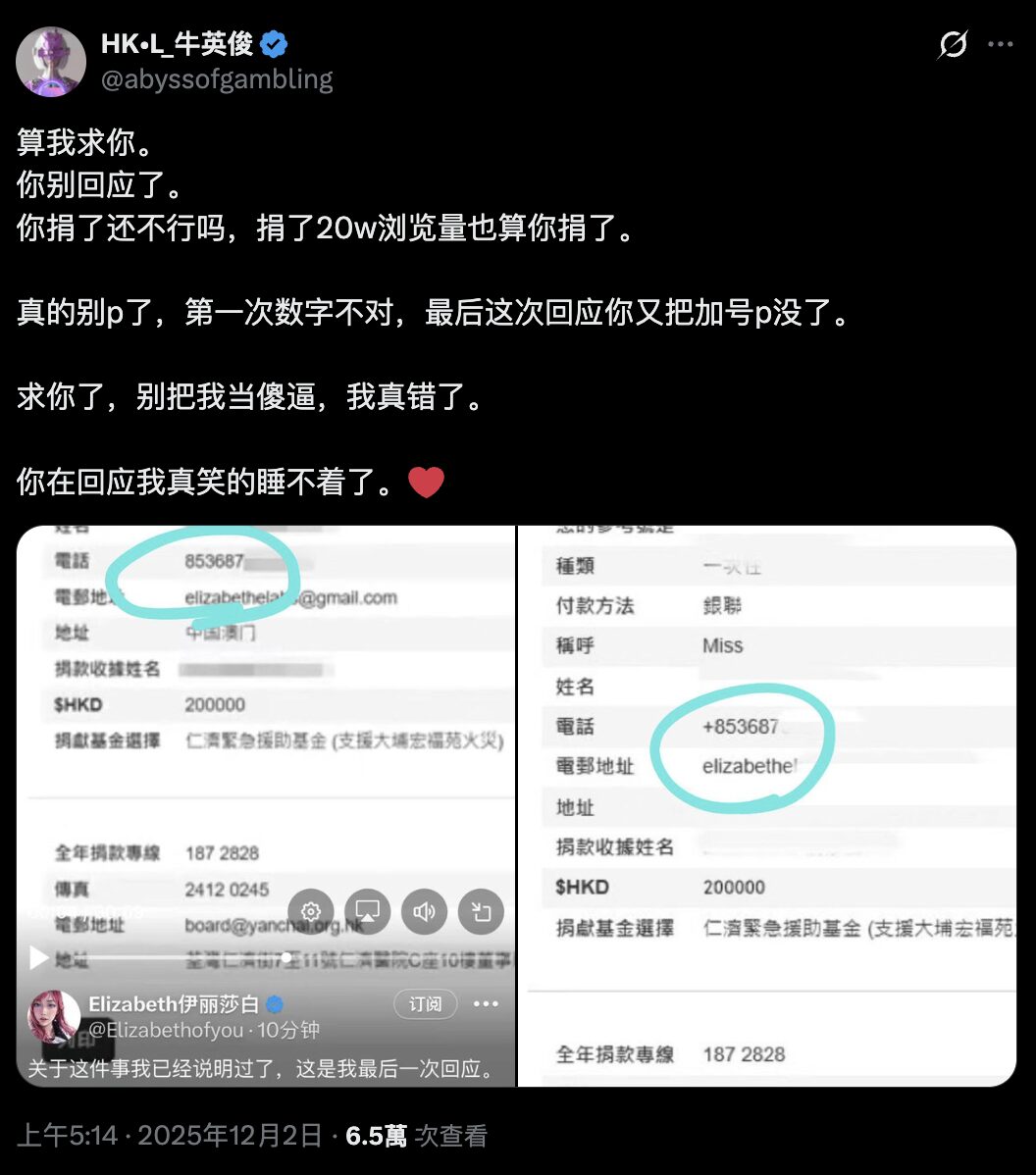
I beg you. Stop responding. Isn’t it enough that you ‘donated’? Consider 200,000 views as your donation.
Adding fuel to the fire, Niu Yingjun also pointed out that in Elizabeth’s response video, another apparent Photoshop error had occurred: the “+” symbol, which should have been present in the phone number field, was missing. This further solidified suspicions that the entire affair was an attempt to cover up a deception.
Driven by community discussion, many netizens have summarized this incident as a “typical KOL traffic manipulation.” Some comments referenced her past interviews, where she reportedly emphasized principles like “traffic is currency,” “bad publicity is still publicity,” and “everything can be KPI-fied.” This led many to believe the incident was highly consistent with her self-proclaimed “traffic logic.”
Consequently, some sarcastically remarked: “She’s truly practicing what she preaches this time. Charity is just the cheapest content, and Photoshopping doesn’t even cost money.”
Past Accolades Resurface, Amplifying Public Outrage and Image Discrepancy
Compounding the controversy, it was revealed that Elizabeth had previously received the “Best Industry Contributor” award at a Binance-hosted event, standing alongside other prominent crypto creators. She was even invited by Binance to be a guest speaker at the upcoming Binance Blockchain Week. This background makes it even harder for many netizens to accept her alleged “fake donation for real engagement” during a tragic disaster.

For many observers, her manner of response—refusing to self-authenticate and emphasizing that “everyone is watching me”—did little to quell the controversy. Instead, it was widely perceived as an evasion of the core questions:
Does the donation receipt represent a genuine financial transaction? Was the amount falsified? Is the image a modified version?
The incident continues to unfold, with many observers noting that if Elizabeth fails to publicly clarify the controversy, it could cause long-term damage to her brand reputation. In the crypto industry, which prides itself on trust and transparency, a seemingly falsified donation screenshot not only reflects a personal integrity issue but also exposes the concerning phenomenon of some KOLs instrumentalizing charitable acts, sparking a broader and critical discussion.
(The above content is an authorized excerpt and reproduction from our partner, CryptoCity. Original link here.)
Disclaimer: This article is for market information purposes only. All content and views are for reference only and do not constitute investment advice. They do not represent the views or positions of BlockTempo. Investors should make their own decisions and trades, and the author and BlockTempo will not bear any responsibility for direct or indirect losses incurred by investors’ transactions.