Sony’s Bold Leap into Digital Currency: A USD Stablecoin for Gaming and Beyond
Tech and entertainment titan Sony Group is reportedly poised to launch a USD-denominated stablecoin next year, a strategic move aimed at revolutionizing digital purchases within its vast ecosystem, spanning games and anime. This development, first reported by Nikkei, raises a crucial question: With Japan boasting its own stablecoin regulatory framework, why has Sony set its sights on the United States for this ambitious venture?
The Strategic Choice: Why a US-Issued Stablecoin?
Sony’s decision to issue its stablecoin in the U.S. is deeply rooted in both business strategy and regulatory landscape. The U.S. presents an attractive environment, partly due to evolving regulatory clarity, including discussions around a “GENIUS Act” earlier this year. Crucially, Sony’s banking arm, Sony Bank, applied for a U.S. national bank charter in October. This charter would empower its trust bank subsidiary to engage in “certain specific activities involving cryptocurrency,” including the issuance of USD-backed stablecoins, management of digital assets for clients, and asset management for affiliated entities.
The stablecoin is primarily targeting Sony’s significant U.S. customer base, which accounts for approximately 30% of the Group’s international sales. Its integration is designed to complement existing payment methods like credit cards, not replace them entirely. A key driver is the potential to significantly reduce transaction fees paid to card organizations. For instance, the fees Sony currently incurs when a PlayStation user purchases a $60 game could be eliminated, leading to either lower prices for consumers or increased profit margins for Sony.
While the initial user experience for PlayStation gamers might see subtle improvements like slightly reduced prices or faster transaction processing, the long-term vision is far more expansive. Sony envisions advanced features such as stablecoin rewards for in-game achievements, automatic conversion of traditional currency to digital, and cross-platform loyalty programs integrating games, movies, and music services.
To underpin this initiative, Sony Bank has forged a partnership with Bastion, a stablecoin infrastructure provider backed by major cryptocurrency exchange Coinbase. Sony’s investment arm also participated in Bastion’s $14.6 million funding round, underscoring a deep collaborative commitment beyond mere technical support.
Navigating Regulatory Waters: US vs. Japan
Sony’s preference for a USD stablecoin is a calculated move driven by its global business structure. Core digital businesses like gaming and anime heavily rely on USD-denominated markets, with the dollar serving as the primary settlement currency across key regions including Europe and Southeast Asia. A USD stablecoin offers maximum operational flexibility and eliminates the cross-border exchange costs associated with a JPY-pegged alternative.
The regulatory environments in the U.S. and Japan also played a pivotal role:
- United States: The evolving U.S. stablecoin framework, often referred to in discussions as a “Stablecoin Act,” outlines clear standards: reserves must be 100% backed by cash or short-term U.S. Treasury bills, and issuance is limited to “qualified institutions” like licensed banks or non-bank payment entities. Crucially, it doesn’t restrict stablecoins from being pegged to currencies other than the USD.
- Japan: Despite being an early adopter with its 2023 amendment to the Payment Services Act allowing stablecoin issuance, Japan’s framework is more restrictive. It mandates a 1:1 peg to the Japanese Yen and limits issuance to a select few entities (banks, fund transfer institutions, trust companies). Japanese regulators primarily envision stablecoins for domestic small-value payments, settlements, and regulated financial services, actively discouraging their use in DeFi, cross-border payments, crypto trading, or global circulation.
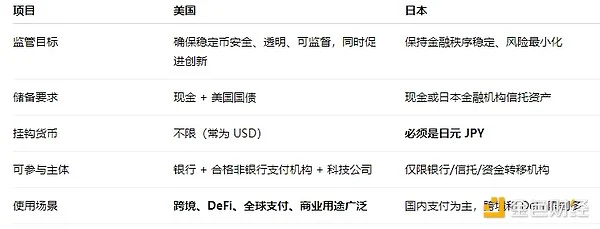
This conservative approach in Japan renders its stablecoin regulations less suitable for a global powerhouse like Sony, which seeks broader utility and market participation. The wider scope and application scenarios of USD stablecoins ultimately swayed Sony’s decision.
Facing Headwinds: Opposition from Traditional Banking
Sony’s foray into stablecoins has not been without its critics. The Independent Community Bankers of America (ICBA) has filed a formal complaint with federal regulators, urging the rejection of Sony’s application. The ICBA argues that Sony’s stablecoin, while akin to a bank deposit, circumvents the stringent regulations traditional banks must adhere to, such as federal insurance requirements and local community investment mandates. They contend that Sony’s digital currency would directly compete with established banking services without playing by the same rules.
Furthermore, the ICBA has voiced significant concerns regarding the potential fallout if Sony’s cryptocurrency business were to fail. They highlight that federal regulators have not had to manage the closure of an uninsured national bank since 1933, and the complexities of liquidating a crypto company could leave customers unable to recover their funds.
The regulatory review process for Sony’s application is estimated to take 12 to 18 months, and the public opposition from powerful banking groups like the ICBA could potentially extend this timeline.
Beyond the Stablecoin: Sony’s Expansive Blockchain Journey
Sony’s exploration into blockchain technology extends far beyond its stablecoin ambitions, showcasing a multi-faceted strategy across its diverse business lines:
- NFTs & Digital Collectibles:
- 2021: Sony Music invested in the NFT marketplace MakersPlace, signaling early interest in music-related NFT applications.
- 2022: Sony Network Communications formed a joint NFT venture in Singapore with Sun Asterisk, holding a 70% stake, focusing on NFT issuance and game development support. Sony also launched its NFT platform, SNFT, and partnered with Solana-based Snowcrash to release NFTs for artists like Bob Dylan, filing trademark applications for the Columbia Records logo.
- 2024: Sony Bank announced “Sony Bank CONNECT,” an NFT management app linking to SNFT, offering user privileges.
- Infrastructure & Exchanges:
- 2023: Sony Group’s Quetta Web acquired Amber Japan (operator of crypto exchange WhaleFin), laying groundwork for crypto asset services.
- 2024: Amber Japan rebranded to S.BLOX, functioning as Sony’s crypto exchange, bridging traditional and Web3 assets.
- Blockchain Development & Investment:
- 2023: Sony invested $3.5 million in Startale Labs, forming a joint venture to focus on blockchain R&D and core network development.
- 2024: Sony Bank conducted a stablecoin proof-of-concept on Polygon. Sony launched “Soneium Minato,” the testnet for its public blockchain Soneium, alongside the “Soneium Spark” incubation program. Samsung’s venture capital fund Samsung Next invested in Startale Labs and joined the incubation, highlighting a growing collaboration between Japanese and Korean tech giants in Web3. The company overseeing Sony’s blockchain initiatives was renamed Sony Block Solutions Lab.
- 2025: Sony Block Solutions Lab launched the Soneium mainnet, an Ethereum Layer 2 network supporting seamless application migration and real crypto asset payments. Notably, Sony blocked several meme coin projects on launch day citing IP protection.
- Ecosystem Integration:
- Sony Pictures Entertainment offers exclusive content access for users purchasing on specific platforms via Soneium.
- Sony Music Entertainment (France) issues limited edition NFTs, while Sony Music Publishing (Japan) hosts NFT events linked to girl group performances.
- Deepened collaboration with Astar Network is expanding the Web3 ecosystem, with ASTRium asset tokens becoming SoneSTRium assets.
Despite fan anticipation for major PlayStation games on Soneium, no flagship Sony game series has yet launched crypto games on the network. However, Soneium has steadily grown into a robust network featuring NFT music collections and an expanding library of smaller games, even collaborating with Square Enix’s now-defunct crypto game, “Symbiogenesis.”
The Road Ahead: A New Era of Digital Payments?
The stablecoin market is in a phase of rapid expansion, and Sony’s proactive stance positions it as a potential trailblazer in shaping the future of digital payments within the entertainment and gaming sectors. The success of this ambitious endeavor, and whether it inspires other industry giants to follow suit, will hinge on Sony’s ability to successfully navigate the complex regulatory approval process and secure widespread consumer adoption by 2026.