Crypto’s Fallen Golden Boy: Do Kwon Handed 15-Year Sentence for Terra-Luna Catastrophe
Once hailed as a visionary in the cryptocurrency world, Terraform Labs co-founder Do Kwon has been dramatically brought low, sentenced on December 11th to 15 years in a U.S. prison for his role in a colossal fraud scheme. The collapse of his Terra ecosystem in May 2022 sent shockwaves through the global crypto market, evaporating an estimated $50 billion within a mere three days and leaving countless investors financially devastated.
A Harsher Judgment: Beyond Prosecution’s Request
The 15-year prison term, handed down by U.S. District Judge Paul Engelmeyer in the Southern District of New York, significantly exceeds the five years recommended by Kwon’s defense team. Strikingly, it also surpasses the 12-year sentence sought by the prosecution. Under the terms of the ruling, Do Kwon must serve at least half of his sentence in the United States before becoming eligible for extradition to South Korea, where he faces further charges.
During the emotional sentencing hearing, numerous victims delivered heart-wrenching testimonies, some weeping openly as they recounted how the Terra collapse obliterated their life savings and tore apart their once-stable families.
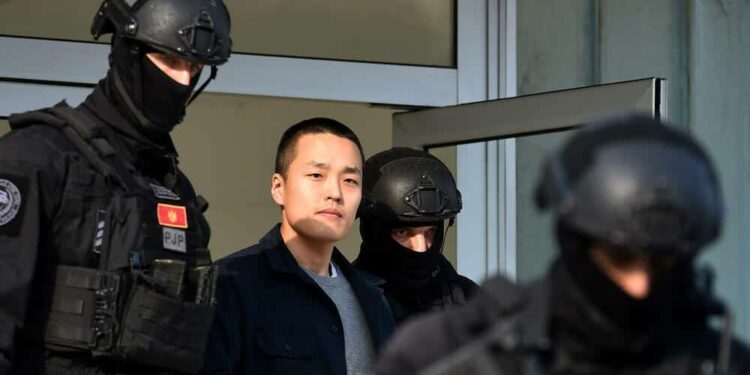
Judge Engelmeyer underscored the “staggering” scale of the fraud, citing the immense financial losses and the vast number of victims. He also highlighted Do Kwon’s attempts to evade justice, noting his flight to Serbia and subsequent arrest in Montenegro while attempting to travel to Dubai with a forged passport.
In a powerful, hour-long court statement, Judge Engelmeyer meticulously detailed Kwon’s extensive deceptions, condemning his “despicable” conduct during the de-pegging of the stablecoin TerraUSD (UST). At that critical juncture, Kwon publicly urged retail investors to hold their positions, even as he and his project team were secretly liquidating assets and making their escape.
“I Don’t Debate with Poor People”: Past Arrogance as Evidence
Do Kwon’s notoriously combative and often mocking demeanor on social media proved to be a significant factor in the judge’s decision for a harsher sentence. Judge Engelmeyer specifically referenced a notorious post by Kwon on Twitter (now X), where he scoffed at critics, stating: “I don’t debate with poor people, sorry I don’t have any change for her right now.”
The judge invoked the words of historian Robert Caro, admonishing Kwon:
“The nature of power is to reveal human nature… You belittled a reasonable skeptic. That moment revealed your true face.”
The defense’s suggestion of a five-year sentence was vehemently rejected by the judge as “completely unbelievable and extremely unreasonable.” He even expressed skepticism that the prosecution’s requested 12 years would be sufficient to deter Kwon or prevent similar fraudulent schemes in the future.
Notably, Judge Engelmeyer repeatedly voiced his bewilderment at the perceived leniency of the prosecution’s recommended sentence, even questioning whether “political interference” might be at play—a subtle allusion to recent pardons granted to several crypto executives by former U.S. President Donald Trump. Both the prosecution and defense denied any such influence.
Following the verdict, U.S. Attorney Jay Clayton for the Southern District of New York released a statement, sharply criticizing Do Kwon for orchestrating an elaborate scheme to mislead investors for personal gain:
“When the crimes were revealed, Do Kwon engaged in a deceptive public relations campaign to cover up the fraud, laundered illicit proceeds, and sought political asylum abroad to evade criminal prosecution.”
“Without question, fraud is fraud, whether it occurs on the street, in the securities markets, or in the nascent and important digital asset ecosystem. No matter where criminals seek refuge in the world, the Southern District of New York will tirelessly work to bring justice to investors and uphold the integrity of our financial markets.”
Earlier this August, the 33-year-old Do Kwon pleaded guilty to one count of conspiracy to commit commodity fraud, securities fraud, and wire fraud, along with a related wire fraud charge tied to the Terraform Labs scheme. He admitted to “knowingly participating in the fraudulent scheme” and indeed defrauding purchasers of the TerraUSD (UST) stablecoin.
Under Do Kwon’s leadership, Terraform Labs became the first domino to fall in the 2022 cryptocurrency crash, triggering a cascade of liquidations and bankruptcies across the industry, ultimately leading to the downfall of even the once-mighty FTX in November of the same year. Former FTX CEO Sam Bankman-Fried (SBF) is currently serving a 25-year sentence for fraud, while Celsius Network founder Alex Mashinsky is also serving 12 years for similar fraudulent activities.
A Plea for Family, A Stinging Rejection from the Bench
During the sentencing hearing, Do Kwon abandoned his characteristic arrogance, expressing remorse and acknowledging his guilt:
“The responsibility rests with me. For the past few years, I have thought almost every moment about what I should have done and what I can do now to make amends.”
Tears welled in Kwon’s eyes as he spoke of his wife and four-year-old daughter in South Korea: “I love my wife and daughter very much, and I hope Your Honor will not be too harsh on my request to be closer to my family.”
However, while the judge expressed sympathy for his daughter growing up without her father, he offered no leniency to Do Kwon himself. Gesturing towards stacks of victim impact statements, Judge Engelmeyer stated:
“Reading these letters is like experiencing a heartbreaking journey of human destruction caused by you.”
Regarding a segment of letters that still expressed support for Do Kwon, the judge dismissively likened them to “letters from a fan club,” describing their authors as “cult followers, still under the influence of hallucinogens.”
The Road Ahead: Extradition and Unresolved Questions
Under the terms of the plea agreement, the prosecution reduced nine original charges, which carried a maximum potential sentence of 135 years, to just two, lowering the maximum possible term to 25 years. In exchange, the prosecution suggested a 12-year sentence and agreed to support Kwon’s request for transfer to a South Korean prison after he serves half of his U.S. sentence.
Nevertheless, Judge Engelmeyer voiced concerns about how the U.S. could ensure Do Kwon would not be released prematurely upon his return to South Korea. The prosecution indicated that South Korean authorities had not disclosed their specific sentencing plans, but Kwon appears prepared to continue his defense there.
Furthermore, an agreement has yet to be reached regarding how much of the 17 months Do Kwon spent in detention in Montenegro (after deducting four months served for passport fraud) will be credited towards his U.S. sentence.
Disclaimer: This article provides market information only. All content and opinions are for reference purposes only and do not constitute investment advice. They do not represent the views and positions of BlockTempo. Investors should make their own decisions and trades. The author and BlockTempo will not bear any responsibility for direct or indirect losses incurred by investors’ transactions.