US Financial Oversight Gains Pro-Crypto Leaders: A New Era for Digital Asset Regulation
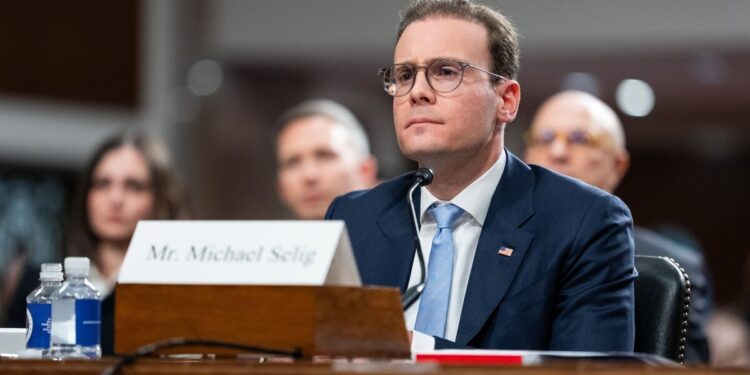
As the potential for a second Trump administration looms, the United States financial regulatory framework is solidifying with two pivotal appointments. The U.S. Senate recently confirmed Mike Selig as Chairman of the Commodity Futures Trading Commission (CFTC) and Travis Hill as head of the Federal Deposit Insurance Corporation (FDIC) in a 53-43 vote. Both figures are widely recognized for their notably open and favorable stances toward the burgeoning cryptocurrency sector, signaling a significant shift in federal oversight.
CFTC Poised for Central Role in Crypto Oversight
The CFTC is increasingly being positioned at the epicenter of crypto asset regulation. Should Congress successfully enact legislation granting the CFTC more comprehensive authority over digital assets, this agency—traditionally focused on futures and derivatives—is set to become the most influential regulatory body in the U.S. cryptocurrency market.
Mike Selig’s ascension to the CFTC chairmanship follows the impactful interim leadership of Caroline Pham. During her tenure, Pham proactively championed several “crypto-friendly” policy directions, effectively laying a progressive groundwork for her successor. Notably, Pham has announced her departure to join MoonPay, a prominent cryptocurrency infrastructure service provider, as Chief Legal and Administrative Officer.
Selig’s “Crypto Sprint” Agenda and Unique Challenges
Selig brings a wealth of experience, having previously contributed significantly to cryptocurrency policy development during his time at the U.S. Securities and Exchange Commission (SEC). At the CFTC, he is expected to vigorously pursue the ongoing “Crypto Sprint” initiative, which includes several transformative objectives:
- **Integrating Stablecoins:** Advocating for the inclusion of stablecoins within the regulatory definition of “tokenized collateral.”
- **Formalizing Blockchain:** Initiating rule revisions to formally embed blockchain technology into regulatory texts, thereby making it an integral part of legal language.
- **Encouraging Spot Leveraged Products:** Fostering an environment where compliant platforms can issue spot leveraged cryptocurrency products, with Bitnomial exchange already pioneering such applications.
However, Selig’s new role presents a unique operational challenge. With Caroline Pham’s immediate departure upon his arrival, Selig will find himself as the sole commissioner of the CFTC, an agency typically comprising five members. While this singular position could facilitate swift policy implementation, the absence of internal checks, balances, and a deliberative process within the commission might expose future policies to legal challenges regarding their legitimacy.
Concurrently, Congress is accelerating legislative efforts to broaden the CFTC’s regulatory purview over spot cryptocurrency transactions. The House of Representatives has already passed a relevant bill this year, now under Senate review. Industry sources suggest that the Senate Banking Committee could conclude its crucial review process as early as the end of the month.
FDIC’s Transformative Shift: Ending the “Debanking” Era
The FDIC’s role extends beyond merely regulating stablecoin issuers; it holds the crucial key to the crypto industry’s access to essential banking services. Travis Hill, during his prior stint as acting chairman, consistently demonstrated a distinctly accommodating stance towards digital assets.
Speaking at a House Financial Services Committee hearing on December 2, Hill declared, “We have overturned the policies of the past few years.” This statement directly addressed the Biden administration’s previous regulations, which mandated banks to seek government approval before engaging with cryptocurrency businesses. “Now, banks’ responsibility is to manage safety and soundness risks, but they are not prohibited from serving these industries,” Hill clarified, emphasizing a return to risk-based assessment rather than outright prohibition.
Hill has been instrumental in rectifying the long-standing “debanking” phenomenon, where banks, often under perceived regulatory pressure, unfairly severed ties with cryptocurrency companies and their executives. This practice, widely criticized by Republican lawmakers and industry stakeholders, was seen as a direct consequence of previous restrictive regulatory policies. Hill’s leadership marks a definitive move away from this exclusionary approach, fostering a more inclusive financial environment for digital asset businesses.
Completing the Regulatory Puzzle: The Fed Remains a Variable
The prolonged vacancies at the helm of the CFTC and FDIC were significant gaps in the Trump administration’s broader vision for cryptocurrency regulation. With key leadership now in place across the SEC, Office of the Comptroller of the Currency (OCC), and Treasury Department, this comprehensive regulatory puzzle is nearing completion. The Federal Reserve (Fed) remains the final piece; while Trump’s nominee for Vice Chair for Supervision, Michelle Bowman, assumed her role in June, the successor to Chairman Jerome Powell, whose term concludes next year, is yet to be determined.
Disclaimer: This article is intended solely for market information purposes. All content and views presented are for reference only and do not constitute investment advice. They do not necessarily reflect the opinions or positions of the author or publisher. Investors are encouraged to conduct their own due diligence and make independent trading decisions. The author and publisher will not assume any responsibility for direct or indirect losses incurred by investors’ transactions.