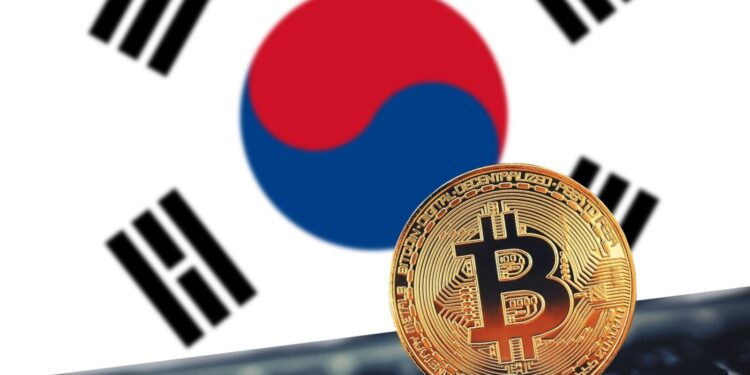
South Korea Ends 9-Year Corporate Crypto Ban: New Guidelines Pave Way for Institutional Investment
After nearly a decade, South Korea is poised to lift its stringent ban on corporate cryptocurrency investments. The nation’s Financial Services Commission (FSC) is reportedly finalizing comprehensive regulatory guidelines, which are expected to permit companies to allocate up to 5% of their shareholder equity into digital assets. This landmark decision marks a pivotal shift from a period of strict suppression to a carefully managed, institutionalized opening of the crypto market.
A New Era for Corporate Crypto Investment
According to a report by the Seoul Economic Daily, the FSC has largely completed its draft guidelines for cryptocurrency trading by listed companies and professional investors. The final version is anticipated to be released as early as January or February of this year. If the timeline holds, South Korean corporations could legally begin incorporating cryptocurrencies onto their balance sheets within 2024.
To mitigate potential financial risks stemming from speculative trading, the proposed framework includes several “firewalls”:
- Investment Cap: Companies and professional investors will be limited to allocating a maximum of 5% of their shareholder equity annually towards cryptocurrency purchases.
- Investment Scope: Initially, investments will be restricted to the top 20 cryptocurrencies by market capitalization. This focused approach aims to steer institutional capital towards more established and liquid assets.
- Stablecoin Discussion: The inclusion of major USD-pegged stablecoins like USDT and USDC in the list of permissible assets is still under active deliberation.
Min Jung, an Associate Researcher at Presto Research, commented on the potential impact: “This will undoubtedly inject considerable liquidity into the market. However, given the restriction to the top 20 cryptocurrencies by market capitalization, we anticipate funds will primarily flow towards Bitcoin and Ethereum, with limited benefits for altcoins.”
Phased Approach and Future Regulatory Landscape
This upcoming guideline is a continuation of the FSC’s gradual easing of the de facto ban on institutional crypto asset trading. South Korea had already permitted non-profit organizations and cryptocurrency exchanges to sell their own digital asset holdings in mid-2025. Furthermore, regulators had previously indicated plans to open up crypto trading for listed companies and professional investors in the latter half of 2025, suggesting a carefully phased liberalization.
To prevent significant market volatility from large-scale transactions, the new guidelines are also expected to incorporate mechanisms such as “split transactions” and “price limits.” Min Jung added, “While the 5% limit might appear conservative, companies taking their initial steps into this new asset class will likely adopt a cautious, ‘testing the waters’ approach, so it shouldn’t pose a substantial impediment.”
Beyond these immediate guidelines, the South Korean crypto community and investors are keenly awaiting the “Digital Asset Basic Act” (DABA), slated for introduction in the first quarter of this year. This comprehensive “second-stage” regulation is expected to define key policies, including the issuance and trading rules for cryptocurrency spot ETFs, and establish a robust regulatory framework for KRW-pegged stablecoins. The DABA will be crucial in shaping the long-term future of digital assets within the Korean financial ecosystem.
Disclaimer: This article is intended solely to provide market information. All content and views are for reference purposes only and do not constitute investment advice, nor do they represent the views and positions of the publisher. Investors should make their own decisions and conduct their own trades. The author and publisher will not bear any responsibility for direct or indirect losses incurred by investors’ transactions.