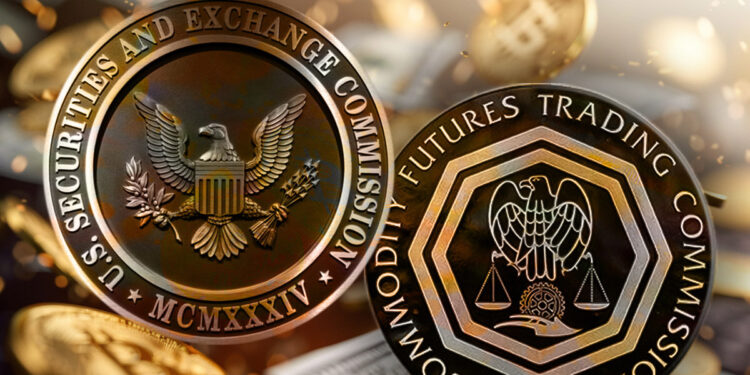
In a pivotal moment for the burgeoning U.S. cryptocurrency industry, two of its most influential regulatory bodies, the Securities and Exchange Commission (SEC) and the Commodity Futures Trading Commission (CFTC), have made a landmark joint declaration. On January 29th, the chairmen of both agencies appeared together at a public event, signaling an unprecedented alignment aimed at establishing precise jurisdictional boundaries and fostering a predictable regulatory environment for digital assets.
This collaborative stance comes as congressional crypto legislation continues to face hurdles. Undeterred, the SEC and CFTC are proactively working within existing legal frameworks to provide the industry with much-needed clarity, thereby reducing operational uncertainties for crypto businesses across the United States.
The event marked the first public address by Mike Selig since his confirmation as the new CFTC Chairman last month. Selig wasted no time in unveiling a robust agenda focused on crypto asset definition and prediction markets. He announced the CFTC’s intention to collaborate closely with the SEC on its “Commonsense Crypto Asset Taxonomy.” This initiative aims to distinctly categorize digital assets as “non-securities,” encompassing digital commodities, collectibles, and various blockchain tools.
Selig further revealed that he has directed his internal CFTC teams to partner with the SEC. Their joint task: to explore the feasibility of establishing a transitional regulatory framework through “joint codification,” even before formal legislation is enacted by Congress.
Emphasizing the transformative period ahead, Chairman Selig stated, “We stand at a critical juncture in the formation of modern markets. As this transformation progresses, the CFTC has the opportunity to continue its consistent role as a forward-looking regulator.”
SEC Chairman Paul Atkins lauded Selig’s policy direction, describing it as precisely the leadership style the current market demands. “What Chairman Selig brings to the CFTC is exactly what this era needs—a deep respect for market order, and a pragmatic understanding of how innovation can promote U.S. economic prosperity,” Atkins remarked.
He underscored the commitment of both agencies to “employ all available tools” to minimize regulatory friction and standardize definitions. This concerted effort will allow the market to operate under clearer rules, even as it awaits comprehensive congressional legislation.
Reaffirming the division of labor, Paul Atkins reiterated that the SEC will oversee the securities domain, including tokenized securities and crypto assets classified as securities. Conversely, mainstream “digital commodities” such as Bitcoin and Ethereum will remain under the CFTC’s jurisdiction.
Chairman Selig also unveiled his comprehensive new crypto regulatory agenda, outlining specific directives for his CFTC team:
- Facilitating Tokenized Collateral: Developing new rules to integrate more compliant tokenized collateral into the financial system.
- Bringing Derivatives Home: Promoting the return of perpetual contracts and innovative derivatives to the U.S., ensuring their compliant development in both centralized and decentralized markets.
- Establishing Developer Safe Harbors: Creating clear and explicit “Safe Harbor” provisions for software developers.
- Innovating DCM Categories: Researching the establishment of a novel Designated Contract Market (DCM) registration category tailored for retail-leveraged, margin, or financed crypto asset transactions.
Furthermore, addressing the regulation of prediction markets, Selig confirmed that the CFTC team has been instructed to formally draft regulatory rules for “Event Contracts,” aiming to establish clear legal operational boundaries for this emerging market segment.
Disclaimer: This article provides market information only. All content and views are for reference only and do not constitute investment advice, nor do they represent the views and positions of BlockBeats. Investors should make their own decisions and trades. The author and BlockBeats will not bear any responsibility for direct or indirect losses resulting from investor transactions.