JPMorgan CEO Jamie Dimon Issues Stark Warning: Echoes of 2008 Financial Crisis and Looming AI Bubble Threaten Markets
By Ariel, CryptoCity
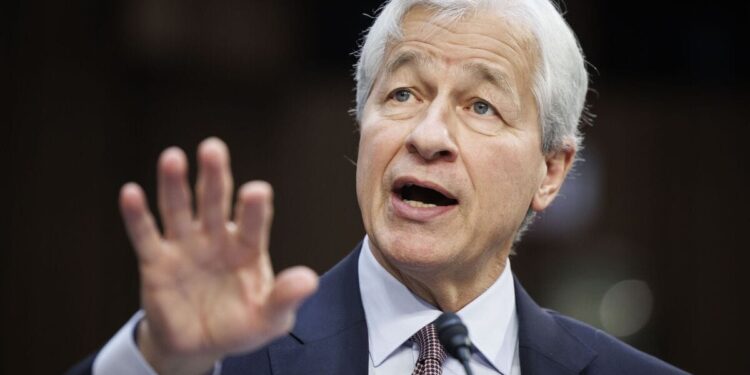
Jamie Dimon, the veteran CEO who successfully navigated JPMorgan Chase through the tumultuous 2008 financial crisis, has issued a sobering warning about the current state of global financial markets. Drawing striking parallels to the precarious period preceding the Great Recession, Dimon cautioned on February 24th that a combination of risky lending practices and an environment of excessive optimism could once again set the stage for a significant economic downturn.

Dimon, who famously steered JPMorgan through the crisis and acquired struggling rivals Bear Stearns and Washington Mutual, highlighted striking similarities between today’s market conditions and those observed in 2005, 2006, and 2007. He noted an alarming surge in asset prices and trading volumes, fostering an “overly optimistic” sentiment among market participants. This optimism, he argues, is driving some financial institutions to engage in “unwise behavior,” taking on high-risk loans in a relentless pursuit of net interest income. Dimon’s outlook remains cautious, predicting an eventual deterioration of the credit cycle, though the precise timing remains uncertain.
To underscore his concern, Dimon referenced the bankruptcies of auto loan company Tricolor Holdings and auto parts supplier First Brands Group last year. He employed a potent analogy: “When you see one cockroach, there are probably many more hiding in the shadows.” JPMorgan Chase itself recognized a $170 million impairment loss on its loans to Tricolor Holdings, serving as a tangible example of the potential pitfalls lurking beneath the surface of seemingly robust markets.

AI’s Unforeseen Impact and the Evolving Credit Cycle
Beyond traditional credit risks, the financial landscape is also grappling with the transformative, yet potentially destabilizing, impact of Artificial Intelligence. As reported by Bloomberg, the rapid evolution of AI technology has triggered “panic trading” across various sectors, with investors scrambling to assess how this innovation will reshape existing markets.
Dimon acknowledged that the credit cycle is prone to unexpected developments, often emerging from unforeseen industries. He posited that this time, the structural changes brought by AI could pose significant challenges to the software industry, prompting JPMorgan to intensify its scrutiny of specific loan categories. Despite this, he anticipates no major impact on the bank’s overall credit losses.
Cloud Giants’ Debt and the Rising Specter of an AI Bubble
JPMorgan is not alone in its cautious stance. A growing chorus of market observers is voicing concerns about the soaring valuations within the AI sector, fearing a potential “AI bubble.” According to a report from The Times, Bank of America’s latest client survey reveals that the AI bubble has, for the first time, become the paramount concern for credit market investors. A particular area of focus is the substantial borrowing levels observed among major cloud service providers, including tech giants like Microsoft, Amazon, Meta, and Google.
The survey data paints a clear picture of escalating apprehension. Investors now project these cloud behemoths to issue a staggering $285 billion in debt this year, a significant jump from the $210 billion estimated just last December. A remarkable 23% of respondents identified the AI bubble as their top concern, a stark increase from only 9% in Bank of America’s December survey. This indicates that the fear of unsustainable investment and valuation levels in AI companies has officially eclipsed the traditional “credit bubble” as the leading hidden risk in investors’ minds.
Interestingly, the report also highlighted a relative lack of concern among investors regarding geopolitical conflicts or central bank policy missteps. Furthermore, only a modest 10% of respondents cited corporate obsolescence due to AI as their primary worry, suggesting a selective focus on the immediate valuation risks rather than the broader disruptive consequences.