Iran’s Digital Lifeline: Bitcoin and Stablecoins Fuel a Resilient Shadow Economy Amid Geopolitical Tensions
As military actions by the US-Israel coalition intensify against Iran, Tehran’s long-established “shadow economy” has once again seized international attention. This sophisticated parallel financial system, intricately weaving Bitcoin mining with stablecoin trading, stands as Iran’s ultimate bulwark in its quest for economic survival, circumventing the pervasive influence of the US dollar and a crippled traditional banking infrastructure.
Bitcoin Mining: Transforming Cheap Energy into Global Assets
Iran pioneered the legalization of cryptocurrency mining as early as 2019. Under this framework, licensed operators are permitted to utilize government-subsidized electricity for mining operations, provided that all generated Bitcoin is sold directly to the Central Bank of Iran. This strategic move enables the nation to procure essential imported goods and settle international trade obligations, effectively bypassing stringent Western banking sanctions and the dominant dollar system.

Statistical analyses suggest that Iran’s Bitcoin mining hash rate contributes approximately 2% to 5% of the global total. However, a significant portion of this activity remains undeclared, implying that the actual scale of Iran’s mining operations could be considerably larger than official figures indicate.
Blockchain analytics firm Chainalysis revealed that by 2025, Iran’s cryptocurrency ecosystem had burgeoned to an impressive $7.8 billion, a valuation nearly comparable to the entire national GDP of nations like the Maldives or Liechtenstein. It’s noteworthy that cryptocurrency engagement in Iran frequently escalates during periods of military conflict or domestic unrest, a trend observed during the 12-day confrontation between Iran and Israel last year.
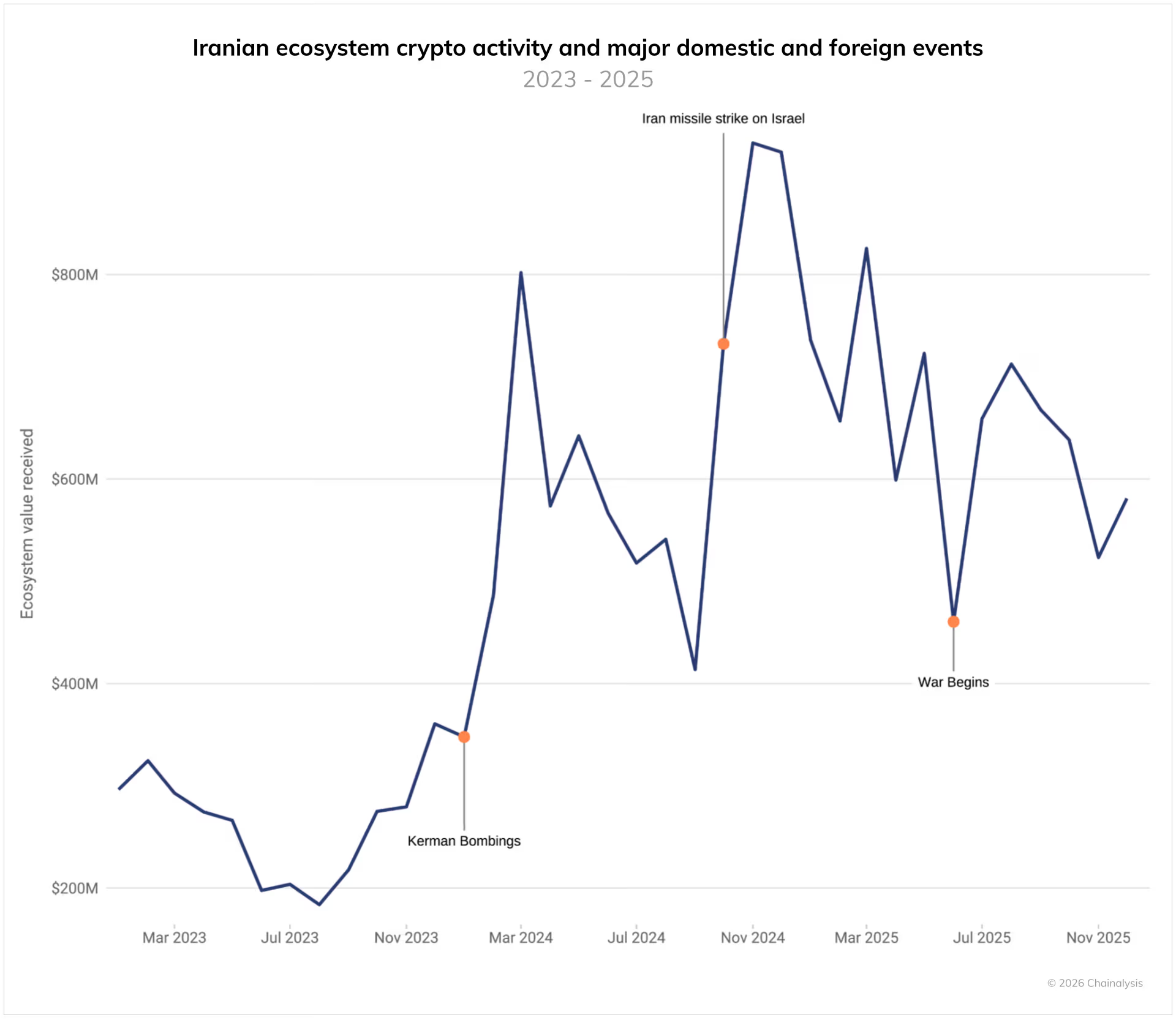
The Islamic Revolutionary Guard Corps (IRGC), Iran’s premier military force, has shown an escalating reliance on cryptocurrencies in recent years. Chainalysis estimates that in Q4 2025, wallet addresses linked to the IRGC accounted for over 50% of Iran’s total cryptocurrency inflows, collectively receiving assets valued at more than $3 billion within the past year alone.
These figures, however, only encompass publicly identifiable wallet addresses directly associated with sanctioned entities, suggesting that the true financial scale of IRGC crypto involvement could be substantially higher.
Rial’s Collapse and USDT’s Rise: A New Paradigm for Trade Settlement
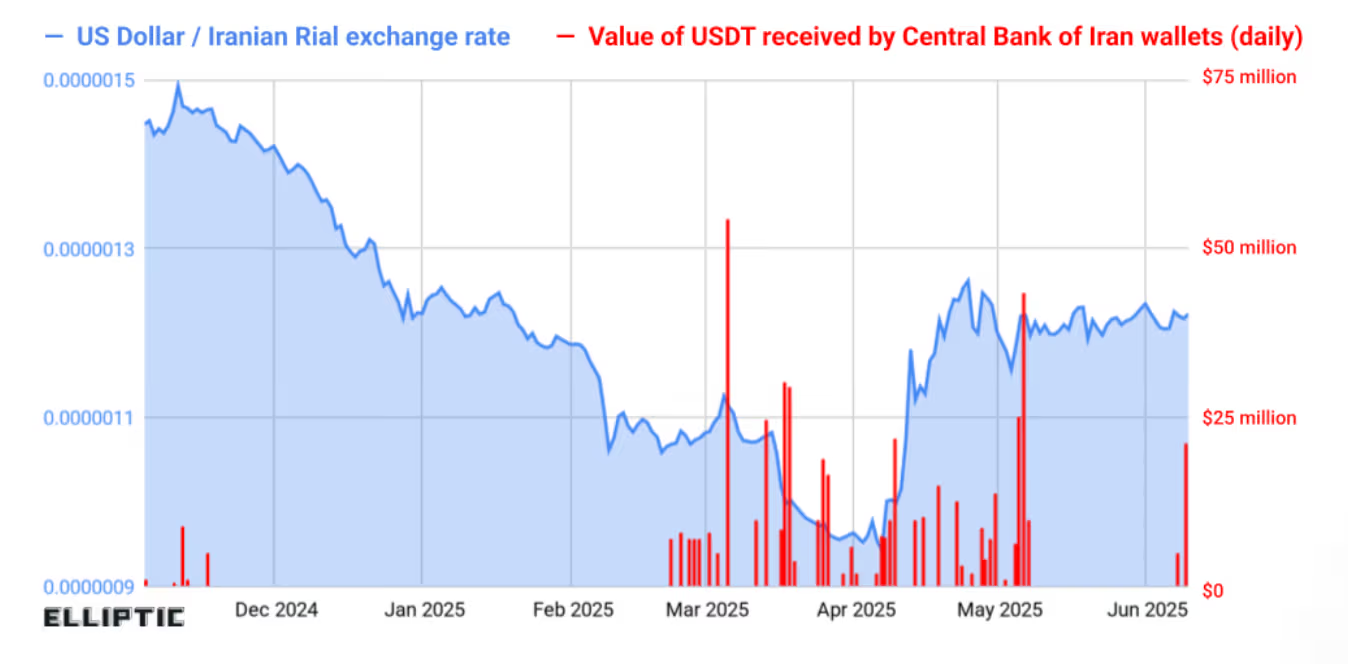
Beyond Bitcoin, stablecoins play an equally critical role in Iran’s financial maneuvers. Blockchain analytics firm Elliptic reports that by 2025, the Central Bank of Iran had amassed at least $507 million in USDT. This accumulation is widely believed to serve the dual purpose of stabilizing the plummeting Iranian Rial and facilitating crucial foreign trade. Despite these efforts, the financial defense has yielded limited success, with data illustrating a staggering depreciation of the Rial against the US dollar, exceeding 96%.
In the face of deeply entrenched hyperinflation and an economy teetering on the brink of collapse, Iranian citizens are increasingly turning to Bitcoin as a safe haven for their assets. A sharp surge in Bitcoin withdrawals from centralized exchanges to personal wallets during recent anti-government protests underscores a growing public desire to retain direct control over their wealth.
The Vulnerability of Iran’s Crypto Lifeline
Analysts estimate Iran’s Bitcoin mining cost to be approximately $1,300 per coin. Once mined, these Bitcoins are sold to the central bank, which then channels them to overseas counterparts to finance essential imports such as machinery, fuel, and vital consumer goods.
However, the sustainability of this “cheap energy to cross-border asset” pipeline hinges entirely on a stable power supply. With the persistent threat of US-Israel airstrikes looming, any damage to Iran’s critical infrastructure or power grid could severely disrupt this crucial economic lifeline, jeopardizing the nation’s ability to navigate the complex landscape of international sanctions.
Disclaimer: This article is provided for market information purposes only. All content and views expressed herein are for reference only, do not constitute investment advice, and do not necessarily reflect the views or positions of the author or BlockBeats. Investors are advised to make their own informed decisions and conduct their own trades. The author and BlockBeats shall not be held responsible for any direct or indirect losses incurred by investors as a result of their trading activities.