US Senate Housing Bill Carries Surprise CBDC Ban, Sparking Digital Dollar Debate
A new bipartisan housing bill, recently unveiled by the U.S. Senate Committee on Banking, Housing, and Urban Affairs, has unexpectedly inserted a temporary prohibition on the Federal Reserve from issuing a Central Bank Digital Currency (CBDC). While the legislation’s primary focus is on expanding housing supply and easing regulatory burdens, this particular clause has quickly captured significant attention within financial and political circles.
The “21st Century ROAD to Housing Act”: A Dual Mandate
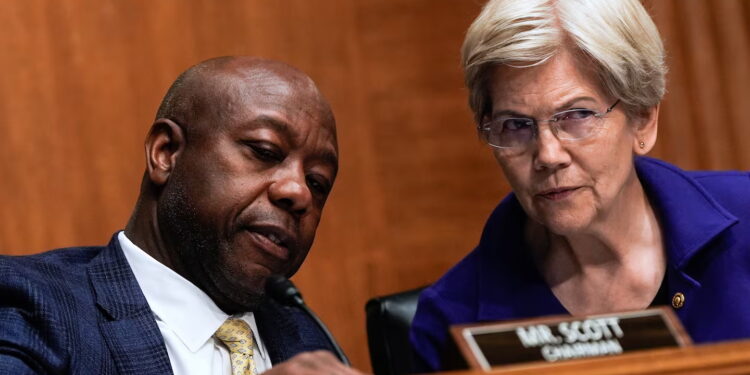
Dubbed the “21st Century ROAD to Housing Act,” the proposed legislation was jointly put forth by Republican Senator Tim Scott, the committee’s ranking member, and Democratic Senator Elizabeth Warren. Its core objectives are ambitious: to streamline the residential construction process across the United States, reduce development costs, and enhance homeownership opportunities for the middle class.
Senator Scott emphasized the bill’s dedication to economic empowerment, stating, “This bill isn’t just about cutting red tape, lowering costs, and increasing housing supply without increasing government spending. It’s about opening the road to economic opportunity and homeownership for more families across America.”
Senator Warren echoed the sentiment, highlighting the bill’s comprehensive nature. She noted that it not only incorporates elements from the Senate’s previously unanimous “ROAD to Housing Act” but also integrates bipartisan proposals from the House of Representatives. Crucially, it seeks to address the pressing issue of corporate landlords aggressively acquiring residential properties, thereby squeezing out prospective individual homebuyers.
The Unexpected CBDC Clause: A Glimpse into Digital Dollar Policy
Despite the senators’ detailed public statements on the housing provisions, neither explicitly mentioned the CBDC prohibition clause. This omission is particularly striking given the clause’s potential implications for the future of digital finance in the U.S.
Nestled within the extensive 303-page bill, the CBDC ban occupies a mere two pages. This isn’t the first time Congress has attempted to attach such a prohibition to broader legislation. The House of Representatives even passed a standalone CBDC ban last year, though it ultimately failed to clear both chambers due to political gridlock.
Key Provisions of the CBDC Ban
The language of the prohibition is unequivocal: “Except as otherwise provided in subsection (c) of this Act, the Board of Governors of the Federal Reserve System or any Federal Reserve Bank may not issue or create a central bank digital currency, either directly or through a financial institution or other intermediary, or introduce any digital asset that is substantially similar to a central bank digital currency.”
This ban is not permanent, featuring a “sunset clause” that dictates its expiration on December 31, 2030. This means that for the duration of the act’s validity, any direct issuance of a digital dollar to the public by the Federal Reserve, or its indirect introduction via commercial banks, would be explicitly forbidden.
However, the bill carves out specific exceptions. Digital assets that are “permissionless, privately issued” and denominated in U.S. dollars, while also “fully retaining” the privacy protections inherent in physical currency, would remain exempt from this prohibition.
White House Weighs In: A Strong Stance on Privacy
In a swift response, the White House issued an “Administrative Policy Statement” expressing strong support for the CBDC prohibition. The statement underscored the administration’s priorities: “This Administration has emphasized that one of the President’s priorities is to prevent the development of a CBDC that could pose significant threats to individual privacy and freedom.”
This development highlights the ongoing, complex debate surrounding the creation of a digital dollar in the U.S., balancing potential financial innovation with concerns over privacy and governmental control. The “21st Century ROAD to Housing Act” thus emerges as a multifaceted piece of legislation, aiming to reshape both the nation’s housing landscape and its approach to digital currency.
Disclaimer: This article provides market information and all content and views are for reference only, do not constitute investment advice, and do not represent the views and positions of BlockBeats. Investors should make their own decisions and trades, and the author and BlockBeats will not bear any responsibility for direct or indirect losses incurred by investors’ transactions.