
Middle East Tensions, Surging Oil, and Bitcoin’s Crossroads: Navigating Market Volatility
The global financial landscape is bracing for increased volatility as escalating geopolitical tensions in the Middle East continue to dominate headlines. Over the weekend, reports of an Israeli strike on Iranian crude oil storage facilities sent shockwaves through energy markets, propelling crude oil futures prices to briefly soar past the critical $110 mark. Historically, such sharp spikes in oil prices are potent indicators of geopolitical crises, often preceding downturns in stock markets. Given the high correlation between the cryptocurrency market and US equities, a significant correction in the stock market could likely trigger a similar response in crypto assets. With the Middle East conflict intensifying, market sentiment is expected to remain under considerable pressure.
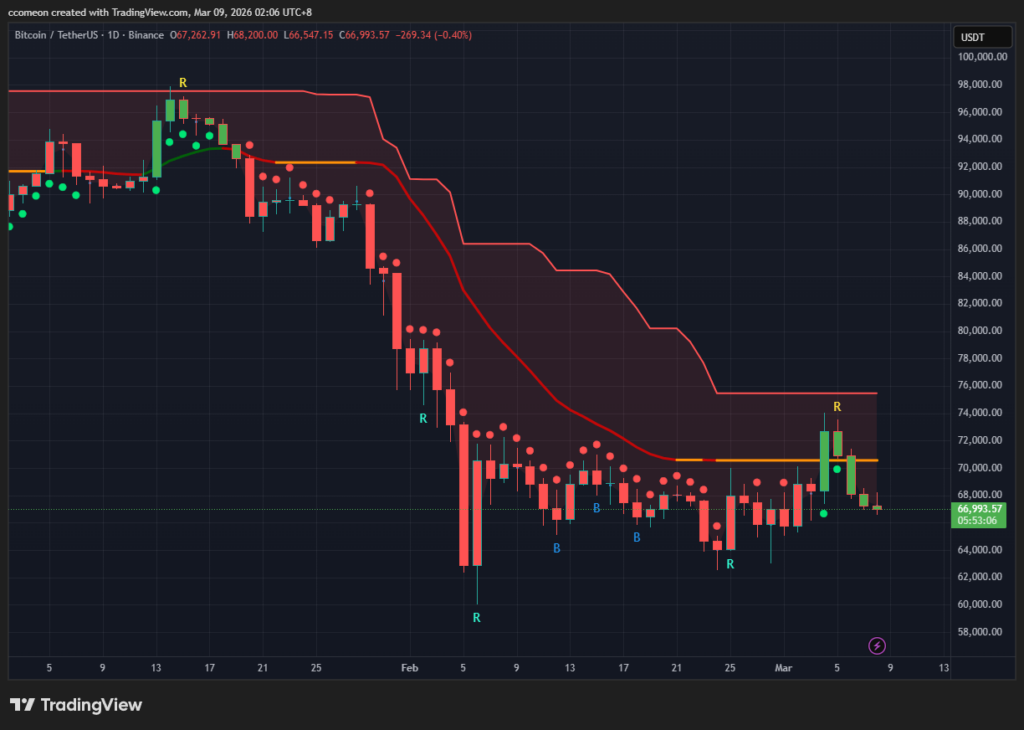
Amidst this backdrop, Bitcoin demonstrated surprising resilience last week, staging an unexpected rally that saw it breach $74,000. However, this momentum proved short-lived. As geopolitical concerns deepened towards the weekend, a flight to safety spurred a downturn across the broader crypto market. This shift caused Bitcoin to retreat, undoing its recent breakthrough of a short-term downtrend and settling back around the $66,000 level. The attempt at a trend reversal has, for now, failed. For Bitcoin to firmly establish a bullish reversal, it needs to decisively hold above $70,000. Should an opportunity arise this week for Bitcoin to re-challenge the $70,000 threshold, it could signal a potential entry point for long positions; conversely, a failure to do so would necessitate a cautious, hedging approach.
Adding another layer of complexity to the market outlook is the upcoming release of the US Consumer Price Index (CPI) data this Wednesday. Current market expectations point towards a potential uptick in inflation, which would exert further downward pressure on market sentiment. This crucial data point not only influences immediate market movements but also plays a significant role in shaping the Federal Reserve’s timeline for interest rate cuts. Coupled with the recent surge in oil prices, an unfavorable CPI report could potentially push back the anticipated rate cuts beyond July this year, a scenario that would be largely bearish for markets. Nevertheless, the overriding factors for market direction this week remain the evolving situation in the Middle East and the profound impact of oil prices on the global economy.
Disclaimer: This article is provided for market information purposes only. All content and views are for reference only and do not constitute investment advice, nor do they represent the views and positions of BlockBeats. Investors should make their own decisions and trades. The author and BlockBeats will not bear any responsibility for direct or indirect losses resulting from investor transactions.