Bitcoin Mining Under Siege: Soaring Costs, Geopolitical Turmoil, and the Fight for Survival
The global Bitcoin mining industry is navigating an unprecedented storm. A confluence of factors—plunging BTC prices, skyrocketing energy costs, and escalating geopolitical instability—has plunged many miners into a precarious state where operational losses far outweigh potential gains. The very foundation of their profitability is eroding, forcing a reevaluation of strategies and even their core business models.
The Economic Squeeze: A $20,000 Loss Per Bitcoin
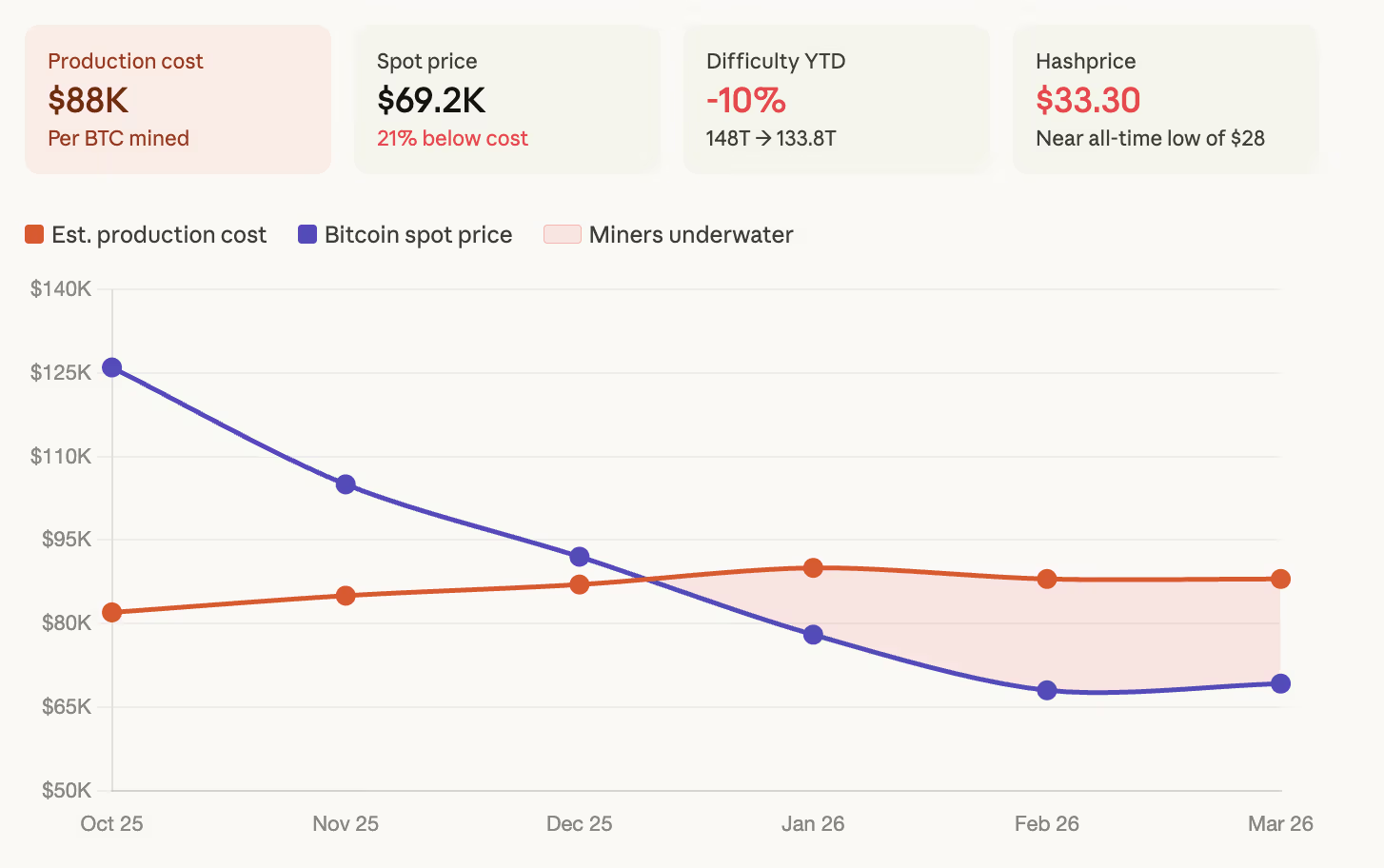
According to Checkonchain’s “Difficulty Regression Model,” an advanced tool that estimates average production costs based on network difficulty and energy input, the expense to mine a single Bitcoin had surged to an alarming $88,000 by March 13. This figure stands in stark contrast to Bitcoin’s spot price, which hovers around $68,000 at the time of writing. This stark disparity means that for every Bitcoin successfully mined, operators face a staggering loss of nearly $20,000—a 21% deficit per block.
Geopolitical Headwinds: Oil Prices Fuel the Crisis
The squeeze on miner profitability began last October when Bitcoin’s price retreated sharply from its $126,000 peak, eventually breaching the $70,000 threshold. However, recent geopolitical flare-ups, particularly the conflict in Iran, have delivered a crushing blow to an already strained industry. The surge in international oil prices past $100 per barrel directly translates to exorbitant electricity costs, a critical input for mining operations. Regions highly dependent on Middle Eastern energy supplies, accounting for an estimated 8% to 10% of global hash power, are bearing the brunt of this impact.
Further exacerbating the situation, commercial shipping through the Strait of Hormuz—a vital artery for approximately 20% of the world’s oil and gas transport—has ground to a near halt. Adding to the tension, former US President Donald Trump’s “48-hour ultimatum” threatening attacks on Iranian power plants has amplified the geopolitical ripple effects, leaving miners in an increasingly volatile and uncertain landscape.
Network Resilience Tested: Hashrate Declines and Block Delays
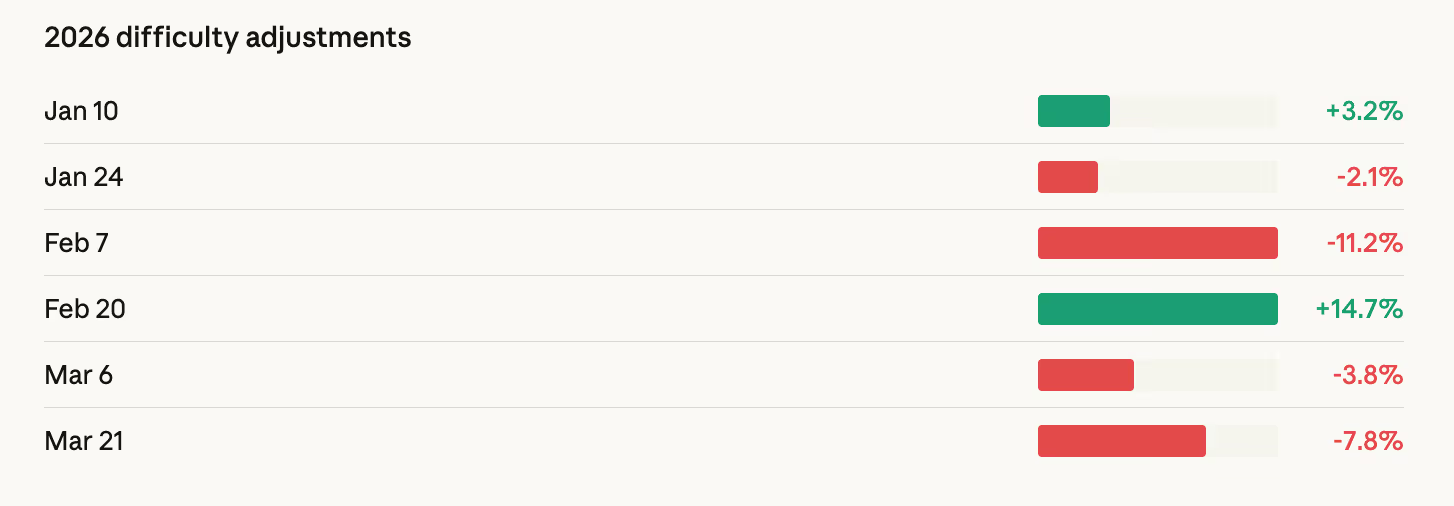
The exodus of miners from the network is becoming increasingly evident in key Bitcoin network metrics. The mining difficulty recently saw a 7.76% downward adjustment, settling at 133.79 T. This marks the second most significant drop in 2026, following an 11.16% plunge in February attributed to the “Fern intense winter storm.” Current difficulty levels are nearly 10% lower than at the start of the year and significantly below the all-time high of almost 155 T recorded in November 2025.
The total network hashrate has also retreated substantially to approximately 920 EH/s, a considerable decline from the astonishing 1 Zetahash (1,000 EH/s) peak achieved in 2025. This reduction in computational power has stretched the average block time in the last adjustment cycle to 12 minutes and 36 seconds, significantly exceeding Bitcoin’s intended 10-minute interval.
The Miner Exodus: A Structural Risk to the Market
The “Hashprice,” a metric from the Luxor mining pool that gauges miners’ expected revenue per unit of hash power, currently hovers around $33.30 per PH/s per day. This figure is perilously close to the breakeven point for most mining hardware and just a whisper away from the historical low of $28 recorded on February 23. When operating costs surpass revenue, miners are left with a stark choice: sell their Bitcoin holdings to cover expenses.
This forced liquidation introduces substantial selling pressure into an already fragile market. With approximately 43% of Bitcoin supply currently held at a loss, and large institutional players (whales) capitalizing on price rebounds to offload assets, coupled with highly leveraged positions dictating price movements, the challenges facing miners transcend mere industry-specific issues. They are evolving into a critical variable with the potential to impact the very structural integrity of the broader cryptocurrency market.
Strategic Pivot: AI and HPC as New Lifelines
Faced with the grim reality of daily losses, publicly traded mining companies are actively seeking transformative solutions. Many are now diversifying their vast computational resources into artificial intelligence (AI) and high-performance computing (HPC) sectors, aiming to secure more stable revenue streams than traditional Bitcoin mining. Industry giants like Marathon Digital and Cipher Mining are already expanding their existing mining facilities to accommodate new data centers dedicated to these emerging technologies.
The Road Ahead: Self-Correction Amidst Short-Term Pain
According to CoinWarz projections, the next Bitcoin mining difficulty adjustment, anticipated in early April, is likely to see a further reduction. Should Bitcoin’s price fail to reclaim the critical $88,000 mining cost threshold, this “miner exodus” is expected to intensify and spread further across the industry. The Bitcoin network, by design, incorporates a self-regulating mechanism: as miners exit due to unprofitability, the mining difficulty decreases, making it easier for the remaining participants to secure profits. However, the transitional period—from widespread unprofitability to a significant difficulty reduction and eventual profit recovery—represents the most perilous test. This phase not only threatens the survival of numerous miners but also forces the spot market to absorb the substantial selling pressure generated by those desperate to stay afloat.
Disclaimer: This article is provided for market information purposes only. All content and views are for reference and informational purposes, do not constitute investment advice, and do not represent the opinions or positions of the author or BlockBeats. Investors should conduct their own due diligence and make independent trading decisions. The author and BlockBeats will not be held responsible for any direct or indirect losses incurred by investors as a result of their transactions.