
Bitcoin’s Price Paradox: Why BTC is Falling Despite Reduced Miner Selling Pressure
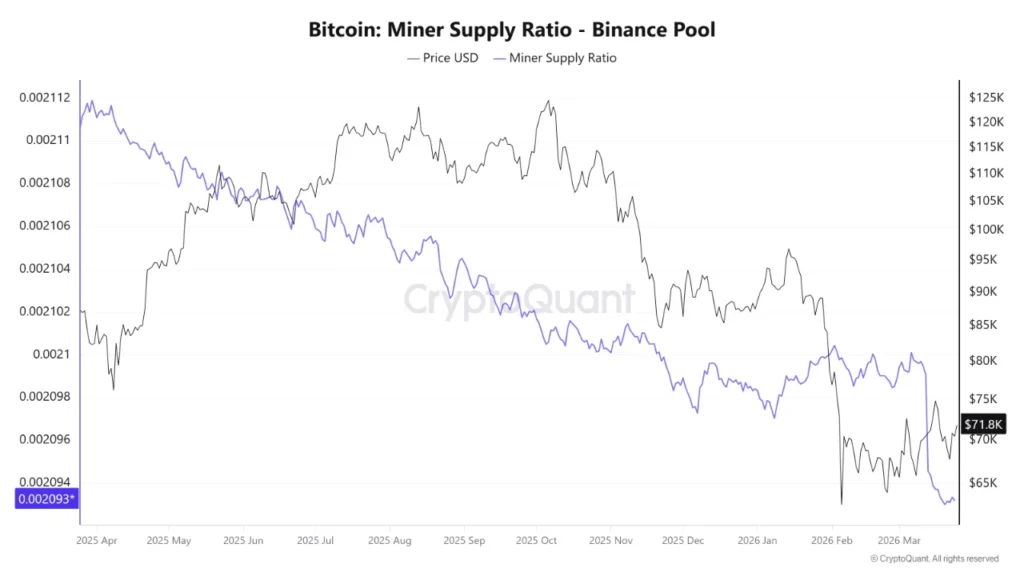
The cryptocurrency market often presents intriguing contradictions, and Bitcoin’s recent price action is a prime example. Despite a notable decline in the CryptoQuant Miner Supply Ratio since early 2025—indicating a significant reduction in the amount of BTC miners are sending to exchanges like Binance—Bitcoin’s price has experienced a volatile journey, initially rising before a subsequent downturn. This counter-intuitive trend suggests that even a decrease in selling pressure from a key supply source like miners doesn’t guarantee price stability, or even upward momentum.
The Squeeze on Bitcoin Miners: Rising Costs and Breakeven Points
Bitcoin miners operate under immense financial pressure. Their primary expenditures encompass electricity, hardware acquisition, operational overheads, and financing costs. Post-halving, these expenses have surged dramatically, shifting their breakeven points significantly. Projections for 2026 reveal that highly efficient, large-scale mining operations face operating costs ranging from $34,000 to $43,000 per BTC. However, the industry average is substantially higher, estimated between $75,000 and $87,000 per BTC. This stark reality implies that a majority of miners are currently operating perilously close to their breakeven threshold, if not already at a loss.
Unpacking Market Dynamics: Where is the Selling Pressure Coming From?
As the sole perpetual generators of new BTC supply, miners play a crucial role in market dynamics. A reduction in their selling activity naturally eases the inherent supply pressure on the spot market, potentially leading to tighter liquidity in the short term. Yet, the persistent downward trajectory of Bitcoin’s price, despite the falling Miner Supply Ratio, sends a clear message: the prevailing selling pressure isn’t originating from miners. Instead, it appears to be driven by a confluence of other powerful forces, including spot investors, fluctuating ETF capital flows, significant whale movements, and broader macroeconomic risk factors.
The Critical Role of Demand: Why Bitcoin Needs a Resurgence
Recent observations underscore a critical juncture: the Miner Supply Ratio is nearing historical lows. This suggests that due to intense cost pressures, miners are either unwilling or financially unable to liquidate their holdings, effectively signaling a weakened supply side. However, this reduced supply hasn’t translated into price appreciation; instead, the continued decline in BTC’s value highlights a profound deficiency in demand. For Bitcoin to establish a robust bottom, a substantial resurgence in demand is imperative. As of now, there are no discernible signs of significant new capital inflows, indicating that the short-term price outlook for BTC remains susceptible to further downside risk.
Disclaimer: This article is intended solely for market information purposes. All content and opinions provided are for reference only and do not constitute investment advice. They do not represent the views or positions of BlockTempo. Investors are strongly advised to conduct their own due diligence and make independent investment decisions. The author and BlockTempo shall not be held responsible for any direct or indirect losses incurred by investors as a result of their transactions.