
Bitcoin Market Under Pressure: Half of Circulating BTC Underwater as Long-Term Holders Face Record Losses
A palpable chill has once again swept through the cryptocurrency market. Recent data from CEX.IO reveals a stark reality: nearly half of all Bitcoin currently in circulation is now trading below its acquisition cost, putting these holdings in a state of loss. This downturn is so significant that even the most steadfast long-term investors, typically renowned for their unwavering patience, are beginning to capitulate and realize losses.
The Alarming Rise of the Bitcoin Impact Index
Adding to the growing concern, the “Bitcoin Impact Index,” as tracked by CEX.IO, experienced a dramatic surge of 13 points last week, reaching a critical 57.4. This marks the most substantial single-week increase since January of this year, underscoring rapidly escalating market stress.
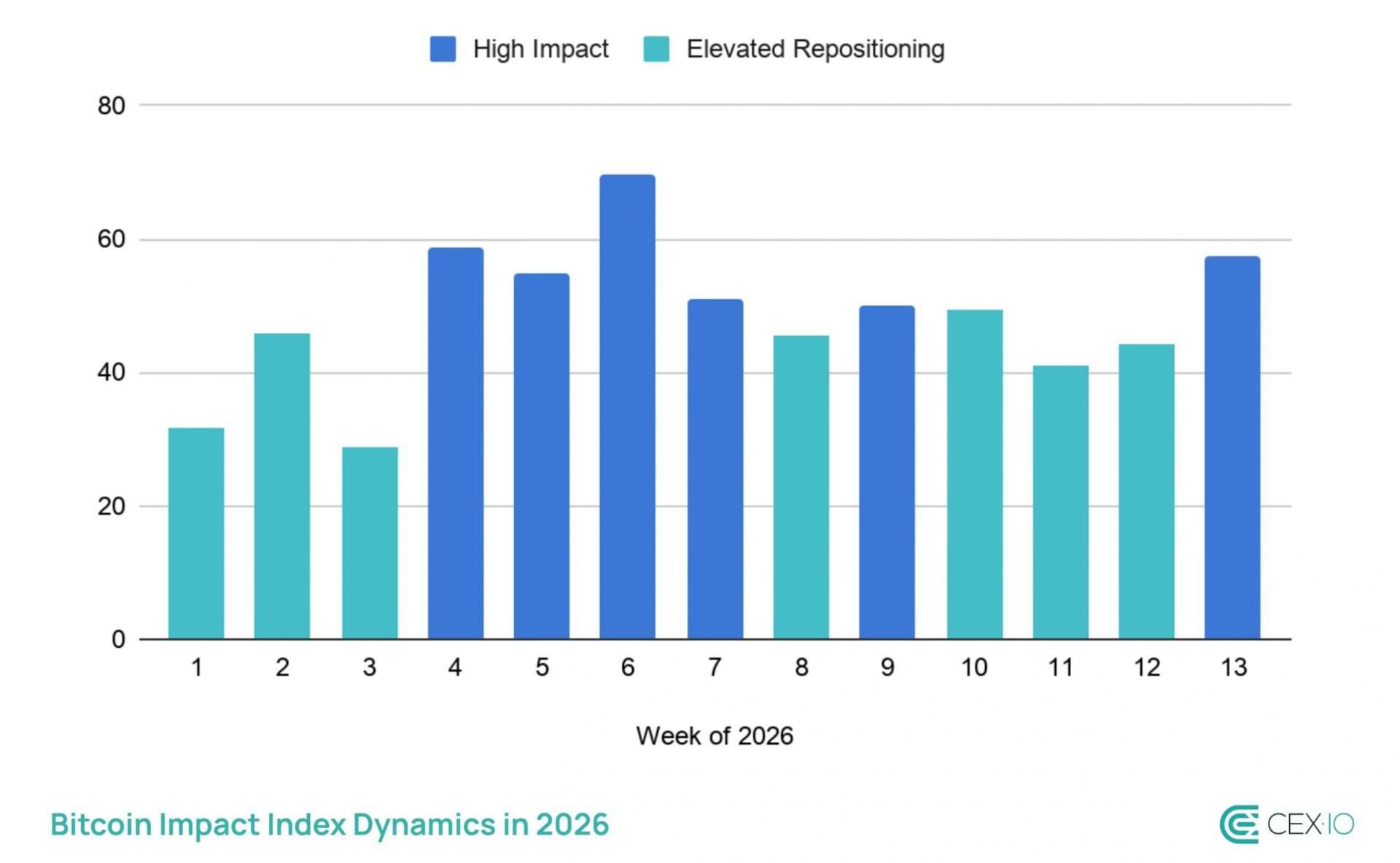
This comprehensive index provides a nuanced view of market pressure across various investor cohorts. It achieves this by meticulously analyzing on-chain behavior, the trading intensity of Bitcoin ETFs and derivatives, and shifts in overall market liquidity. With a maximum potential score of 100, the current reading of 57.4 firmly places the market in the “High Impact” danger zone.
Historically, an entry into this elevated risk territory has served as a potent harbinger of impending “large-scale sell-offs.” Precedent includes significant double-digit market corrections witnessed in 2018, 2022, and even earlier this year, all preceded by similar index warnings.
Long-Term Holders: From Profit-Taking to Pain
Perhaps the most concerning development is the broadening of market pressure to include long-term holders—those who have held their Bitcoin for over six months. Just a week prior, with Bitcoin comfortably above the $70,000 mark, these seasoned investors were actively taking profits. However, the landscape has now dramatically shifted.
The CEX.IO report highlights that approximately 4.6 million Bitcoins held in these long-term wallets, representing roughly 30% of their total holdings, are now underwater. Furthermore, the realized losses recorded by these long-term holders last week—reflecting actual sales at a deficit—have hit their highest level since 2023, signaling a significant erosion of conviction.
This widening divergence between Bitcoin’s price trajectory and underlying on-chain confidence has historically been a critical warning signal. Previous instances in mid-2018 and mid-2022, characterized by similar patterns, were followed by substantial Bitcoin pullbacks exceeding 25%.
Short-Term Holders Face Dire Straits as Capital Momentum Fades
The situation for short-term holders is even more precarious. The report indicates that a staggering 47% of all circulating Bitcoin is currently held at a loss—a level not seen since the peak of market pressure in February this year. This means nearly half of all Bitcoin holders are effectively “trapped” in positions below their entry price.
Compounding the market’s woes, the vital capital momentum that previously buoyed prices is rapidly dissipating. What was once a robust daily average net inflow of $250 million in stablecoins has now dramatically reversed, transforming into a net outflow of $292 million. This shift signals a significant reduction in fresh capital entering the ecosystem. Adding to the selling pressure, even traditional market supporters like Bitcoin ETF issuers and miners have pivoted from accumulation to active selling.
The Last Line of Defense: A Glimmer of Hope?
Despite the pervasive bearish sentiment, the market clings to one crucial psychological and technical barrier. On-chain data has yet to detect the mass transfer of Bitcoin to exchanges—a behavior typically interpreted as a precursor to widespread investor capitulation and a full-blown sell-off. The absence of this critical signal offers a fragile thread of hope, suggesting that while under immense strain, the market has not yet entered its final phase of surrender.
Disclaimer: This article is intended solely for market information purposes. All content and opinions are provided for reference only and do not constitute investment advice. They do not necessarily reflect the views or positions of the author or any affiliated entities. Investors are encouraged to conduct their own due diligence and make independent trading decisions. The author and associated platforms disclaim all responsibility for any direct or indirect losses incurred by investors as a result of their trading activities.