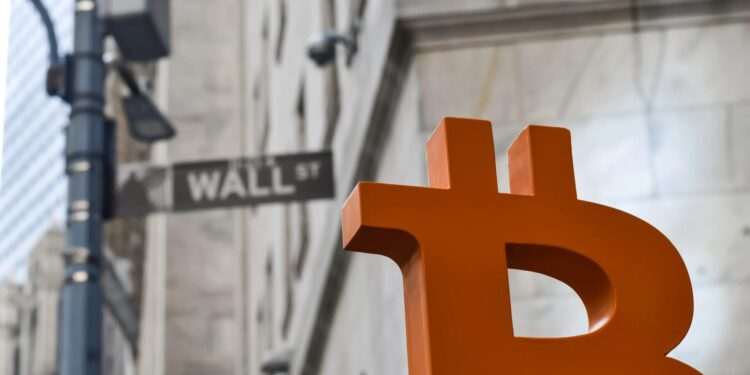
Bitcoin’s Maturation: From Speculative Gamble to Core Asset
For years, the mention of Bitcoin conjured images of extreme volatility – “pump and dump,” “90% crashes from all-time highs.” However, a significant shift is quietly reshaping the market structure. In its current cycle, Bitcoin’s maximum drawdown has been approximately 50%, a notable reduction compared to historical patterns. Analysts suggest this reflects Bitcoin’s evolution from a speculative plaything into a mature asset class.
Jason Fernandes, co-founder and market analyst at crypto investment platform AdLunam, asserts, “Bitcoin’s drawdown narrowing to around 50% is clear evidence of market structure maturation.” He elaborates that as market liquidity deepens and institutional participation grows, the magnitude of Bitcoin’s price swings, both up and down, naturally becomes compressed. Fernandes emphasizes:
At this stage, the market’s focus is no longer on questioning Bitcoin’s legitimacy, but rather on optimizing asset allocation strategies.
Farewell to Extreme Swings, Hello to Moderated Growth
Echoing this sentiment, Zack Wainwright, an analyst at Fidelity Digital Assets, recently shared similar observations on social media. He points out that with increasing market maturity, Bitcoin is “less blindly explosive,” and the probability of extreme downside risks is diminishing.
A look back at Bitcoin’s past reveals several “crypto winters” that were truly harrowing:
- In 2013, after peaking at $1,163, Bitcoin plummeted to $152 by early 2015, an astonishing 87% decline.
- In 2017, following its surge to a $20,000 peak, it crashed to $3,122 within a year, representing an approximate 84% drop.
In stark contrast to these brutal bear markets, while Bitcoin did experience a correction after reaching an estimated all-time high of $126,000 in October 2025 (note: original text says 2025, implying a forward-looking statement or typo for 2021/2024), the severity of this correction has been far less dramatic than in previous cycles.
Zack Wainwright comments, “Each cycle’s upside is milder than the last, and the downside risk is similarly no longer as harrowing.”
However, not all analysts share this optimistic view. Mike McGlone, Senior Commodity Strategist at Bloomberg Intelligence, warns that he believes the “cryptocurrency bubble has burst.” He suggests that if broader risk assets like stocks and commodities experience a widespread sell-off, Bitcoin could still face “mean reversion” (the phenomenon where asset prices tend to return to their historical average over the long term), potentially falling to the $10,000 mark.
In response, Jason Fernandes, who has frequently debated McGlone, counters by highlighting the significant growth in the cryptocurrency market’s scale. With Bitcoin’s market capitalization steadily increasing, the capital required to trigger a 90% crash is now prohibitively large, making the probability of such an extreme collapse exceedingly low.
Furthermore, institutional-grade capital “moats,” ranging from Bitcoin spot ETFs to pension fund exposure, structurally add to the difficulty of large-scale sell-offs.
From High-Risk Bet to Portfolio Optimizer
Another indicator of Bitcoin’s market maturity is evident in how institutional investors approach asset allocation. Jason Fernandes points out that what truly changed institutional attitudes was portfolio data. He states:
If a small allocation of just 1% to 3% can significantly boost portfolio returns, simultaneously improve the Sharpe Ratio (a measure of risk-adjusted return), and not noticeably increase overall drawdown risk, then Bitcoin’s role is no longer merely a single bet, but rather an efficiency enhancement tool within a diversified portfolio.
This repositioning has also altered how institutions evaluate risk. Jason Fernandes explains:
The question now is no longer “Is holding Bitcoin too risky?”, but rather “Is the portfolio missing an opportunity by not allocating to Bitcoin at all?”
Recent research from Fidelity supports this perspective. Over the past decade, Bitcoin has delivered an astounding return of approximately 20,000%, far outpacing U.S. stocks, gold, and bonds. Despite its volatility, its risk-adjusted performance remains unparalleled. The report notes:
Although Bitcoin is a relatively young asset, it has rapidly evolved into a major asset class, claiming the title of best-performing asset in 11 out of the past 15 years.
However, every gain comes with a trade-off. Jason Fernandes reminds investors: “As Bitcoin matures and its volatility converges, the market should also expect its future returns to normalize. The asymmetric, massive surges of earlier years were precisely accompanied by extreme drawdown risks; now that drawdowns are smaller, Bitcoin’s performance will increasingly resemble macro asset allocation rather than venture capital-style high-risk bets.“
In summary, as Bitcoin no longer routinely experiences 80% bloodbaths, and traditional portfolios can benefit from small allocations without excessive risk, this once-wild digital asset is being reborn in a more investable and practical form. For Wall Street and large institutions, this might just be the true turning point for Bitcoin’s entry into the mainstream financial pantheon.
Disclaimer: This article is for market information purposes only. All content and views are for reference only and do not constitute investment advice. They do not represent the views or positions of the author or BlockTempo. Investors should make their own decisions and transactions. The author and BlockTempo will not bear any responsibility for direct or indirect losses incurred by investors’ transactions.