By Kurumi, CryptoCity
Phantom Wallet Suffers Major Outage During Airdrop, Triggering Price and Balance Anomalies
The popular Solana ecosystem wallet, Phantom, experienced an unexpected service disruption on Monday evening, leading to widespread anomalies in token price displays and account balances across the platform. This critical malfunction coincided with a highly anticipated crypto airdrop event, where a surge in transaction demand rapidly exacerbated the issue.
Official statements from Phantom indicated that the outage primarily affected front-end data updates. This prevented users from accurately viewing their real-time asset values, with many reporting alarming displays of drastic price drops or even zero balances. While Phantom assured users that “asset security remained unaffected,” the propagation of incorrect information significantly disrupted market behavior and user confidence.
Users Unable to Trade, Community Demands Full Compensation Amidst Financial Losses
During the service interruption, numerous users reported being unable to execute trades, missing crucial opportunities to react to price fluctuations, and consequently incurring significant paper losses. On social media platforms, some users publicly shared accounts of losing approximately $450 (roughly NT$14,000) within a mere 1.5 hours, fueling widespread panic and frustration within the community.
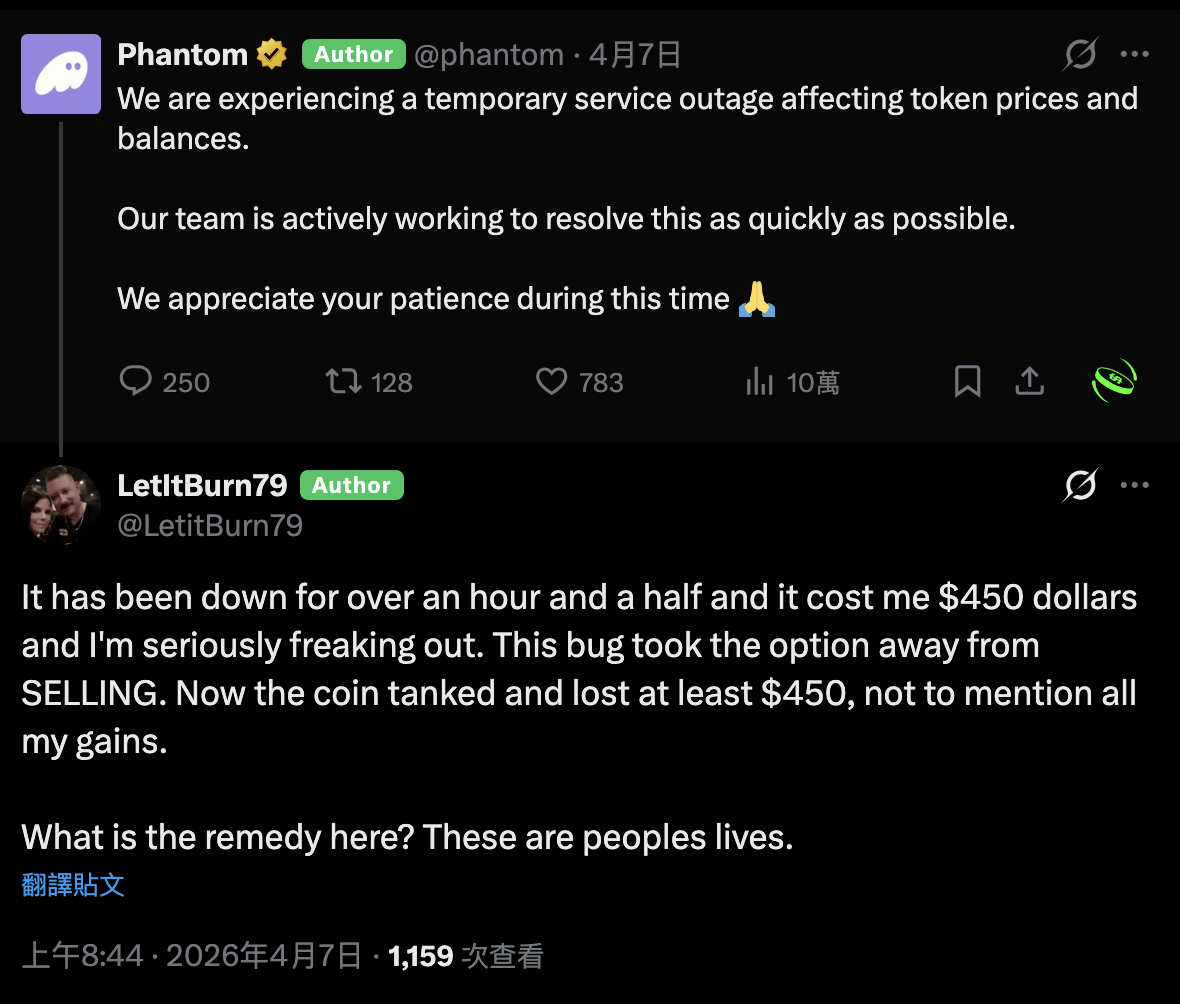
As more instances of financial detriment emerged, a growing chorus of users began publicly demanding a compensation mechanism from Phantom. Critics argue that the platform’s failure to maintain stable operations during a period of high market volatility directly impacted their trading decisions and led to preventable losses.
The incident has also reignited a broader debate within the crypto space: “Should front-end display errors incur responsibility?” This question is particularly pertinent in the realm of DeFi and self-custody wallets, where users are typically expected to bear their own operational risks, leaving the precise boundaries of platform responsibility in a contentious gray area.
Heightened Security Concerns: Phishing Attacks Exploit the Chaos
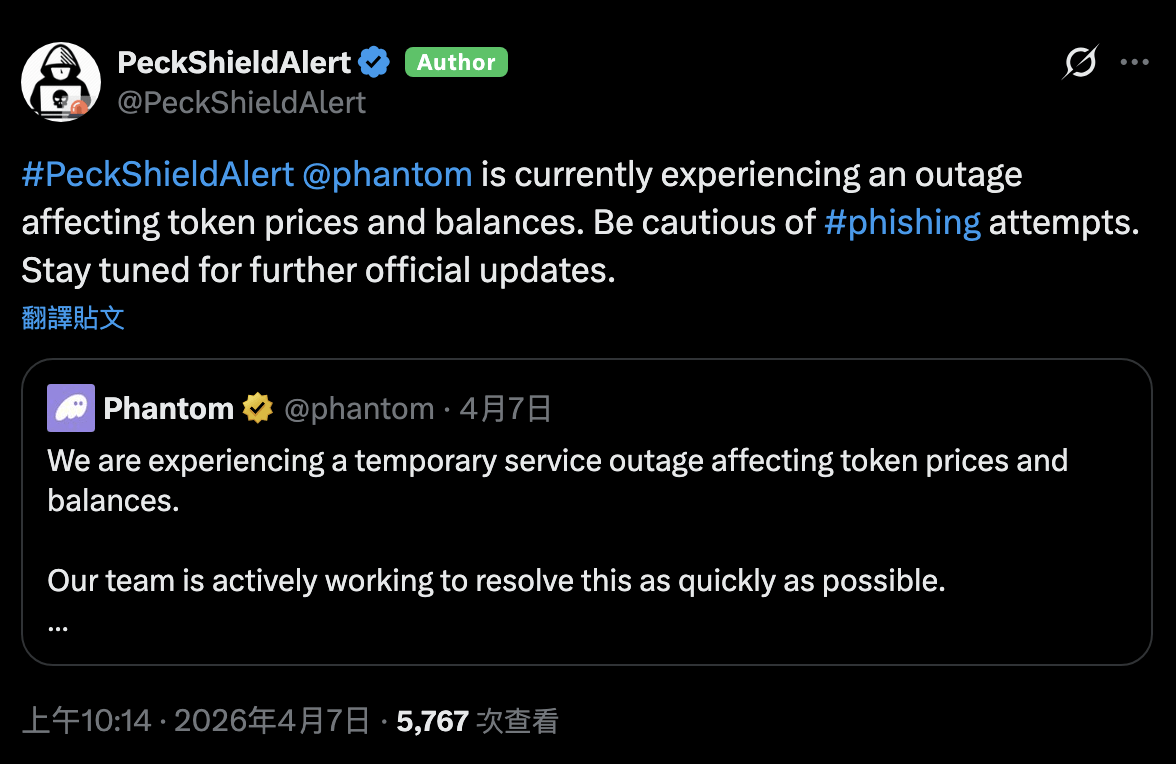
Compounding the service disruption, blockchain security firm PeckShield issued a warning about potential phishing attacks. Malicious actors were observed attempting to exploit the chaotic situation by luring users into connecting to fraudulent websites or signing suspicious transactions.
Previous research has highlighted the “address poisoning” risk associated with Phantom wallets, where attackers send small, fake transactions to confuse users and trick them into sending assets to incorrect addresses. This latest incident has once again amplified these existing security vulnerabilities and underscored the importance of vigilance.
Experts strongly advise users that whenever an application layer exhibits anomalies, they should always cross-verify their asset status using an on-chain explorer. Relying solely on wallet display information for critical transactions, especially during outages, can lead to irreversible losses.
Technical Issue Resolved, But Trust Crisis Looms for Self-Custody Wallets
Phantom swiftly announced the resolution of the technical issue within hours, recommending that any users still experiencing anomalies contact their customer support. While an official cause has not been publicly detailed, industry speculation points towards data integration or API update delays as the likely culprits, rather than a fundamental blockchain malfunction.
Notably, Phantom has faced similar balance display latency issues in the past. This recurring problem suggests that under conditions of high-frequency trading and simultaneous large-scale user operations, the wallet’s front-end infrastructure continues to encounter significant pressure bottlenecks.
This incident vividly illustrates that while self-custody wallets champion user autonomy over assets, they are not immune to challenges in user experience and system stability—issues often associated with centralized exchanges. The critical task ahead for the industry is to find an optimal balance between decentralization and robust reliability, ensuring a seamless and secure experience for all users.
(The above content is excerpted and reproduced with authorization from partner “CryptoCity,” original link)
Disclaimer: This article is for market information purposes only. All content and views are for reference only, do not constitute investment advice, and do not represent the views and positions of Blocktempo. Investors should make their own decisions and trades. The author and Blocktempo will not bear any responsibility for direct or indirect losses resulting from investor transactions.