
Author: Nancy, PANews
The true identity of Satoshi Nakamoto, the enigmatic creator of Bitcoin, remains one of the cryptocurrency world’s most enduring mysteries, captivating enthusiasts and experts for over 17 years. Despite countless theories and a rotating cast of potential candidates—from pioneering cryptographers to tech entrepreneurs—conclusive evidence has consistently eluded public grasp.
Recently, The New York Times reignited this long-standing debate with an extensive, ten-thousand-word investigative report. Employing a multi-faceted analysis of language style, technical pathways, and historical context, the investigation posited Blockstream CEO Adam Back as the most compelling candidate for Satoshi Nakamoto. However, Back swiftly and unequivocally denied these claims, and the industry at large has largely met the report’s arguments with significant skepticism.
Satoshi Nakamoto Identity Reignited: NYT Investigation Focuses on Adam Back
The New York Times investigation, spearheaded by acclaimed journalist John Carreyrou, involved over a year of meticulous research. Carreyrou delved into decades of archives, scoured cypherpunk mailing lists, and analyzed all publicly available texts attributed to Satoshi Nakamoto. Through a rigorous cross-referencing of writing style, technical philosophy, and historical background, he systematically narrowed down a pool of over 34,000 potential individuals, ultimately singling out 55-year-old British cryptographer Adam Back.
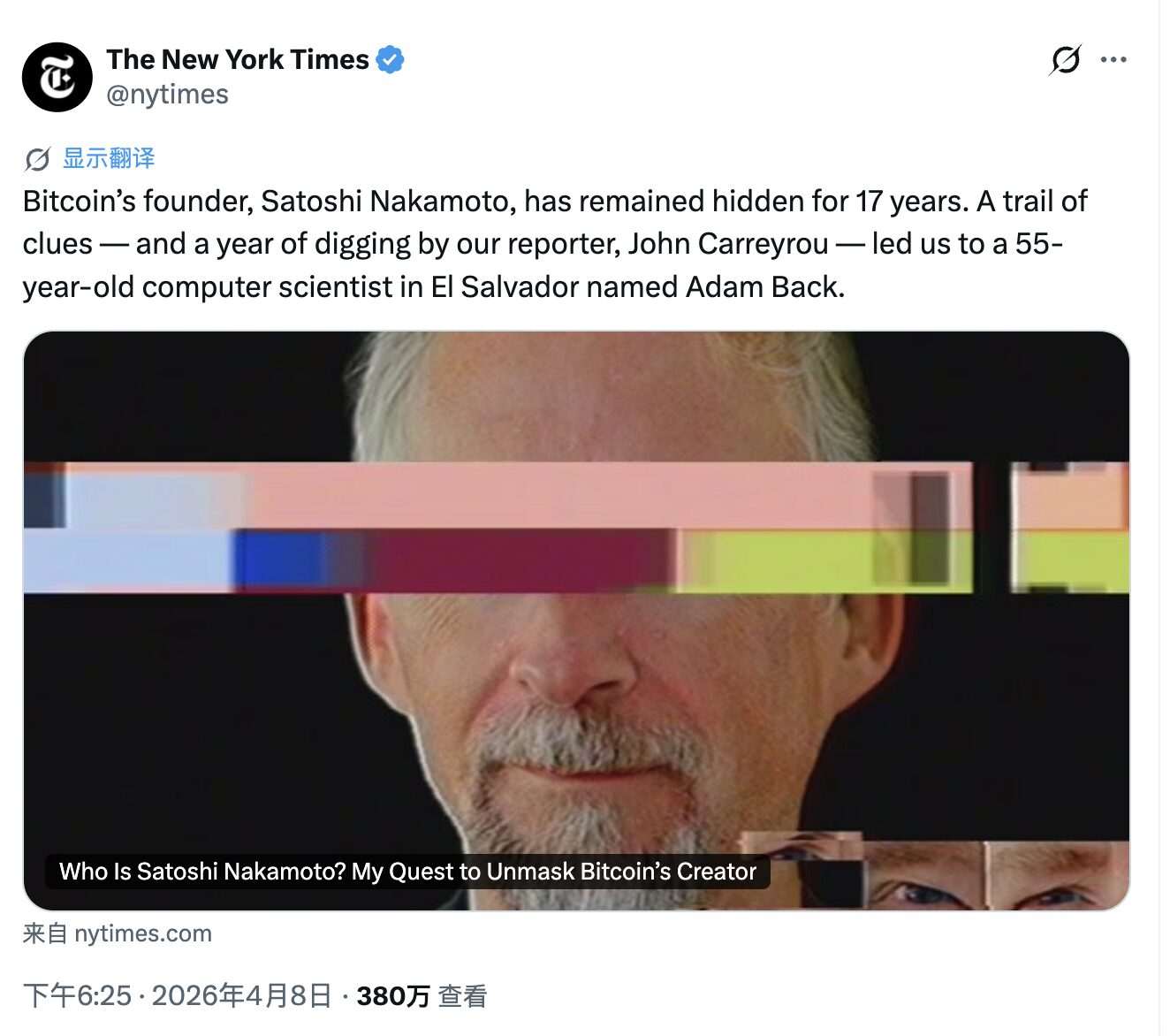
John Carreyrou, a two-time Pulitzer Prize winner, is renowned for his investigative prowess, notably for his deep exposé of the Theranos medical fraud, which he chronicled in the bestselling book “Bad Blood.”
The article suggests that this focus on Back is not without merit, given his extensive background. Back was a pivotal figure among the early cypherpunks, a collective whose intellectual contributions significantly influenced the foundational ideas behind Bitcoin. The famous headline from The Times embedded in Bitcoin’s genesis block has long been interpreted as a subtle hint at the founder’s British ties, a detail that aligns perfectly with Back’s nationality. Crucially, Back has been deeply immersed in discussions surrounding anonymous communication, encryption technology, and digital cash since the 1990s. His robust technical background, programming acumen, and cryptographic expertise demonstrably parallel the sophistication displayed by Satoshi Nakamoto in the Bitcoin white paper and early communications.
From a technical standpoint, Back’s influence is particularly notable. As early as the late 1990s, he proposed a vision for electronic cash on mailing lists that sought to operate independently of traditional banking systems. This concept featured core elements such as a decentralized network, a Proof-of-Work mechanism based on computational puzzles, controlled monetary scarcity, distributed nodes for attack resistance, and a trustless verification system. These components bear striking resemblance to the architecture outlined in the Bitcoin white paper a decade later. Specifically, Back’s invention, the Hashcash mechanism, was directly integrated into Bitcoin as its fundamental mining algorithm. Furthermore, his earlier suggestion to combine Hashcash with Wei Dai’s b-money concept closely mirrors the technical blueprint Satoshi Nakamoto ultimately employed for Bitcoin’s implementation. Based on these profound parallels, Carreyrou posits that Back was not merely a participant but potentially the original architect of Bitcoin.
Ideologically, the investigation highlights a strong alignment between Back and Satoshi Nakamoto. Both were profoundly shaped by cypherpunk principles, advocating for personal privacy and freedom through cryptographic means and leaning towards a libertarian worldview. Their shared critiques of the traditional banking system, which both viewed as ripe for replacement, and their use of technology to voice concerns about financial crises and policy, further underscore this ideological congruence. This convergence makes the “why” behind Bitcoin’s creation a coherent narrative when considering Back.
The most granular evidence presented by the investigation pertains to writing style. Researchers identified numerous similarities in vocabulary, grammar, and even subtle stylistic quirks shared by Back and Satoshi, including the use of specific technical jargon, a blend of British and American spellings, and inconsistent hyphenation. While individual similarities might be coincidental, their collective appearance is compelling. Unique phrasings like the unconventional hyphenation of “proof-of-work” and the rare term “partial pre-image” were used by only a handful within the cryptography community at the time, with Back being one of them. Leveraging AI to perform large-scale analysis across multiple mailing lists, the pool of candidates was progressively narrowed, ultimately leaving only Adam Back.
The timeline analysis further bolstered this hypothesis. Satoshi Nakamoto was active from 2008 to 2011 before abruptly disappearing. Intriguingly, Back showed minimal public engagement in Bitcoin discussions during this period, yet post-2011, he rapidly emerged as a prominent figure within the Bitcoin community. Around 2013, as speculation mounted regarding Satoshi Nakamoto’s substantial Bitcoin holdings, Back was notably active in key forums. Even a pivotal email from 2015, widely interpreted as a “Satoshi Nakamoto comeback” during the block size debate, mirrored Back’s known positions and linguistic style. These circumstantial clues, the report argues, are difficult to dismiss as mere coincidence.
Although Back provided email correspondence with Satoshi Nakamoto as evidence against his identification, the reporter found these exchanges to contain logical inconsistencies. Furthermore, Back reportedly failed to provide crucial email metadata when requested. During a face-to-face interview, Back repeatedly denied being Satoshi, yet struggled to offer coherent explanations for key chronological points, exhibiting a perceived evasiveness. This defensive posture contrasted sharply with his typically confident technical persona. In one instance, when Carreyrou quoted Satoshi’s famous line, “I am better at code than words,” Back’s response reportedly contained a natural, almost self-referential “slip of the tongue,” which the journalist interpreted as an unconscious revelation.
Despite the compelling nature of these findings, the article prudently concludes that these clues, while highly correlative, do not constitute definitive proof. The ultimate, irrefutable confirmation of Satoshi Nakamoto’s identity, it asserts, could only come from a private key signature associated with their known Bitcoin addresses.
Community Skepticism Mounts as Adam Back Reaffirms Denial
Adam Back, a respected cryptographer and pioneer in the Bitcoin space, was quick to address The New York Times’ identity claims with a firm denial.
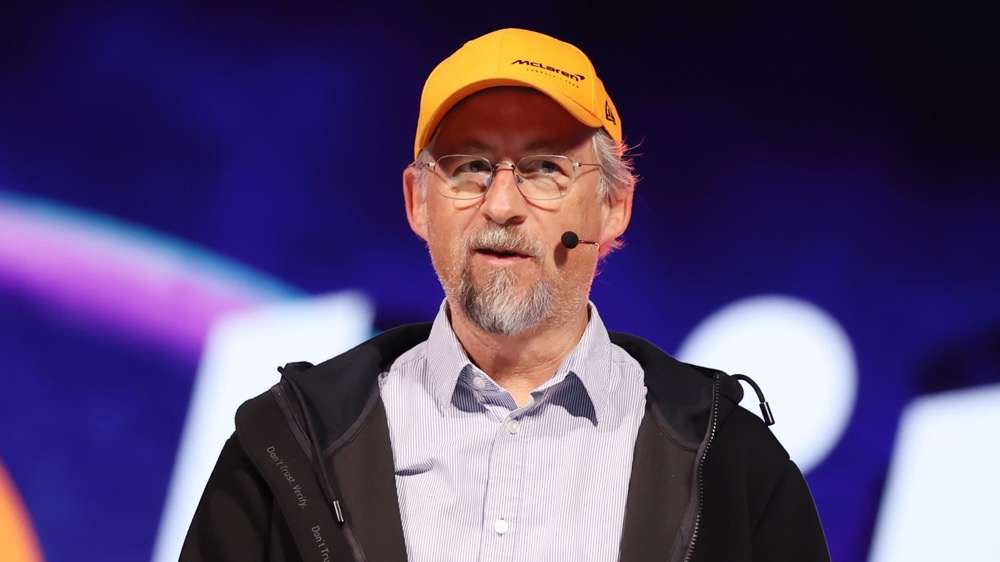
“I am not Satoshi Nakamoto,” Back declared in a public statement. He elaborated that his early and intense interest in cryptography, online privacy, and the societal benefits of electronic cash led him to actively participate in related research and discussions within cypherpunk mailing lists from around 1992. This involvement, he explained, naturally led to the development of Hashcash and other foundational ideas. He acknowledged that numerous early attempts were made to design decentralized electronic cash systems, reflecting a collective pursuit of a Bitcoin-like architecture.
Back further clarified that his prolific activity on cypherpunk mailing lists meant he posted far more frequently than others. This increased his statistical probability of commenting on topics like electronic cash, thereby making it easier for investigators to draw connections between his statements and Satoshi Nakamoto’s, labeling it a mere statistical bias. He attributed other purported evidence to coincidence and the natural use of similar phrasing by individuals with shared experiences and interests.
He also emphasized that the invention of Bitcoin required a unique blend of skills and experience, and while he and many others “came very close to the final solution” in their decade-long design attempts, they ultimately “never touched the core.” Back reiterated that he, too, does not know who Satoshi Nakamoto is, but believes this anonymity is ultimately beneficial for Bitcoin.
This is not Back’s first public denial of such speculation. He has consistently refuted these claims over the years, often explaining Satoshi Nakamoto’s anonymity as a safeguard. He has argued that Bitcoin’s potential to revolutionize money and separate it from state control carried immense risks for its creator. While some nations are now embracing Bitcoin and regulatory frameworks are evolving, its status remains ambiguous or illegal in others, suggesting that early identity exposure could have posed significant dangers, even for core developers.
The New York Times report quickly sparked a wave of debate within the broader crypto community. Jameson Lopp, a prominent Bitcoin core developer, dismissed the stylistic analysis as insufficient, stating that “Satoshi Nakamoto could not be caught by stylistic analysis, and it was shameful to paint such a big target on Adam’s back with such flimsy evidence.”
Crypto financial researcher FatMan took a more critical stance, suggesting Back is a “role-player” who has used “humble self-promotion” to exaggerate his connection to Bitcoin. FatMan argued that Back packaged a “weekend project” like Hashcash as a precursor to Bitcoin to build influence and secure funding. He asserted that Back is not Bitcoin’s true inventor, and Satoshi Nakamoto’s privacy should be respected, not subjected to public speculation or exposure.
Crypto KOL Todd also presented several counter-arguments, including:
- Satoshi Nakamoto genuinely emailed Back for advice when Bitcoin was obscure, making a “double act” unlikely.
- Bitcoin’s codebase, written in C++, exhibits a programming style distinct from Adam Back’s.
- Blockstream, Back’s company, funds Bitcoin core developers, but its commercial endeavors (e.g., sidechains, hardware wallets) seem inconsistent with the profile of someone holding a vast amount of early Bitcoin.
- Back has publicly expressed regret for not participating in early Bitcoin mining and his philosophical leanings are more towards Bitcoin as a store of value, diverging from its initial concept as electronic cash.
- Back has a history of patent applications, whereas Satoshi Nakamoto deliberately chose an entirely open-source approach for Bitcoin.
A History of Failed Identity Reveals and the Enduring Mystery
Satoshi Nakamoto’s anonymity has imbued Bitcoin with a persistent mystique, and the potential ownership and movements of approximately 1.1 million BTC—currently valued at around $77 billion—continue to captivate and occasionally unsettle the market.
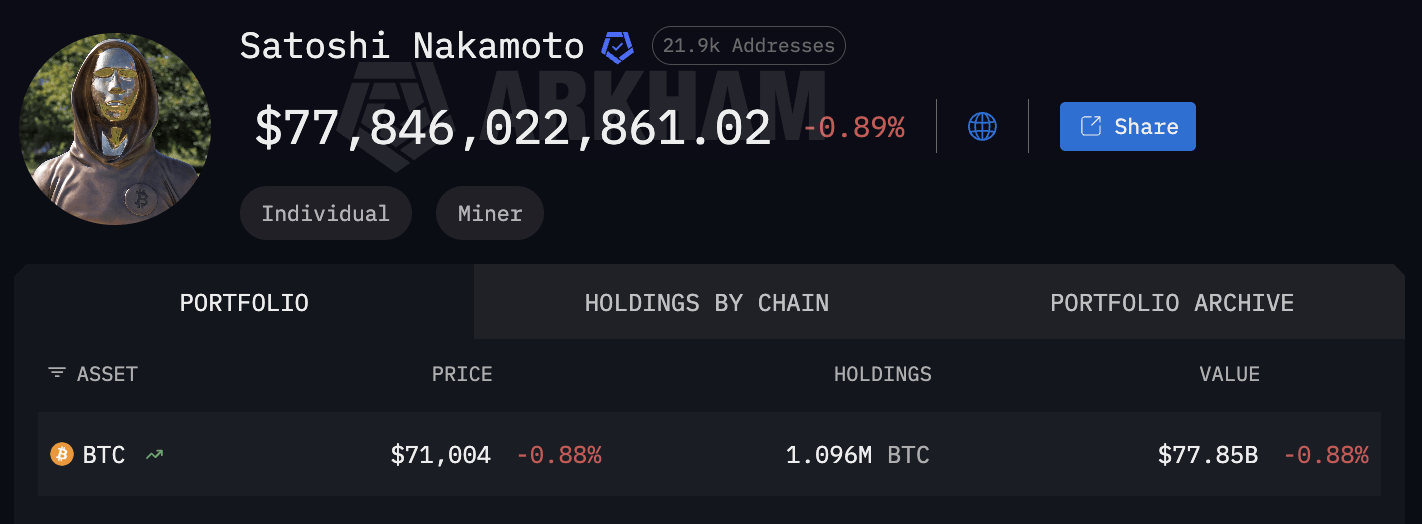
Over the past decade, numerous attempts to unmask this pseudonym have emerged, each generating significant buzz before ultimately falling short.
In 2014, Newsweek magazine famously identified Dorian Nakamoto, a Japanese-American physicist residing in California, as Satoshi. This report garnered widespread attention, but Dorian Nakamoto vehemently denied any involvement in Bitcoin’s creation. Subsequent investigations largely disproved the article, which unfortunately caused considerable personal distress to him.
The most persistent claimant has been Australian computer scientist Craig Wright, who began asserting himself as Satoshi Nakamoto in 2016. He even went so far as to claim copyright over the Bitcoin white paper and its original source code. However, a UK court ultimately ruled against Wright, determining that much of his submitted evidence was fabricated. He was found in contempt of court and, in late 2024, received a 12-month prison sentence, suspended for two years.
More recently, in 2024, the HBO documentary “Money Electric: The Bitcoin Mystery” directed its attention toward Canadian Bitcoin developer Peter Todd, sparking a fresh round of speculation. Todd swiftly refuted these inferences, labeling the accusations as absurd and providing evidence to counter them, even temporarily adopting a lower profile due to security concerns. In the same year, Briton Stephen Mollah also claimed to be Satoshi Nakamoto at a London launch event, but like others, failed to provide any verifiable proof and was quickly dismissed by the community.
While these various attempts to unveil Satoshi Nakamoto’s identity have often created short-term media frenzies, none have ever provided the ironclad evidence needed to definitively solve the puzzle. As time progresses, Satoshi Nakamoto’s anonymity has paradoxically become an integral part of the Bitcoin narrative itself. Today, the Bitcoin network operates as a robust, global system, its immense value derived not from the identity or halo of its founder, but from the decentralized consensus of its worldwide community.
(This content is an authorized excerpt and reproduction from our partner PANews. Original article link)
Disclaimer: This article is for market information purposes only. All content and views are for reference only, do not constitute investment advice, and do not represent the views and positions of BlockTempo. Investors should make their own decisions and trades. The author and BlockTempo will not be liable for any direct or indirect losses incurred by investors’ transactions.