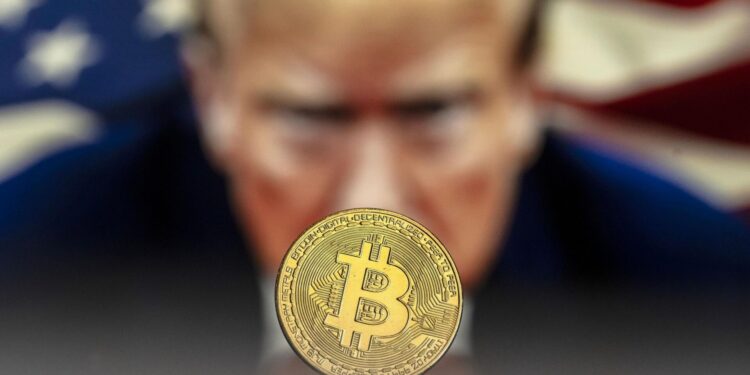
Crypto’s Curious Absence: Trump’s National Security Strategy Overlooks Digital Assets Amidst Proactive Policies
The Trump administration recently unveiled its updated National Security Strategy report, a pivotal document outlining the nation’s core priorities and guiding budget allocation. However, the report contains a striking omission: a complete silence on the topics of cryptocurrency and blockchain technology.
While digital assets were conspicuously absent, the strategy explicitly frames America’s “core and vital national interests” around emerging technologies such as Artificial Intelligence (AI) and Quantum Computing. The document states:
We aim to ensure that American technology and standards – especially in AI, biotechnology, and quantum computing – lead the world forward.
This oversight presents a stark contrast to recent public declarations from the Trump administration. Just last month, during an appearance on CBS’s “60 Minutes,” President Trump voiced his opposition to “letting China be #1 in crypto.” He has also publicly advocated for relocating all Bitcoin mining operations to U.S. soil.
Adding to this narrative, CIA Deputy Director Michael Ellis highlighted in May that cryptocurrency represents “another battleground in the technological competition between nations.” He emphasized the critical need for the U.S. to secure a strong position in this arena to effectively counter China and other global adversaries.
Though cryptocurrency isn’t explicitly named, a particular passage within the report’s financial strategy section might offer a subtle nod to the sector. It mentions the administration’s intent to leverage America’s “leadership in digital finance and innovation” to solidify and expand “U.S. financial dominance,” thereby ensuring market liquidity and security. This phrasing could implicitly encompass the broader digital asset landscape.
Despite its silence within the National Security Strategy, the Trump administration’s practical policy actions throughout the year have been notably supportive and proactive towards the cryptocurrency industry, fostering greater adoption among financial institutions.
Key initiatives include the signing of the “GENIUS Act” into law, which provides a regulatory framework for stablecoins. Furthermore, President Trump established a dedicated cryptocurrency task force, prohibited the Federal Reserve from issuing a Central Bank Digital Currency (CBDC), and oversaw federal agencies scaling back numerous crypto-related enforcement actions.
Beyond policy, the U.S. government has also actively built Bitcoin reserves and cryptocurrency inventories, predominantly from confiscated digital assets. The administration is reportedly exploring “budget-neutral” methods to further expand these holdings.
Disclaimer: This article is provided for market information purposes only. All content and views are for reference only, do not constitute investment advice, and do not represent the views or positions of BlockTempo. Investors should make their own decisions and trades. The author and BlockTempo will not bear any responsibility for direct or indirect losses resulting from investor transactions.