US Regulators Usher in New Era: Ripple, Circle, and Three Other Crypto Giants Granted Federal Trust Bank Charters
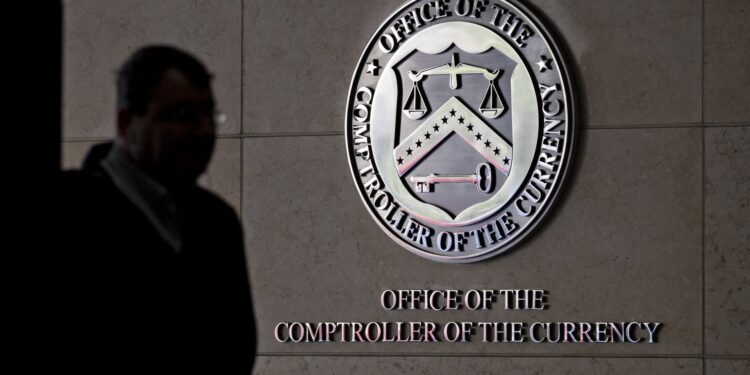
In a landmark decision poised to reshape the digital asset landscape, the U.S. Office of the Comptroller of the Currency (OCC) announced on December 12 that five prominent digital asset companies, including Ripple and Circle, have received conditional approval to operate as federally chartered trust banks. This pivotal move is widely hailed as a significant step towards integrating USD stablecoin issuers into the mainstream federal regulatory framework.
Paving the Way for Institutionalization
The esteemed list of companies granted this conditional approval comprises industry heavyweights: Ripple, Circle, BitGo, Fidelity Digital Assets, and Paxos. Historically, many of these firms have primarily operated under state-level regulatory oversight. Their transition to “conditional federal chartered trust banks” marks a crucial milestone, effectively paving the way for cryptocurrency finance to achieve broader institutionalization and mainstream adoption within the U.S. financial system.
OCC Comptroller Jonathan Gould underscored the agency’s forward-looking vision in a statement, emphasizing that the OCC remains committed to “providing institutional pathways that allow traditional and innovative finance to coexist.” This approach, he added, ensures that the federal banking system evolves in tandem with financial advancements, thereby robustly supporting the modern economy’s development.
Understanding the Federal Trust Bank Charter
The conditional nature of these approvals means that the five entities must successfully meet stringent regulatory requirements to secure permanent federal trust bank qualifications. Once fully approved, they will join an exclusive group of approximately 60 institutions currently holding such charters.
A federal trust bank license empowers these firms to engage in fiduciary activities, including critical services like digital asset custody. However, it’s important to note that this charter does not extend to offering comprehensive deposit and lending services typically associated with traditional commercial banks.
Industry Leaders React with Enthusiasm
Ripple’s Bold Stance
Brad Garlinghouse, CEO of Ripple, wasted no time in hailing the OCC’s decision as “HUGE news” on social media platform X. He specifically highlighted its significance as a critical milestone for the development of Ripple’s RLUSD stablecoin, which boasts a market capitalization of approximately $1.3 billion.
HUGE news! @Ripple just received conditional approval from the @USOCC to charter Ripple National Trust Bank. This is a massive step forward – first for $RLUSD, setting the highest standard for stablecoin compliance with both federal (OCC) & state (NYDFS) oversight.
To the…
— Brad Garlinghouse (@bgarlinghouse) December 12, 2025
Garlinghouse didn’t shy away from critiquing what he termed the “anti-competitive strategies” of certain traditional banking factions:
“You’ve been complaining that crypto doesn’t play by the same rules, but now the crypto industry is directly subject to OCC regulation and standards — prioritizing compliance, trust, and innovation for the benefit of consumers. What are you so afraid of?”
Circle Strengthens USDC Oversight
Circle, the issuer of the USDC stablecoin (with a circulating market capitalization of approximately $78 billion), emphasized that obtaining federal trust bank status will significantly enhance the security and regulatory oversight of USDC’s reserve assets. This new status will also empower Circle to provide a broader range of digital asset custody and related fiduciary services to its institutional clientele.
Paxos Champions Regulatory Clarity
Paxos, responsible for issuing PYUSD (PayPal’s stablecoin, valued at around $3.8 billion) and Global Dollar (USDG, with a market cap of approximately $1.4 billion), highlighted the benefits of a federal regulatory platform. The company stated that this environment would enable businesses to issue, custody, trade, and settle digital assets within a clearer, more predictable regulatory framework. Paxos has a history of proactive compliance, having secured a New York State Department of Financial Services (NYDFS) license in 2015 and applying for a federal charter in 2020.
BitGo Declares “End of the Crypto War”
Mike Belshe, CEO of BitGo, described the development in strong terms, proclaiming it “marks the official end of the war against cryptocurrency” and signals a new chapter for banking innovation. Belshe asserted that the U.S. has formally entered a phase of “regulatory integration,” anticipating an acceleration of institutional improvements moving forward.
Notably, BitGo also serves as the issuer of USD1, a stablecoin under World Liberty Financial, a project widely understood to have close ties to the Trump family.
The End of the “Debanking” Era
For an extended period, the U.S. cryptocurrency industry has grappled with the pervasive issue of “debanking,” where numerous operators and executives reported systematic service termination by large banks. This new regulatory clarity arrives amidst a broader policy shift.
Since taking office, the current administration has repeatedly signaled its intent to reverse regulatory policies previously deemed unfavorable to the cryptocurrency sector. Adding weight to this stance, the OCC recently released a “debanking” investigation report. This report directly implicated the top nine largest U.S. banks in such practices and issued a stern warning that cutting off banking services for legitimate business clients without proper justification could lead to severe penalties.
This collective move by the OCC and the positive reception from industry leaders signal a transformative period for digital assets, promising greater stability, legitimacy, and integration into the global financial system.
Disclaimer: This article provides market information for reference only. All content and views expressed are for informational purposes and do not constitute investment advice. They do not represent the views or positions of the author or BlockBeats. Investors should make their own decisions and trades, and the author and BlockBeats will not bear any responsibility for direct or indirect losses incurred by investors’ transactions.