Author: Max, CryptoCity
Kevin Warsh Confirmed as Fed Governor, Poised to Reshape Monetary Policy
A significant shift is on the horizon for the U.S. political and financial landscape in May 2026. The U.S. Senate, in a decisive 51-45 vote on Tuesday, officially confirmed Kevin Warsh as a member of the Federal Reserve (Fed) Board of Governors. This crucial development paves the final stretch for Warsh to potentially succeed current Chair Jerome Powell.
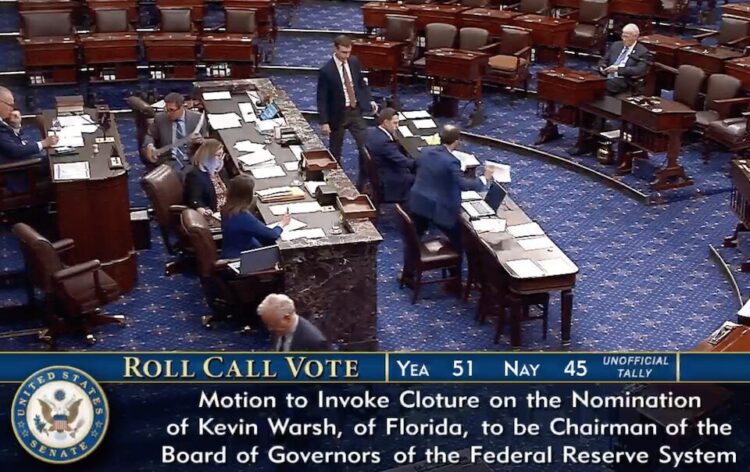
Warsh is set to embark on a formidable 14-year term as a Governor, commencing in February 2026 and extending through 2040. The confirmation vote, notably partisan, saw full support from the Republican majority, with only Pennsylvania Senator John Fetterman breaking ranks from the Democratic side to cast a “yes” vote. This outcome departs from the traditional bipartisan consensus typically seen in Fed Chair nominations.
With Chair Powell’s four-year term concluding this Friday, the Senate is anticipated to proceed with a separate confirmation vote for Warsh as Chair on Wednesday. Given the current strategy of Senate Majority Leader John Thune, Warsh’s confirmation as Chair appears highly probable. While Powell is slated to step down from the chairmanship, he has indicated his intention to remain on the Board of Governors until 2028. His rationale is to uphold organizational stability and independence amidst a Department of Justice investigation into the Fed headquarters’ renovation project. This rare scenario of “two generations of Chairs” coexisting introduces complex political dynamics into the future implementation of U.S. monetary policy.
Warsh’s Deep Crypto Ties Take Center Stage, Viewing Bitcoin as a Policy Barometer
In stark contrast to past Federal Reserve officials who harbored skepticism towards digital assets, Warsh’s extensive connections within the cryptocurrency industry have garnered significant market attention. According to his financial disclosure report submitted to the Office of Government Ethics, Warsh commands a substantial fortune exceeding $100 million, with a portfolio that includes numerous Web3-related investments.
These holdings encompass a diverse range of projects, including the prediction market platform Polymarket, blockchain infrastructure company Tenderly, and Bitcoin payment startup Flashnet. Furthermore, he holds equity stakes in digital asset management firm Bitwise and the stablecoin initiative Basis. Warsh has pledged to divest these assets upon officially assuming his role, but his openly favorable stance on cryptocurrencies is an undeniable fact.
- Related News: The Most Crypto-Savvy Fed Chair? Kevin Warsh’s “Dozens of Crypto Company” Holdings Revealed
Warsh has publicly lauded Bitcoin as a transformative technology, going so far as to describe it as an “excellent policeman for financial policy.”
He posits that Bitcoin’s price fluctuations serve as a reliable indicator of market confidence in the Federal Reserve’s management of inflation and monetary credibility.
During his Senate Banking Committee hearing, Warsh emphasized that cryptocurrencies have deeply permeated the fabric of the U.S. financial system, asserting that they are an integral part of the broader financial services industry, rather than merely a marginalized speculative tool.
Rate Cut Expectations Collapse Amid Inflation Fears and Hawkish Resurgence
Despite persistent pressure from President Trump for aggressive interest rate cuts to stimulate the economy, Warsh’s ascendance has sent market expectations for looser monetary policy plummeting. Throughout his tenure as a Governor, Warsh earned a reputation as a hawk, consistently prioritizing inflation risks. While he reiterated his commitment to the Fed’s independence in recent hearings, he also voiced concerns regarding the rapidly expanding balance sheet and an overly accommodative interest rate environment.
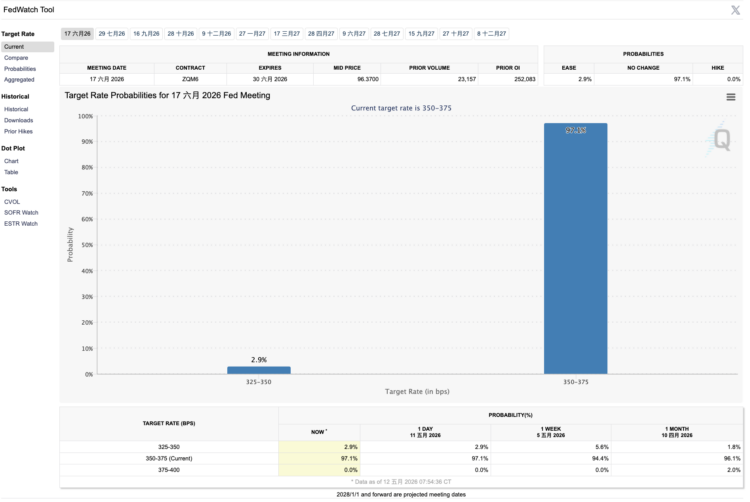
Consequently, the CME FedWatch Tool now reflects a drastic reduction in traders’ expectations for rate cuts in 2026 and 2027. The market currently anticipates interest rates to remain within the 3.5% to 3.75% range, with only a marginal 2.9% predicting any rate reductions.
Compounding this anxiety are recent economic data. The U.S. April Consumer Price Index (CPI) climbed to an annual rate of 3.8%, exceeding market forecasts of 3.7% and marking a three-year high. This, coupled with escalating tensions between the U.S. and Iran, has kept oil prices elevated, with the risk of a prolonged closure of the Strait of Hormuz sounding alarms for energy inflation.
Under this macroeconomic pressure, both Bitcoin and gold surrendered recent gains. Bitcoin’s price fell over 1.5% following the news, dipping below $80,900 from its daily high of $82,098. Gold and silver also experienced declines of 0.7% and 2% respectively, reflecting investors’ deepening fear of a prolonged high-interest rate environment.
Crucial Regulatory Phase: Web3’s Future Under Warsh’s Leadership
Warsh’s tenure coincides with a critical juncture for cryptocurrency regulation in the United States. The Senate Banking Committee is scheduled to deliberate on the “Digital Asset Market Clarity Act” (CLARITY Act) this Thursday. This comprehensive 309-page draft legislation aims to delineate the jurisdictional boundaries between the Securities and Exchange Commission (SEC) and the Commodity Futures Trading Commission (CFTC), and includes amendments prohibiting stablecoin yields.
- Related News: 2026 CLARITY Act Latest Summary: Key Points Including Registration Exemptions and Prevention of Passive Stablecoin Yields
While the bill faces considerable opposition from labor organizations and the traditional banking sector, there is a widespread market belief that a Federal Reserve Chair with a deep understanding of cryptocurrency technology will be instrumental in accelerating the research and implementation of stablecoin regulatory frameworks and digital payment systems.
Warsh will confront the formidable challenge of balancing political pressures with the imperative of economic stability. Ray Dalio, founder of Bridgewater Associates, recently observed that Bitcoin, due to its lack of privacy, currently struggles to fulfill its core role as a safe-haven asset, making it unlikely for central banks to hold significant quantities in the short term.
However, Warsh’s perspective that AI-driven productivity enhancements could offset inflationary pressures might emerge as a new argument in his future interest rate policy decisions. As Kevin Warsh officially takes his place at the Federal Reserve, global financial markets are holding their breath, eager to observe how this crypto-minded new leader will reshape the dollar’s status and the future trajectory of monetary policy.