
Mt. Gox Stirs Market with Massive Bitcoin Transfer, Fueling Repayment Hopes
As Bitcoin dipped below the critical $70,000 threshold, the long-dormant Mt. Gox, once the world’s largest cryptocurrency exchange, has once again made a significant move, transferring a substantial amount of its Bitcoin holdings. This activity, observed earlier this week, has sent ripples through the crypto community, sparking intense speculation about the imminent commencement of a new round of creditor repayments.
On-chain data, meticulously tracked by Arkham Intelligence, reveals that on Tuesday, Mt. Gox moved over 10,000 Bitcoins, valued at approximately $739 million at the time of transfer. Specifically, 10,306 BTC (worth $730.8 million) were shifted from a cold storage wallet to an unlabelled address identified as “14FE…c9eq.” Concurrently, an additional 116.3 BTC were transferred to a Mt. Gox hot wallet.
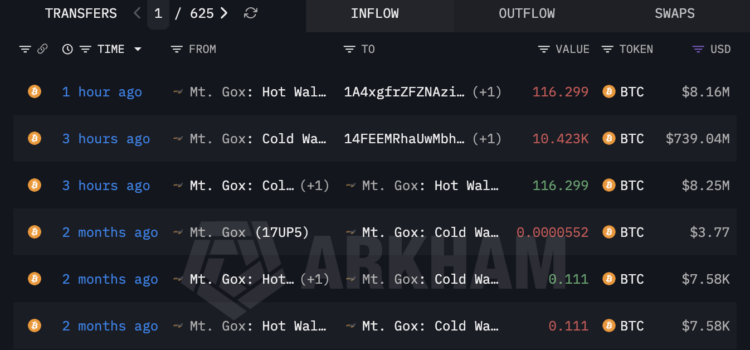
As of the time of reporting, these substantial Bitcoin holdings have not been further distributed. This latest movement has garnered significant attention, primarily because historical precedents show that Mt. Gox’s previous large-scale transfers have consistently preceded or been directly linked to its ongoing compensation processes for thousands of aggrieved creditors.
According to Arkham Intelligence, Mt. Gox’s wallets currently retain a considerable balance of 34,504 Bitcoins, with an estimated market value of approximately $2.43 billion, highlighting the sheer scale of the assets still under its control.
The Long Road to Repayment: A Decade of Waiting
The saga of Mt. Gox dates back to 2014 when the Tokyo-based exchange, then dominating the global Bitcoin trading volume, declared bankruptcy after claiming to have lost around 850,000 Bitcoins due to a devastating hack. This catastrophic event plunged tens of thousands of users into a protracted and often frustrating wait for justice and restitution.
After years of legal battles and administrative hurdles, Mt. Gox finally initiated its long-awaited fund repayment operations in July 2024. However, the process has been notoriously slow, drawing criticism from creditors eager to recover their lost assets.
Adding to the delays, last October saw the repayment deadline extended by another year, pushing it to October 31, 2026. The official statement attributed this extension to the fact that “many creditors have not yet completed the necessary withdrawal procedures,” significantly impacting the overall progress of the repayment efforts.
Disclaimer: This article is intended solely for the purpose of providing market information. All content and views are for reference only, do not constitute investment advice, and do not represent the opinions and positions of the author or publisher. Investors should make their own decisions and transactions. The author and publisher will not bear any responsibility for direct or indirect losses incurred by investors’ transactions.




