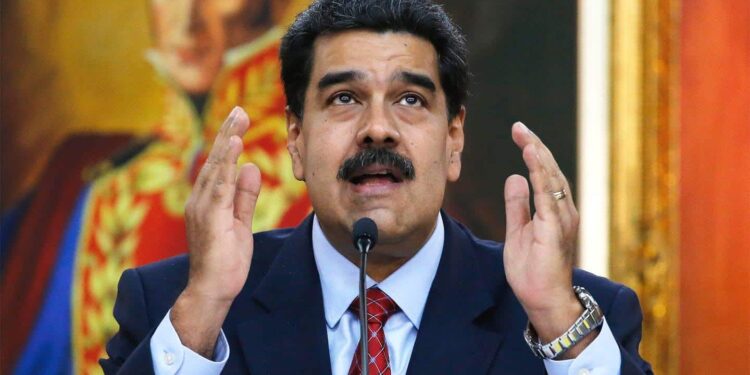
The recent actions by US President Donald Trump to apprehend Venezuelan President Nicolás Maduro have inadvertently brought to light a long-rumored “secret Bitcoin vault” belonging to the South American nation. Intelligence reports indicate that the Maduro regime, through years of clandestine operations, amassed a staggering “shadow reserve” of 600,000 to 660,000 Bitcoins, estimated to be worth between $60 billion and $67 billion.
This astonishing discovery not only catapults Venezuela into the ranks of the world’s leading Bitcoin holders but also places its holdings on par with those of institutional giants like BlackRock and Strategy. The ultimate fate of this invisible mountain of wealth is now poised to significantly influence Bitcoin’s supply-demand dynamics and overall market sentiment.

Unmasking Venezuela’s Covert Bitcoin Accumulation
According to sources cited by Whale Hunting, Venezuela’s “state-level Bitcoin hoarding program” commenced in 2018. The regime employed a multi-pronged approach to accumulate its digital treasure, primarily through “gold-for-Bitcoin exchanges,” settling oil exports with USDT, and seizing domestic mining operations.
Gold-for-Bitcoin Swaps (2018 – 2020)
It is reported that Venezuela exported tens of tons of gold from the Orinoco Mining Arc. Approximately $2 billion of these proceeds were converted into Bitcoin at an average price of $5,000 per coin. Today, this portion of the reserve alone has swelled in value to an estimated $36 billion.
Oil Exports Settled in USDT (2023 – 2025)
Following the failure of Venezuela’s national cryptocurrency, the “Petro,” the Maduro regime mandated that the state-owned oil company, PDVSA, settle crude oil export payments in USDT. To circumvent the risk of frozen accounts and reduce exposure to the US dollar, these stablecoins were subsequently “washed” and converted into Bitcoin.
Coupled with the confiscation of Bitcoin from illicit domestic mining operations, Venezuela’s total Bitcoin holdings are estimated to exceed 600,000 coins, representing approximately 3% of Bitcoin’s current circulating supply.
Geopolitical Implications and Market Impact
The sheer scale of Venezuela’s “shadow vault” is impossible to ignore. For context, in 2024, Germany’s sale of just 50,000 Bitcoins (then valued at roughly $3 billion) triggered a significant 15% to 20% market correction.
The critical question now revolves around how the US authorities will handle these seized assets, a topic that has become a focal point for market observers. Sources suggest three primary possibilities:
- Frozen due to ongoing legal proceedings.
- Incorporated into the United States’ strategic Bitcoin reserves.
- Auction liquidation (considered less probable).
Most analysts believe the first two scenarios are the most viable. Both freezing the assets or nationalizing them would mean these Bitcoins would not enter the open market for the next 5 to 10 years. This effective locking of supply would, paradoxically, constitute a bullish narrative for Bitcoin and major institutional holders like Strategy.
Bitcoin’s Lifeline in Venezuela: Beyond Government Hoarding
Venezuela’s reliance on Bitcoin extends far beyond government coffers, permeating deeply into civilian life. Amidst crippling hyperinflation, stringent US sanctions, and the collapse of the national fiat currency, the Bolívar, cryptocurrencies have become a widely adopted tool for the populace.
By the end of 2025, an estimated 10% of everyday consumer payments and nearly 40% of peer-to-peer transfers within Venezuela utilized cryptocurrencies. Furthermore, stablecoin remittances accounted for 10% of all overseas funds flowing into the country.
According to Chainalysis, Venezuela ranks 17th globally in cryptocurrency adoption, placing it among the leading nations in Latin America.
The Future: A Strategic Reserve or a Lingering Enigma?
With the potential downfall of Maduro, a pro-US transitional government could usher in policy shifts, including easing mining restrictions or even pushing for cryptocurrency legalization. However, until the private keys are surrendered and legal ownership is unequivocally clarified, these 600,000 Bitcoins effectively remain in a “locked” state.
What began as a rogue state’s covert hoarding operation could, by a twist of fate, inadvertently lead to the creation of the largest strategic Bitcoin reserve in history. Should the United States successfully take control and freeze these assets, 2026 could witness a historic restructuring of Bitcoin’s global supply and liquidity, marking one of the most dramatic chapters in financial history.
Disclaimer: This article is provided for market information purposes only. All content and opinions are for reference only, do not constitute investment advice, and do not represent the views and positions of the author or BlockBeats. Investors should make their own decisions and trades, and the author and BlockBeats will not bear any responsibility for direct or indirect losses incurred by investors’ transactions.