In the dynamic and often volatile world of decentralized finance (DeFi), where high leverage and true decentralization are paramount, one platform is unequivocally asserting its dominance: Hyperliquid. This specialized decentralized exchange (DEX) for perpetual contracts is not just leading the pack; it’s creating a significant chasm between itself and its competitors. While platforms like Aster and Lighter grapple with the challenge of converting fleeting “airdrop hype” into sustained trading activity, Hyperliquid is demonstrating a robust, long-term appeal to serious traders.
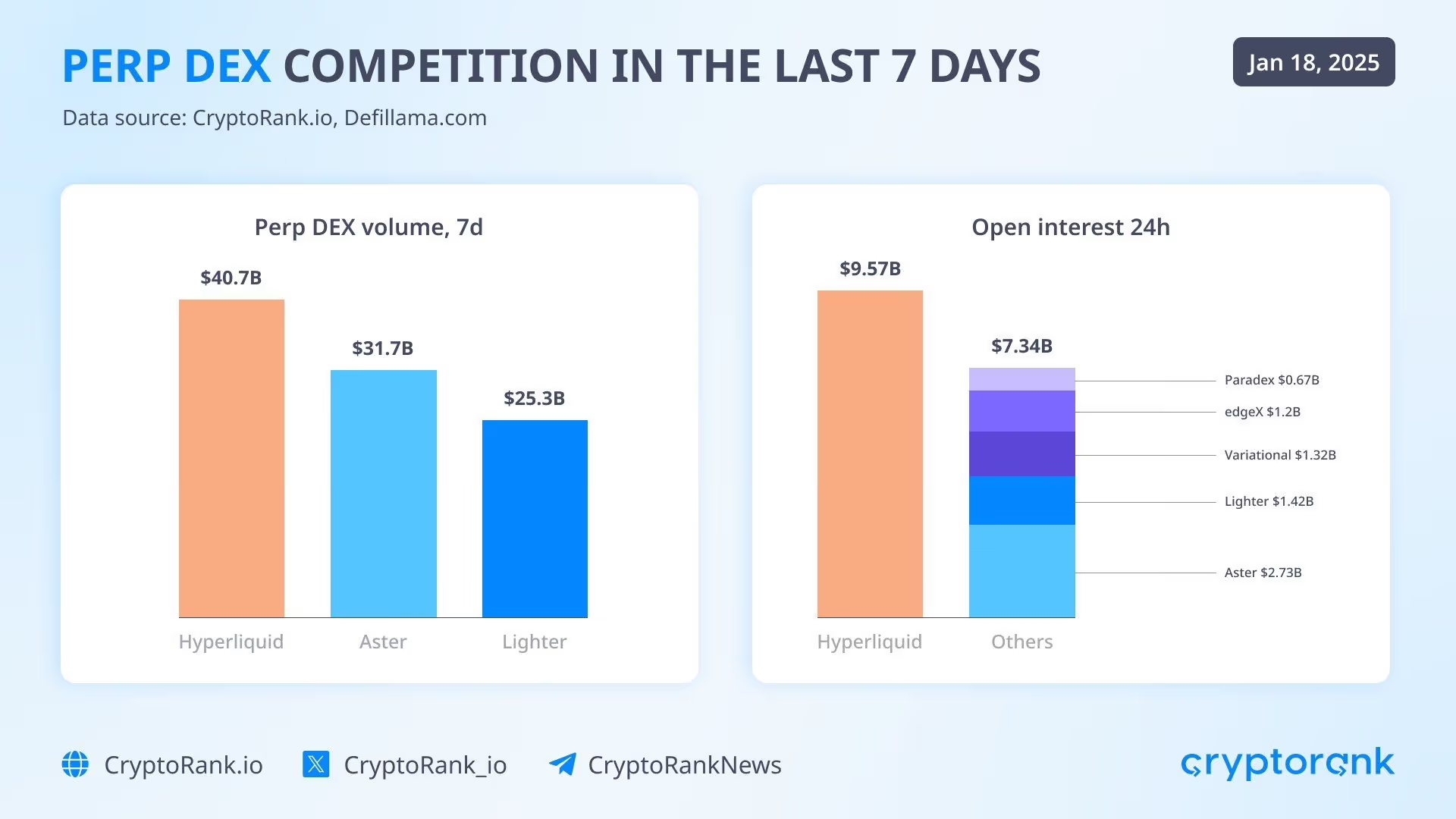
The numbers speak volumes. According to comprehensive data from CryptoRank and DefiLlama, Hyperliquid’s perpetual contract trading volume soared to an impressive $40.7 billion over the past seven days. This figure comfortably eclipses Aster’s $31.7 billion and Lighter’s $25.3 billion, signaling Hyperliquid’s strong market presence.
Beyond Volume: The True Measure of Commitment – Open Interest
While trading volume indicates activity, the real litmus test for a perpetual contract platform’s health and trader confidence lies in “Open Interest.” This crucial metric reflects the total value of outstanding perpetual contracts that have not yet been settled, serving as a powerful indicator of traders’ willingness to “stake risk” rather than merely “farm volume” for short-term incentives.
Here, Hyperliquid’s leadership becomes even more pronounced. In the past 24 hours, Hyperliquid boasted an Open Interest of $9.57 billion. In stark contrast, the combined Open Interest of several other prominent DEXs – including Aster, Lighter, Variational, edgeX, and Paradex – amounted to only approximately $7.34 billion. This significant asymmetry underscores Hyperliquid’s position as a genuine hub for committed risk-takers, not just a temporary stop for reward chasers.
The Fading Allure of Airdrop-Driven Hype
The divergence in performance becomes even clearer when examining platforms that heavily rely on reward mechanisms. Lighter, for instance, experienced a dramatic surge in trading volume leading up to its December airdrop last year. However, once the token distribution concluded, market enthusiasm rapidly evaporated. Its weekly trading volume plummeted by nearly three-fold from its December peak of $600 million. This pattern starkly illustrates a critical vulnerability: liquidity tends to recede as quickly as it arrived once token incentives diminish or are fully realized.
Industry Voices Echo Concerns Over Unsustainable Incentives
This phenomenon has not gone unnoticed by industry veterans. Stephan Lutz, CEO of BitMEX, previously articulated a pertinent warning at the Token2049 summit. He cautioned that many perpetual contract DEXs are overly reliant on reward mechanisms, making it exceedingly difficult to retain liquidity once these incentives normalize. Lutz incisively compared token incentives to “paying for advertising” – capable of generating a transient burst of traffic, but ultimately failing to cultivate a loyal base of traders willing to assume long-term risk.
The Token Paradox: Utility vs. Investment Value
Despite Hyperliquid’s undeniable operational triumphs and clear market leadership, the price performance of its native HYPE token has yet to mirror this success. This disconnect highlights a broader market skepticism concerning DeFi protocols’ token issuance models, value accrual mechanisms, and their long-term economic viability.
The market appears to be drawing a distinct line between a platform’s inherent utility and the investment value of its associated token. While Hyperliquid has decisively won the battle for market share, trading volume, and leverage, the critical question remains: can it successfully translate this dominant operational advantage into sustainable, long-term economic gains for its token holders? Only time will tell if Hyperliquid can bridge this gap and solidify its position not just as a trading powerhouse, but also as a compelling investment proposition.
Disclaimer: This article is intended solely for the purpose of providing market information. All content and views expressed herein are for reference only and do not constitute investment advice. This article does not represent the views or positions of Blockcast. Investors are advised to make their own decisions and conduct their own trades. The author and Blockcast will not bear any responsibility for direct or indirect losses incurred by investors as a result of their transactions.