By Peggy and Lin Wanwan, BlockBeats
Tether’s Bold Bet: USAT and the Quest for US Regulatory Legitimacy
For a decade, Tether’s USDT has reigned as the cryptocurrency market’s most stable asset, a ubiquitous, $170 billion “de facto dollar” that operates without official U.S. government backing. Yet, its very success has amplified an inherent vulnerability: the absence of a U.S. identity has made it an offshore “shadow empire,” perpetually navigating regulatory ambiguities.
While competitors like Circle pursued trust bank licenses, Paxos built global clearing networks, and financial giants like Visa and Mastercard explored stablecoin settlements, Tether remained largely outside the traditional regulatory spotlight. This changed dramatically in September 2025, when Tether, the parent company of USDT, unveiled its audacious answer to its identity crisis: USAT. This marks Tether’s inaugural attempt to secure the long-missing U.S. regulatory imprimatur.
Simultaneously, Tether announced the appointment of Bo Hines, a 29-year-old former White House advisor, as USAT’s CEO. Once a star wide receiver for Yale, Hines now finds himself at the forefront of global finance’s most sensitive battleground, tasked with establishing Tether’s legitimate presence in the United States.
Hines’s transition was far from coincidental. In January 2025, his name appeared prominently on the executive director list of the newly formed Presidential Digital Asset Advisory Committee. At just 28, he played a pivotal role in advancing the “GENIUS Act,” a foundational piece of U.S. stablecoin regulatory legislation. Months later, he departed the White House to join Tether, embracing the formidable challenge of expanding its footprint in the U.S. market.
This move signals a profound strategic shift for Tether: a deliberate attempt to embed itself within the U.S. political and regulatory ecosystem. Hines’s arrival is both a powerful lobbying asset in Washington and a crucial step in reshaping Tether’s “shadow empire” image.
However, Hines’s appointment is merely the initial gambit. The true potential for USAT to shed its “offshore dollar clone” perception lies in a meticulously crafted compliance strategy—a “three-pronged approach” designed to integrate Tether into the U.S. regulatory narrative and capital market logic. This isn’t just an expansion of the stablecoin landscape; it’s Tether’s mechanism to forge a “legitimate doppelgänger,” transforming itself from a global funding conduit into a fully compliant participant within the U.S. financial order.
The Birth of a Legitimate Doppelgänger: USAT’s Strategic Pillars
Stablecoins have evolved into one of the most intriguing assets in financial history. Neither pure dollar nor pure cryptocurrency, they have permeated every corner of the globe over the past five years. Tether, with USDT approaching a $500 billion valuation, has built a colossal “shadow dollar” system: a lifeline for remittances in Latin America, a hedge against inflation in Africa, and a settlement tool for e-commerce in Southeast Asia.
Yet, as the dominant provider, Tether has consistently operated in regulatory gray areas. Ambiguous audits, complex offshore structures, and lingering concerns about money laundering and sanctions have cemented its “shadow empire” label. For U.S. regulators, Tether presents a paradox: it globalizes the dollar while simultaneously posing potential systemic risks. The world’s most widely circulated “digital dollar” has, until now, lacked a legitimate U.S. identity.
This identity dilemma has finally compelled Tether to innovate. September 2025 marks the launch of USAT, specifically tailored for the U.S. market. This is more than a simple product update; it’s a calculated experiment built upon three strategic pillars: People, Money, and System. Tether is betting these three elements can integrate its “shadow dollar” into the U.S. financial narrative.
Pillar 1: Political Capital – The Bo Hines Factor
USAT’s first strategic pillar is its human capital: the political endorsement embodied by Bo Hines.
Bo Hines, 29, was once a starting wide receiver for the Yale football team. An injury cut short his athletic career, propelling him into politics.

After an unsuccessful congressional bid as a Republican in 2020, Hines transitioned into policy. From 2023, he served on the White House Digital Asset Advisory Committee, rising to Executive Director. During his tenure, he notably contributed to drafting the “GENIUS Act,” the nascent framework for U.S. stablecoin regulation that influenced subsequent legislative proposals.
In August 2025, Hines resigned from the White House. On August 19, Tether announced his appointment as a strategic advisor, focusing on U.S. market compliance and policy engagement. The same announcement hinted at the forthcoming launch of a U.S.-regulated stablecoin, USAT.

Less than a month later, in September 2025, Tether officially launched USAT and named Hines its inaugural CEO. This places him directly in charge of USAT’s business development and crucial regulatory interactions within the U.S. market.
This marks a significant departure for Tether, which historically featured management with primarily financial or technical backgrounds, lacking direct U.S. policy experience. Hines’s integration ensures that USAT is intrinsically linked to the U.S. regulatory landscape from its inception.
Pillar 2: Financial Credibility – Anchoring to Wall Street
The second pillar addresses Tether’s long-standing Achilles’ heel: the transparency and composition of its reserves. USDT’s early audit documents, revealing significant holdings in commercial paper, short-term loans, and opaque asset portfolios, fueled persistent skepticism about its “one-to-one” dollar backing.
With USAT, Tether aims to decisively quell these doubts. The September 2025 announcement designated Cantor Fitzgerald as USAT’s reserve custodian. Founded in 1945, this venerable investment bank is a primary dealer of the U.S. Treasury, deeply involved in underwriting and distributing U.S. government debt, and boasts an impeccable credit standing on Wall Street.

Tether’s plan stipulates that Cantor Fitzgerald will ensure USAT’s reserves are predominantly U.S. Treasury bonds. This fundamental shift means USAT’s value is no longer reliant on intricate offshore asset structures but is directly anchored to the liquidity and credit system of the U.S. Treasury market. This arrangement forges a deeper, more transparent bond between Tether and the U.S. financial system, repositioning Tether from a “shadow dollar” provider to a “distributor on the U.S. debt chain.” This is Tether’s first explicit collaboration with a Wall Street primary dealer as a core partner for its products.
Pillar 3: Institutional Integration – A Regulated Framework
The third pillar centers on USAT’s institutional framework: its issuance and compliance will be managed by Anchorage Digital Bank. As one of the first digital asset banks to secure a federal trust charter in the U.S., Anchorage is a compliant entity directly subject to federal oversight. Unlike USDT’s reliance on offshore structures, USAT’s reserves and audit processes will be fully integrated into the U.S. institutional framework. This not only aligns with the “GENIUS Act’s” stablecoin issuance requirements but also signifies Tether’s “identity registration” at an institutional level.
The choice of headquarters is equally strategic. USAT will be based in Charlotte, North Carolina—the second-largest financial center in the U.S., home to traditional financial giants like Bank of America. Charlotte offers a robust financial ecosystem while remaining somewhat removed from the intense regulatory spotlight of New York or Washington. This detail underscores Tether’s ambition to achieve not just conceptual but practical, on-the-ground integration.

USAT, therefore, transcends being merely another stablecoin; it represents Tether’s formal engagement with the U.S. market. The combined force of Bo Hines’s political acumen, Cantor Fitzgerald’s financial credibility, and Anchorage Digital Bank’s institutional compliance forms a comprehensive strategy, transforming Tether from a “shadow dollar” provider into an “institutionalized participant.”
However, the ultimate success of this transformation remains an open question. Tether’s foundational nature—its global business, offshore structure, and complex capital flows—has not fundamentally changed. While USAT may secure a U.S. identity, it faces an uphill battle to immediately alter the market’s entrenched perceptions of Tether.
The launch of USAT signifies that Tether is leveraging stablecoin issuance as a vehicle for identity restructuring: the shadow dollar is knocking on Wall Street’s door.
Reshaping the Stablecoin Landscape: A Direct Challenge to USDC
In the U.S. market, Tether’s strategic pivot with USAT directly challenges Circle and its USDC stablecoin.
For years, USDC has been the poster child for U.S. compliant stablecoins. However, its market capitalization and circulation are considerably smaller than USDT’s; as of September 2025, USDC stood at approximately $70 billion, representing 25–26% of the stablecoin market.
Despite being roughly one-third the size of USDT, USDC has cultivated strong trust within U.S. political circles and Wall Street, bolstered by exclusive partnerships with Coinbase and endorsements from institutions like BlackRock.
Circle further solidified its control by repurchasing shares in the Center consortium in 2024, becoming the sole issuer of USDC. This move reinforced USDC’s implicit narrative: U.S. compliance equals safety, while offshore markets equal risk.
However, this very narrative has created an opening for Tether to exert pressure.
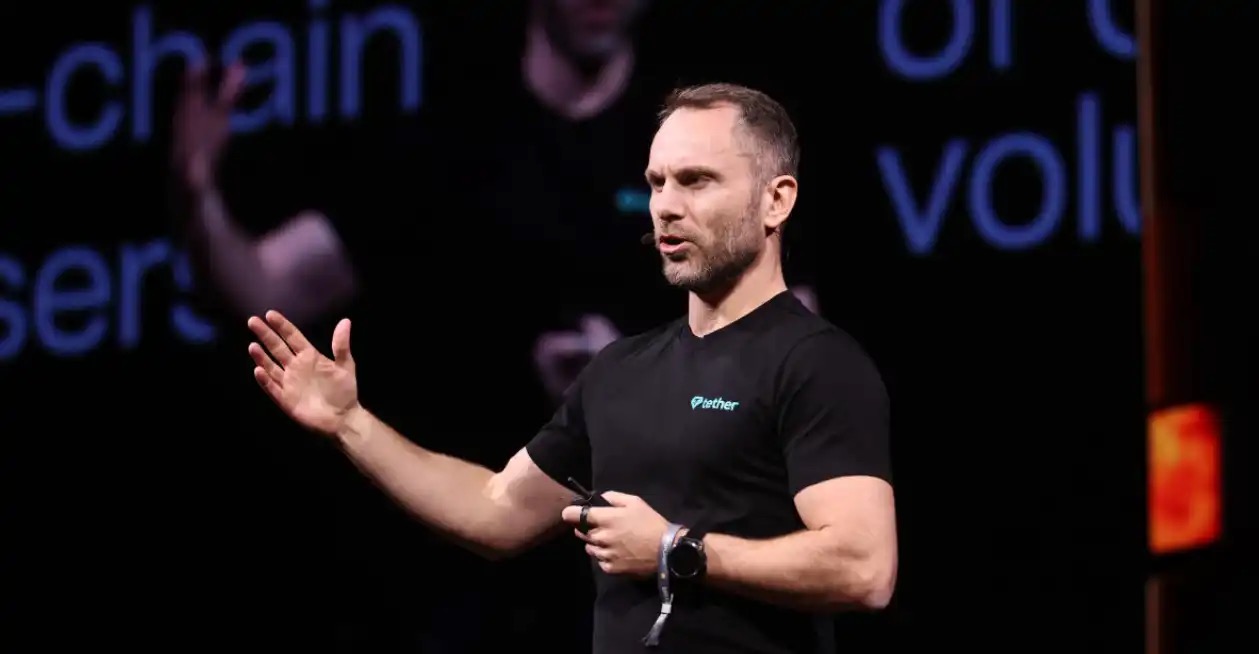
Tether CEO Paolo Ardoino has repeatedly asserted that USAT’s mission is to prevent a potential USDC monopoly in the U.S. market. He explicitly stated, “Without USAT, the U.S. stablecoin market could be locked in the hands of a few institutions.” Thus, USAT’s strategic imperative extends beyond a mere product upgrade; it’s a direct market offensive against USDC.
By launching USAT, Tether attempts to leverage its immense scale to bridge its “compliance gap.” USAT’s significance lies in granting Tether, for the first time, both massive market presence and regulatory compliance, posing a direct threat to USDC’s established moat.
If Circle represents the top-down, U.S.-rooted compliance faction, Tether, through USAT, is constructing a “dual narrative”: maintaining its vast “gray empire” network globally while simultaneously cultivating a “compliant doppelgänger” in the U.S. market.
The future stablecoin market may well evolve into a “dual-track” landscape: USDT sustaining its strong user base in emerging markets (particularly Latin America, Africa, and Southeast Asia), while USAT targets the U.S. domestic market and institutional clients. This structure promises to safeguard Tether’s advantages in new markets while attracting institutional capital through compliance, injecting new momentum into the entire sector.
For Tether, this initiative transcends issuing a new coin or pursuing a listing; it’s an identity metamorphosis. Should it successfully list on U.S. capital markets, it could shed the “shadow empire” label entirely, entering the global financial stage as a legitimate “dollar company.”
However, Tether’s aggressive move will undoubtedly provoke counter-responses. Circle is likely to accelerate its collaborations with regulators and institutions to further entrench USDC’s compliance advantage. Licensed issuers like Paxos may capitalize on the opportunity to expand their presence in niche markets such as payments and cross-border settlements.
Traditional financial titans are also keenly observing. From Visa and Mastercard to Wall Street investment banks, all are exploring how to integrate stablecoins into existing financial infrastructures. USAT’s launch is not merely a turning point for Tether’s identity but a potential catalyst for a new, intensified phase of stablecoin competition.
Epilogue: The Shadow Empire’s Path to Sunlight
The introduction of USAT presents Tether with unprecedented opportunities, yet it is also fraught with new risks. Will the market truly believe that a heavily scrutinized “shadow empire” can effectively compartmentalize itself through a compliant doppelgänger?
History offers precedents for “gray forces” transitioning into legitimate entities.
In the late 19th century, American society harbored deep distrust of financial capital, with the Morgan family often vilified as “financial oligarchs.” While not strictly illegal, their immense capital and influence, in an era devoid of modern regulation, were perceived as “hijacking public interest,” branding them a “gray force.”
However, financier J.P. Morgan meticulously reshaped his image. By assisting the government in issuing national debt and resolving fiscal crises, and by restructuring railway company debts, he gradually transformed from a “capital oligarch” into a “financial agent of the state.”
Tether’s current strategy—aggressively acquiring U.S. Treasury bonds and launching a compliant stablecoin—bears a striking resemblance to Morgan’s approach: earning legitimacy by addressing national challenges.

Yet, not all “gray giants” successfully navigate such transformations.
Binance, the world’s largest crypto exchange, operated almost entirely offshore in its early days, largely outside regulatory purview. In recent years, it has sought licenses in markets like France and Abu Dhabi, attempting to embrace compliance and penetrate the U.S. market. However, in the U.S., it faced stringent regulatory resistance, ultimately forcing it to scale back and tighten operations. This cautionary tale underscores that regulators will not easily grant legitimacy to “gray giants” seeking to “go white.”
This means Tether’s future remains uncertain. Its reserve transparency, compliance execution, and ongoing engagement with regulatory bodies will be continuously scrutinized in the coming years.
Meanwhile, the stablecoin market is already witnessing accelerated competition.
Circle is actively pursuing a U.S. national trust bank charter to fortify its compliance capabilities and deepen ties with regulators and institutional investors. Paxos reports significant growth in demand for its stablecoin infrastructure and has partnered with Mastercard to launch a “Global Dollar Network,” aiming to broaden stablecoin utility. Visa is also expanding its support for stablecoin settlements, pushing for their integration into existing payment systems. Concurrently, Plasma is exploring direct stablecoin integration into global payment network infrastructure, focusing on on-chain clearing and cross-border payments.
The stablecoin market is rapidly transitioning from its era of wild growth into a more intense, institutionalized, and regulated competitive phase.
USAT represents Tether’s first formal attempt to present its identity card in Washington. The true test lies not on the blockchain, but at the conference table: whoever can shape the regulatory agenda will ultimately define the next generation of digital dollars. Whether the shadow empire can step into the sunlight remains the greatest suspense in crypto finance.
Disclaimer: This article is for market information purposes only. All content and opinions are for reference only and do not constitute investment advice. They do not represent the views or positions of BlockTempo. Investors should make their own decisions and trades. The author and BlockTempo will not bear any responsibility for direct or indirect losses resulting from investor transactions.