

The CZ Effect: How a Crypto Titan’s Words Ignite Markets and Fuel Meme Mania
Author: zhou, ChainCatcher
For many retail investors in the volatile crypto market, the dual fears of significant losses and missed opportunities are ever-present. Standing at this critical juncture is CZ, a figure whose pronouncements can trigger overnight fortunes or devastating reversals. Assets linked to CZ frequently exhibit extreme price fluctuations, often appearing to detach from fundamental value and instead respond directly to market sentiment.
While CZ rarely publicly endorses or acquires cryptocurrencies, his every move in this regard tends to send ripples across the market. On November 2nd, CZ announced via a post that he had purchased ASTER with personal funds on Binance, providing an on-chain transfer screenshot showing 2.09 million tokens. This revelation immediately ignited the market, propelling ASTER from $0.91 to $1.26, a surge exceeding 30%.
However, this dramatic pump was met with a swift counter-move. On-chain analyst Ember observed that a significant whale subsequently shorted $50.62 million worth of ASTER at $1.2. As ASTER’s price has since retreated, this short position has accrued a floating profit of over $12 million, while CZ’s initial purchase at approximately $0.913 currently sits at a floating loss.
This was not CZ’s first interaction with ASTER. During the token’s Token Generation Event (TGE) in September, his retweet of a promotional post saw ASTER skyrocket from $0.02 to $2.42, a staggering nearly 7000% increase, making it a market darling.
The highly sensitive nature of ASTER’s price to CZ-related news was further demonstrated on October 30th. A prominent KOL erroneously reported that a CZ-associated wallet had offloaded 35 million ASTER tokens, causing an immediate 16.8% price drop and over $4 million in on-chain liquidations. The market only recovered its losses two hours later, after Lookonchain and EmberCN clarified it was an internal Binance hot wallet transfer, and CZ himself publicly denounced the “fake news.”
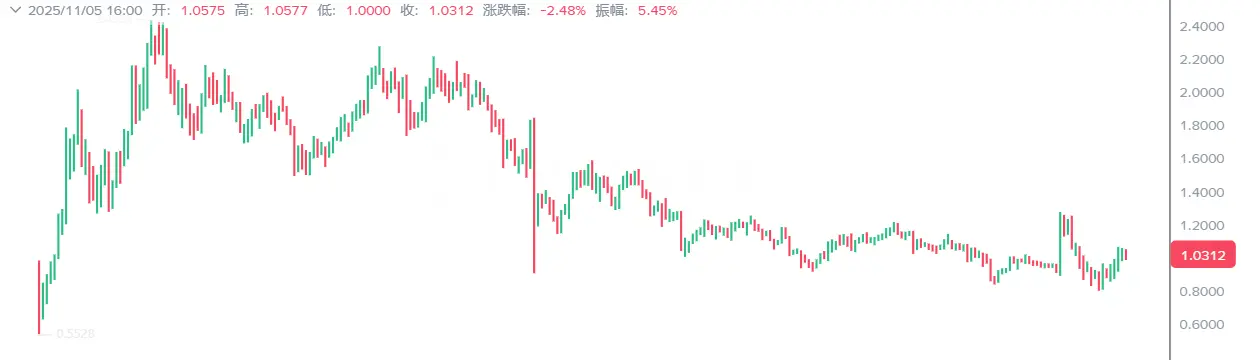
Indeed, CZ’s name is almost inextricably linked to ASTER’s every significant price movement. Reflecting on his own trading history, CZ humorously admitted to being “100% underwater” shortly after his short-term crypto purchases. He cited buying Bitcoin at an average of $600 in 2014, only for it to plummet to $200 within a month and remain there for 18 months, and his 2017 BNB purchase experiencing a 20-30% dip for weeks. Following ASTER’s recent decline, he added to his position, acknowledging the inherent uncertainty. He also cautioned investors about risks and declared his intention to cease disclosing future trading activities to avoid inadvertently influencing the market.
In the past, CZ has consistently stated that BNB constitutes over 98% of his personal portfolio, a holding he has never sold since its ICO at $0.1. Eight years later, BNB’s price has long surpassed the $1,000 mark, consistently climbing the market cap rankings to currently secure the fifth position in the crypto ecosystem. This long-term conviction and success with BNB provide significant credibility to his market commentary.
Beyond BNB and ASTER, VANA also warrants attention as the first project where CZ assumed an advisory role (without explicitly confirming a personal investment).
Vana, an AI identity generation application, saw its VANA token launch on Binance in December 2024, immediately soaring to an all-time high of $35.8. As the sole Data DAO listed on Binance, it perfectly capitalized on the Q4 AI hype. However, the opening of its Data Liquidity Pool (DLP) in January 2025 exposed data quality issues, leading to a sharp decline in its price to around $6.
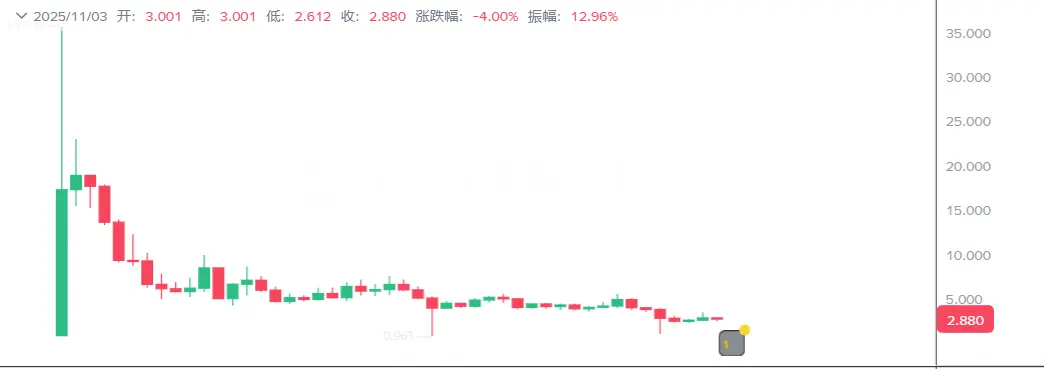
On February 24th, YZi Labs announced a strategic investment in Vana, with CZ joining as an advisor on the same day. His post, “Crypto is AI money, data is AI food,” instantly amplified the project’s visibility, causing the VANA token to surge over 50% in 48 hours. Yet, as the initial buzz faded, the project struggled to gain traction, and the token price plummeted to $2.8, marking a 92% drop from its peak. CZ’s past comment, “I am an advisor, not a babysitter; implementation is up to the team,” aptly illustrates that while his endorsement can ignite market sentiment, it cannot sustain a project lacking fundamental strength.
CZ Ignites, Community Fuels: The Unstoppable Force of Meme Carnivals
As a prominent public figure, CZ’s public mentions of certain cryptocurrencies inevitably trigger a wave of follow-on trading from investors. Despite his frequent attempts to distance himself from specific meme coins, the resulting “copycat effect” is formidable. This phenomenon is particularly potent when projects are listed on Binance Alpha, where the inherent FOMO (Fear Of Missing Out) amplifies the impact of a single word, capable of stirring up a storm.
Consider the SZN coin: following CZ’s October 7th post declaring the arrival of “BNB meme season,” its price surged an astonishing 5600% in 24 hours. The “4” coin, originating from CZ’s hand gesture used to refute fake news, was memefied by the community, leading to a peak rally of 2000%. BROCCOLI, named after CZ’s dog, achieved a $52 million market capitalization within two hours. CZSTATUE, a meme coin inspired by a 14-foot golden statue of CZ, ironically surged 3000% even after CZ advised against buying it. PALU, derived from a cartoon avatar CZ liked, saw its market cap temporarily exceed $100 million. MAXI, a response to CZSTATUE, climbed over 1500% after CZ’s critical comments. SCI6900, a project CZ retweeted about the Shanghai index on-chain, rallied 300% in 24 hours. In March 2025, CZ’s casual statement about spending 1 BNB each on TST and Mubarak for “testing” purposes instantly sent both tokens soaring (TST by 50%+ and Mubarak by 300%+).
A recent, high-profile example is the Chinese meme coin “Binance Life.” It originated from a casual reply by Binance co-founder He Yi to a netizen: “Wish you a Binance Life.” This was further amplified when Base founder @jessepollak posted a video, “Enable Binance Life mode in the Base App,” which CZ promptly retweeted, hailing “Binance Life” as the first Chinese platform launched on the Base App, originating from the BNB chain. This rapid-fire interaction propelled its market capitalization past $500 million in a short period, with the community forcefully branding it the “Revival of Chinese Memes.” However, upon closer inspection, while these tokens enjoyed fleeting fame, most have since experienced significant pullbacks, with current prices generally 80%-95% below their peaks, and both liquidity and investor attention have markedly cooled.
GIGGLE offers another illustrative case study. On September 21st, 2025 (likely a typo for 2023 or 2024), CZ publicly shared the BNB donation address for Giggle Academy on X. In response, the GIGGLE token, issued on Four.meme, rapidly surged approximately 14-fold. CZ subsequently clarified that GIGGLE was not an official project, leading to an immediate 80% price crash. However, the story didn’t end there.
In October, GIGGLE’s initial listing on Binance Alpha, followed by its debut on Binance Spot, each triggered substantial price increases. On November 3rd, Binance announced a commitment to donate 50% of GIGGLE spot and leverage trading fees directly to Giggle Academy starting in December. In a reciprocal move, Giggle Academy officially stated it would burn an additional 50% of the donated tokens. This news, released amidst a broader crypto market pullback in early November, sparked a massive surge in GIGGLE’s trading volume, doubling its price once again.
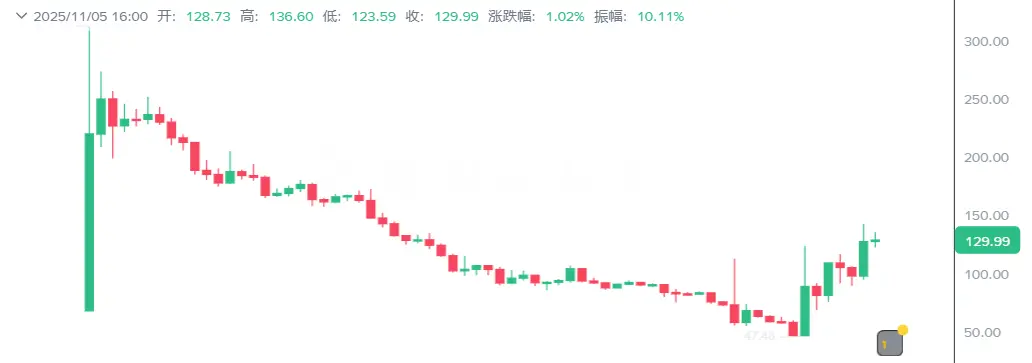
From its Binance Alpha debut to its spot listing, and then to a major official announcement, each phase contributed to significant gains. Despite GIGGLE not being an official Giggle Academy token, the community adeptly leveraged the narrative, pushing the topic and investor sentiment to a fever pitch. This sequence of events unequivocally demonstrates that in the world of meme coins, Binance’s platform remains the ultimate validator for both liquidity and investor confidence.
YZi Labs’ Investment Endorsements: A More Measured Impact
Beyond CZ’s direct endorsements, the investment backing from YZi Labs also commands market attention. Public records indicate that YZi Labs has invested in over 20 projects this year, primarily focusing on infrastructure, settlement, stablecoins, and AI applications, with additional ventures into Real World Assets (RWA) and Bitcoin programmability. Notable projects that have already issued tokens include SIGN, VANA, EDU (Open Campus), and ENA (Ethena).
SIGN, an airdrop protocol, saw YZi Labs lead a $16 million investment in January 2025, followed by an additional $25.5 million in October. On April 25th, Binance announced SIGN’s inclusion on its HODLer Airdrops page. In the two days leading up to this, the token’s price surged from $0.03 to $0.133, a more than threefold increase, before gradually retreating to its current level of around $0.08.
On September 19th, YZi Labs announced an increased stake in Ethena Labs, though the ENA token’s price reaction was rather subdued. However, USDe’s Total Value Locked (TVL) reached its peak of $14.15 billion in the same month. During a market event on October 11th, USDe briefly depegged, and its TVL has since fallen to $9.5 billion. According to CoinGecko, ENA currently holds a market capitalization of approximately $2.3 billion, ranking 56th among cryptocurrencies.
CZ publicly acknowledged an early investment in SafePal on September 24th via social media. On that day, the SFP token price climbed from $0.4 to approximately $0.7, a gain exceeding 70%, though it has since fallen back to $0.3.
On October 20th, YZi Labs participated in Open Campus’s $5 million strategic funding round. Given that the education sector is not a primary hotbed for crypto speculation, the EDU token’s performance remained modest.
It’s noteworthy that YZi Labs typically announces its investment news *after* the respective tokens have been listed on exchanges. This strategic timing is designed to amplify the event-driven price and volume surges. However, as evidenced by Vana’s initial struggles and the subsequent fading interest in SIGN and EDU, the market does not always fully embrace YZi Labs’ investment endorsements, indicating a more discerning approach from investors.
Conclusion
Ultimately, whether it’s CZ’s direct involvement, the community’s cultivation of meme narratives, or YZi Labs’ strategic investment backing, these actions serve as mere sparks. The community, by latching onto these concepts, provides the necessary fuel, igniting market rallies. This dynamic underscores the market’s perpetual need for exciting narratives to maintain attention and liquidity. However, a spark can only illuminate the present; it cannot guarantee the future. In the long run, it is the underlying fundamental value that truly sustains a project’s relevance and success.




