US Senate Unveils Bipartisan Crypto Bill: A New Era for Digital Asset Regulation?
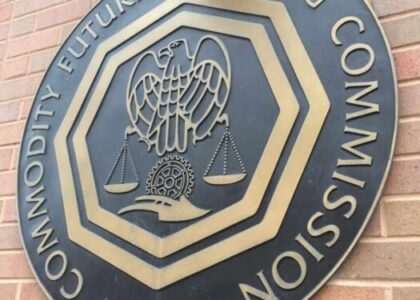
Washington D.C. witnessed a pivotal moment in the ongoing quest for cryptocurrency clarity this week as the U.S. Senate Agriculture Committee unveiled its highly anticipated discussion draft for digital asset market structure legislation. This bipartisan effort aims to provide much-needed regulatory precision, addressing the long-standing jurisdictional ambiguities between the Securities and Exchange Commission (SEC) and the Commodity Futures Trading Commission (CFTC) over the burgeoning crypto market.
For years, the U.S. crypto industry has grappled with a fragmented regulatory landscape, where the fundamental distinction between a “commodity” (typically overseen by the CFTC) and a “security” (under the SEC’s purview) remains a critical, yet unresolved, question. While both agencies have attempted to offer guidance, only Congress possesses the legislative authority to definitively draw this line, providing a stable framework for innovation and investor protection.
The draft bill, however, is merely the initial stride in what promises to be a complex and protracted legislative journey. Marked with bracketed sections indicating areas of ongoing debate, it reflects the intricate negotiations still required among lawmakers. Furthermore, the Senate’s recent preoccupation with government funding and budget negotiations has inevitably siphoned attention, potentially delaying the bill’s progress.
Spearheading this significant initiative are Senator John Boozman (R-AR), Chairman of the Agriculture Committee, and Senator Cory Booker (D-NJ), a prominent Democratic voice. Senator Booker emphasized the urgency of congressional action in a statement:
“As more Americans participate in new financial markets and payment systems, Congress must act to strengthen and expand the existing regulatory framework to protect consumers from predatory practices, ensure market safety, and prevent bad actors from exploiting regulatory loopholes.”
CFTC Poised for Expanded Oversight
Given the Agriculture Committee’s direct oversight of the CFTC, this legislative draft is a crucial piece of the puzzle in shaping future crypto regulation. A cornerstone of the bill is its definition of a “digital commodity” as an asset that is:
- Fungible and transferable.
- Capable of being held and transferred by individuals without an intermediary.
- Recorded on a cryptographically secure public distributed ledger.
Crucially, the draft empowers the CFTC with an explicit regulatory framework for these “digital commodities.” It mandates that the CFTC collaborate with the SEC to formulate comprehensive rules spanning various aspects, from “securities investment portfolio margin systems” to the regulation of intermediaries.
Despite the expanded mandate, Senator Booker voiced concerns regarding the CFTC’s capacity to absorb these new responsibilities. The agency currently operates with a lean team of 543 full-time employees, a stark contrast to the SEC’s approximately 4,200. He highlighted:
“I am particularly concerned about the CFTC’s lack of resources, the lack of bipartisan cooperation among commissioners, and how to prevent regulatory arbitrage and official corruption. Congress must ensure sufficient firewalls are established to prevent these abuses.”
To address potential resource shortfalls, the draft proposes establishing new “funding sources” for the CFTC, potentially through regulatory fees levied on specific crypto enterprises.
DeFi’s Future Remains Undefined as Industry Calls for Developer Protection
The numerous bracketed sections within the draft underscore the areas where consensus remains elusive. Notably, the chapter dedicated to Decentralized Finance (DeFi) is conspicuously blank, signifying a critical gap that requires further deliberation.
Amanda Tuminelli, Executive Director of the DeFi Education Fund, issued a strong appeal for future amendments to “fully protect developers.” She stressed the importance of clearly differentiating between “centralized intermediaries controlling others’ funds” and “software developers simply developing code,” arguing that the latter should not be subjected to the same regulatory burdens as the former.
A Long Road Ahead: Legislative Timeline and Political Hurdles
The path to enactment for this legislation is intricate. As the Agriculture Committee oversees the CFTC and the Banking Committee supervises the SEC, both committees must first approve their respective versions of the bill. Only then can these separate drafts be coordinated and merged before advancing to a full Senate vote.
However, the journey is fraught with political complexities. Already, some Republican senators, including Senator John Kennedy, have publicly questioned the draft’s readiness for deliberation. On the Democratic side, while many advocate for bipartisan consensus, influential figures like Senator Elizabeth Warren remain vocal critics of the crypto industry’s inherent risks and potential conflicts of interest, particularly concerning political figures’ involvement in the space.
Ron Hammond, Director of Policy and Advocacy at Wintermute, estimates that while the two committees might “complete their respective versions of the vote by the end of the year at the earliest,” the subsequent merging and reconciliation processes mean a full Senate vote is unlikely before the first quarter of 2026. This timeline underscores the significant legislative heavy lifting still required to bring comprehensive crypto regulation to fruition.
Disclaimer: This article is intended solely for market information purposes. All content and views expressed are for reference only and do not constitute investment advice. They do not necessarily reflect the opinions or positions of this publication. Investors are encouraged to conduct their own due diligence and make independent trading decisions. Neither the author nor the publication will assume any responsibility for direct or indirect losses incurred as a result of investor transactions.