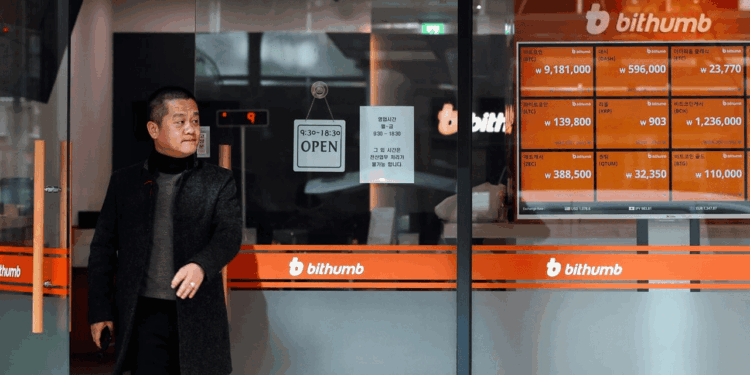
Bithumb Admits ‘Serious Flaws’ After $40 Billion ‘Fat Finger’ Blunder Rocks Crypto Market
In a stunning admission that has sent ripples across the global digital asset landscape, South Korean cryptocurrency exchange Bithumb confirmed on Wednesday that its internal systems harbored “serious flaws.” These critical vulnerabilities, the exchange stated, exposed the platform to uncontrollable risks and potential malicious exploitation, directly leading to a colossal error where an estimated $40 billion worth of Bitcoin was mistakenly transferred to customers.
The Unprecedented ‘Fat Finger’ Fiasco Unpacked
As reported earlier in the week, Bithumb’s unprecedented blunder originated from a seemingly minor operational oversight. The exchange initially intended to disburse event bonuses totaling approximately 620,000 Korean Won (around $420 USD) to its users. However, a crucial employee error—a “fat finger” mistake in setting the correct currency type—resulted in the inadvertent issuance of 620,000 Bitcoins. This staggering sum, valued at an estimated 60 trillion Korean Won (approximately $40 billion USD), momentarily sent shockwaves through the market, causing Bitcoin’s price on the platform to plummet by a dramatic 17% and sparking widespread concern.

Regulatory Clampdown and AI-Powered Oversight Initiatives
In response to the alarming incident, South Korea’s Financial Supervisory Service (FSS) swiftly announced a comprehensive investigation into “high-risk behaviors” within the crypto market. This probe will specifically target operational patterns that could disrupt market order, including large-scale price manipulation by so-called “whales,” questionable trading arrangements linked to deposit and withdrawal suspensions, and the propagation of false information or malicious pump-and-dump schemes via social media.
Furthermore, the FSS unveiled ambitious plans to bolster its regulatory capabilities by developing advanced monitoring tools. These tools will automatically detect abnormal trading patterns, complemented by the integration of artificial intelligence (AI) text analysis systems designed to identify potential market manipulation in real-time. This proactive approach underscores a growing commitment to safeguarding market integrity and investor confidence.
Bithumb CEO Confirms Systemic Vulnerabilities and ‘Ghost Tokens’
During a parliamentary hearing, Bithumb CEO Lee Jae-won shed further light on the extent of the internal failings. He revealed that the mistakenly issued Bitcoin quantity was an astonishing 15 times greater than the exchange’s actual holdings, which stood at approximately 42,000 coins. Key contributing factors cited included a significant 24-hour delay in transaction processing and a critical failure to reflect asset balance updates in real-time. Lee Jae-won candidly stated, “We are deeply aware of the flaws in our internal system controls.”
The CEO further admitted that Bithumb lacked crucial safeguards: there was no cross-verification between the total transfer amount and the exchange’s actual holdings, nor were dedicated accounts for event bonuses adequately segregated to ensure transaction security. This critical oversight allowed the system to authorize the transfer of “non-existent ghost tokens,” highlighting a fundamental breakdown in risk management protocols and internal audit procedures.
The Aftermath: Unrecovered Funds and Swift Withdrawals
While Bithumb has reported a successful recovery of 99.7% of the erroneously transferred assets, the investigation uncovered a concerning detail: over 80 users, demonstrating “astonishing speed,” managed to cash out their unexpected windfall before the exchange could freeze the funds. As of February 9, a total of 125 Bitcoins remain unrecovered, underscoring the formidable challenges of clawing back digital assets once they leave an exchange’s control and enter the broader market.
Broader Implications for South Korea’s Burgeoning Crypto Market
The incident serves as a stark warning for South Korea’s rapidly expanding cryptocurrency market. With over 10 million investors, digital assets have become a primary investment vehicle for many Koreans. Major exchanges like Upbit and Bithumb generate annual revenues in the trillions of Korean Won. However, this massive market growth has not been paralleled by a commensurate strengthening of internal controls and robust risk management frameworks. This critical imbalance has now been exposed as the core vulnerability in this high-profile debacle, emphasizing the urgent need for enhanced operational resilience across the industry.
Disclaimer: This article is for market information purposes only. All content and views are for reference only and do not constitute investment advice, nor do they represent the views and positions of Blockcast. Investors should make their own decisions and trades. The author and Blockcast will not be liable for any direct or indirect losses incurred by investors’ transactions.