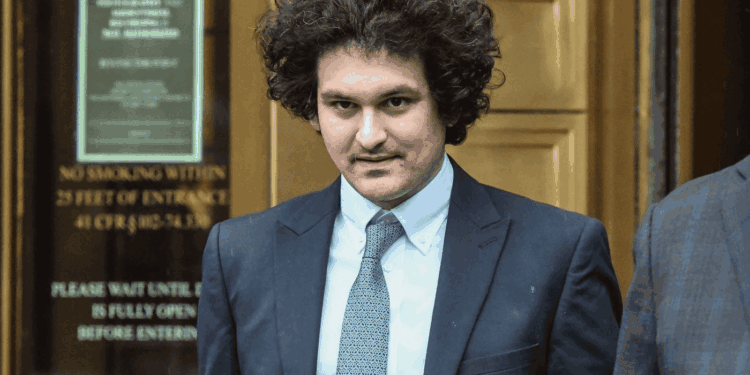
From Behind Bars: SBF Breaks Silence on Social Media, Challenging Fraud Conviction
Sam Bankman-Fried (SBF), the embattled founder of FTX, has broken his silence from the Metropolitan Detention Center in Brooklyn, where he is serving a 25-year sentence. On February 20th, SBF took to his X (formerly Twitter) account to publish a series of posts titled “Top 10 Misconceptions About Me and FTX,” launching a vigorous public defense.
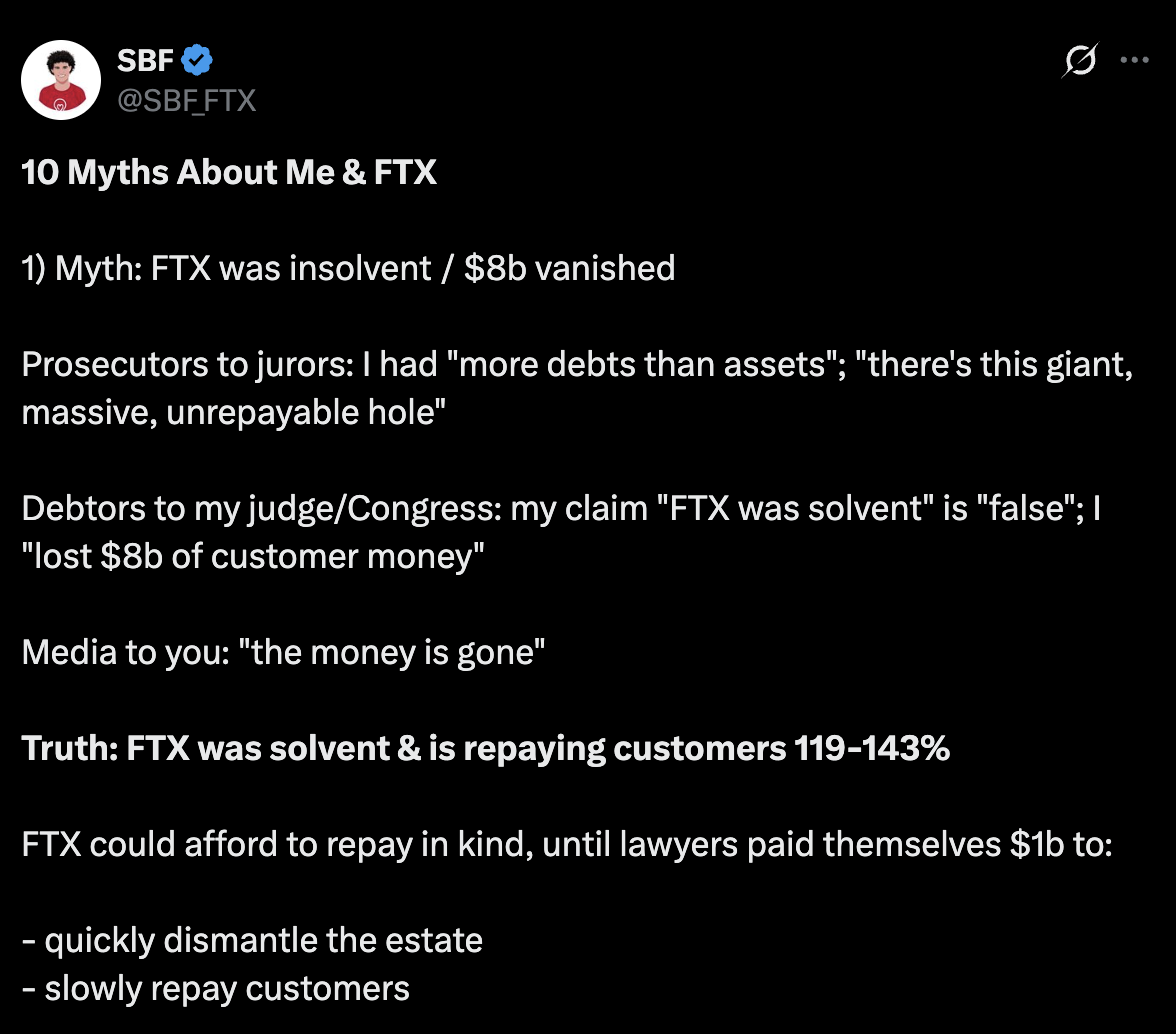
This social media offensive marks SBF’s most forceful public counter-attack since his November 2023 conviction on seven counts of fraud and conspiracy. Through his posts, he aggressively seeks to dismantle the core narrative that led to his incarceration, asserting that FTX was never genuinely insolvent. He highlights that clients are currently receiving between 119% and 143% of their claims, which he presents as proof of the company’s ample assets to cover its liabilities. SBF decries his 2023 trial as profoundly unjust, contending that the widely reported “$8 billion loss” was a fabrication and that FTX possessed robust balance sheet strength even as it crumbled.
SBF further casts doubt on the legitimacy of the bankruptcy proceedings. He cites creditor advocate Mr. Purple, who characterized the FTX bankruptcy as the “darkest” case he had ever witnessed. Compounding these concerns, legal and professional service fees for the case have reportedly surpassed $1 billion.
SBF explicitly accuses the initial legal team of coercing the company into Chapter 11 bankruptcy protection without his consent, arguing that FTX was merely experiencing a short-term liquidity crunch, not an existential collapse. He asserts that within days of the client run, he had secured external investment offers capable of bridging the funding gap and sustaining withdrawals, but these vital solutions were ultimately thwarted by the subsequent restructuring team.
The 119% Payout Controversy: Unpacking the Valuation Discrepancy
Despite SBF’s persistent claims of clients receiving over 100% compensation, legal experts and creditors largely dismiss this as a manipulative narrative. Under U.S. bankruptcy law, claim values are fixed to prices on November 11, 2022—the day FTX filed for bankruptcy. This timing is critical, as the cryptocurrency market was then in freefall, heavily impacted by FTX’s collapse, leading to severely depressed asset values. For instance, a client holding one Bitcoin ($BTC) on FTX would currently receive roughly $17,000 in cash. While this technically represents 119% of the 2022 valuation, it pales in comparison to Bitcoin’s projected 2026 market price exceeding $100,000, effectively leaving clients with a potential loss upwards of $80,000.
John Ray III, the CEO tasked with FTX’s extensive restructuring efforts, previously confirmed the successful recovery of approximately $14.7 billion to $16.5 billion in assets. This impressive haul includes a 13.56% equity stake in the artificial intelligence firm Anthropic, alongside substantial proceeds from the liquidation of numerous real estate holdings. The approved repayment plan stipulates that roughly 98% of small creditors (those with claims below $50,000) should receive their distributions within 60 days of the plan’s September 2025 effective date.
However, the timeline for larger creditors remains fluid, with outstanding tax claims from the U.S. Internal Revenue Service (IRS) and potential asset recovery lawsuits introducing further uncertainties into the compensation process. While SBF leverages the ostensibly high repayment percentage to deflect his fraud conviction, this notion of “full compensation” holds little sway with creditors who have been denied the significant appreciation of their crypto-denominated assets.
Beyond Finance: SBF Denies Sex Scandals, Secret Backdoors, and Alleges Judicial Misconduct
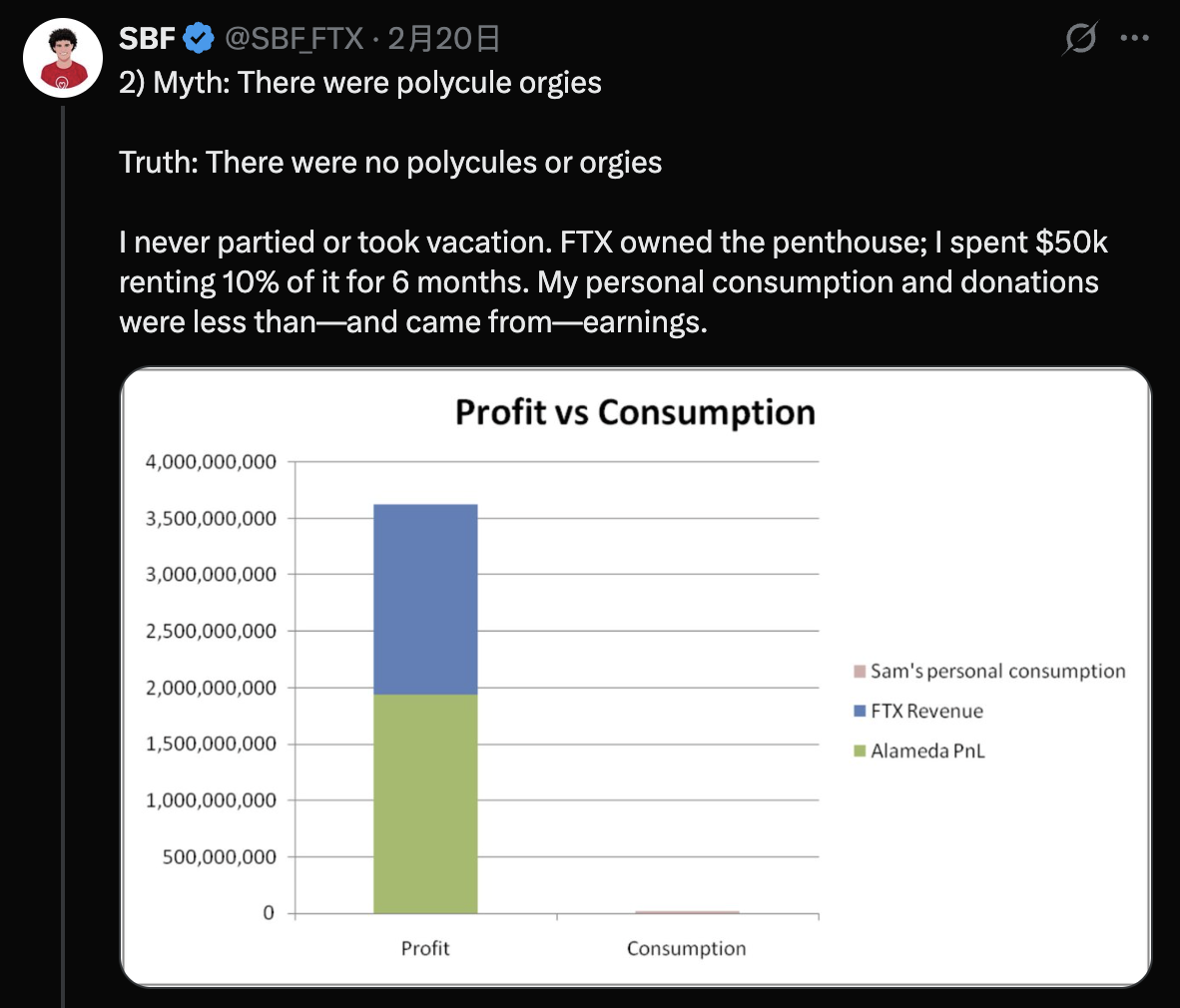
Beyond the financial allegations, SBF seized this moment to address persistent rumors surrounding his personal life. He unequivocally denied accusations of “polycules” or “orgies,” claims that media outlets frequently drew parallels to the notorious activities of deceased sex offender Jeffrey Epstein. SBF asserted that he neither partook in parties nor vacations, and even within FTX’s luxurious properties, he merely paid $50,000 in rent for a modest 10% of the space. He underscored that all personal expenditures and donations originated from his legitimate earnings, not from client funds.
Addressing technical and operational claims, SBF staunchly denied ever implementing a secret “backdoor” for Alameda Research to circumvent FTX’s risk management systems. He contended that FTX’s margin mechanism naturally incorporated collateral pools and lending functionalities, and Alameda’s account operations served legitimate business purposes, fully compliant with the exchange’s terms of service.
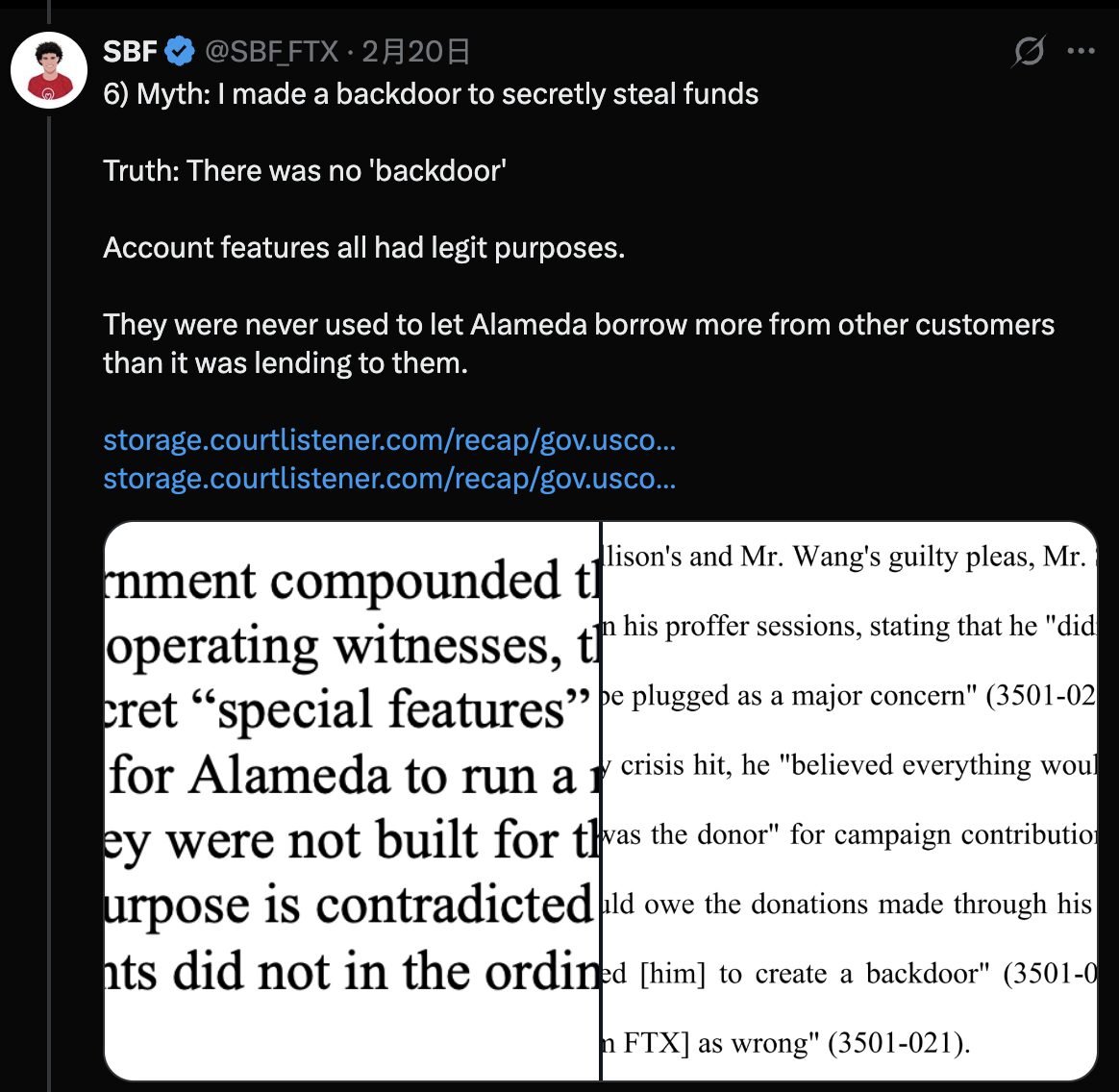
SBF attributes the 2022 collapse to systemic risk management failures and a liquidity crisis, rather than any premeditated criminal intent. He leveled accusations against former executives who testified, including Caroline Ellison, Gary Wang, and Nishad Singh, alleging they provided false testimonies in exchange for leniency. The resulting sentences—Ellison’s 2-year term, Wang’s probation, and Singh’s complete avoidance of jail time—have, according to SBF, only intensified his doubts about the fairness of his own trial.
SBF Files Pro Se Motion for Retrial, Alleges Political Interference in Justice System
In early February 2026, SBF, aided by his mother Barbara Fried (a former Stanford Law professor), submitted a 35-page *pro se* motion to the Manhattan Federal Court, formally seeking a retrial. Within this motion, SBF asserts that trial judge Lewis Kaplan displayed significant bias, obstructing the defense from presenting critical evidence during the proceedings, such as proof of FTX’s original solvency and legal advice provided by his counsel. He has gone as far as to request a different judge preside over this motion, arguing that Kaplan’s rulings severely prejudiced the jury.
This escalating legal battle has also extended into the political sphere. In his appeal, SBF alleges political persecution by the then-Biden administration, claiming he was targeted because he transitioned from a significant Democratic donor to contributing to the Republican Party. He further contends that federal prosecutors deliberately conspired to conceal exculpatory evidence and coerced former executive Ryan Salame into a guilty plea by threatening Salame’s pregnant fiancée, thereby preventing his testimony.
Despite SBF’s fervent pursuit of political intervention, including a hopeful appeal for a presidential pardon from the Donald Trump administration, Trump has unequivocally stated his unwillingness to release the controversial executive. With the $FTT token exhibiting significant volatility in response to SBF’s ongoing maneuvers, this high-stakes battle—waged from behind bars and encompassing judicial, political, and financial valuation complexities—shows no signs of abating in the near term.
(The above content is an authorized excerpt and reproduction from our partner, Crypto City. Original article here.)
Disclaimer: This article is provided for market information purposes only. All content and opinions are for reference and do not constitute investment advice. They do not represent the views or positions of Blockcast. Investors should make their own decisions and trades. Neither the author nor Blockcast will bear any responsibility for direct or indirect losses incurred by investors’ transactions.