Author: HIBIKI, CryptoCity
FATF: Stablecoins Now the Preferred Choice for Illicit Transactions
The Financial Action Task Force (FATF), the global anti-money laundering (AML) watchdog, has issued a stark warning: stablecoins have emerged as the virtual asset of choice for illicit activities, including sanctions evasion. In its latest 42-page report, FATF highlights the involvement of state actors like Iran and North Korea, calling for more stringent regulation on stablecoin issuers.
Earlier in January, FATF had already indicated that stablecoins constitute a significant portion of illicit on-chain activity. The organization now estimates that fraud and scam-related illicit stablecoin activities amounted to approximately $51 billion during 2024, underscoring the escalating challenge.
Nations and Criminals Embrace Stablecoins for Illicit Gains
FATF’s report delves into specific instances of stablecoin misuse by nefarious actors. North Korea’s notorious Lazarus Group, for example, has leveraged stablecoins to procure military equipment, while Iran’s Islamic Revolutionary Guard Corps (IRGC) has relied on them to acquire drone components. Beyond state-sponsored illicit finance, terrorist organizations and drug trafficking cartels are heavily dependent on stablecoins like Tether (USDT) and USDC for fund transfers and money laundering operations.
In a notable enforcement action on July 2, 2025, Tether, the issuer of USDT, executed its largest-ever freeze of Iran-linked funds, locking 42 cryptocurrency wallet addresses. Over half of these were found to have significant ties to the local exchange Nobitex.
As a global standard-setter for combating money laundering, FATF attributes stablecoins’ appeal to criminals to their inherent characteristics: price stability and high liquidity, which make them an ideal vehicle for illicit fund transfers.
Unhosted Wallets: A Critical Vulnerability Fueling Record Illicit Stablecoin Flows
In its updated report from March 2026, FATF reiterated its concern, emphasizing that USD-pegged stablecoins have become a pivotal tool in illicit financial activities.
Citing a report by blockchain analytics firm Chainalysis, FATF revealed a dramatic shift in the landscape of crypto crime. In 2025, out of a staggering $154 billion in illicit virtual asset transaction volume, stablecoins accounted for 84%. This marks a stark contrast to 2020, when illicit transactions were predominantly Bitcoin-centric.
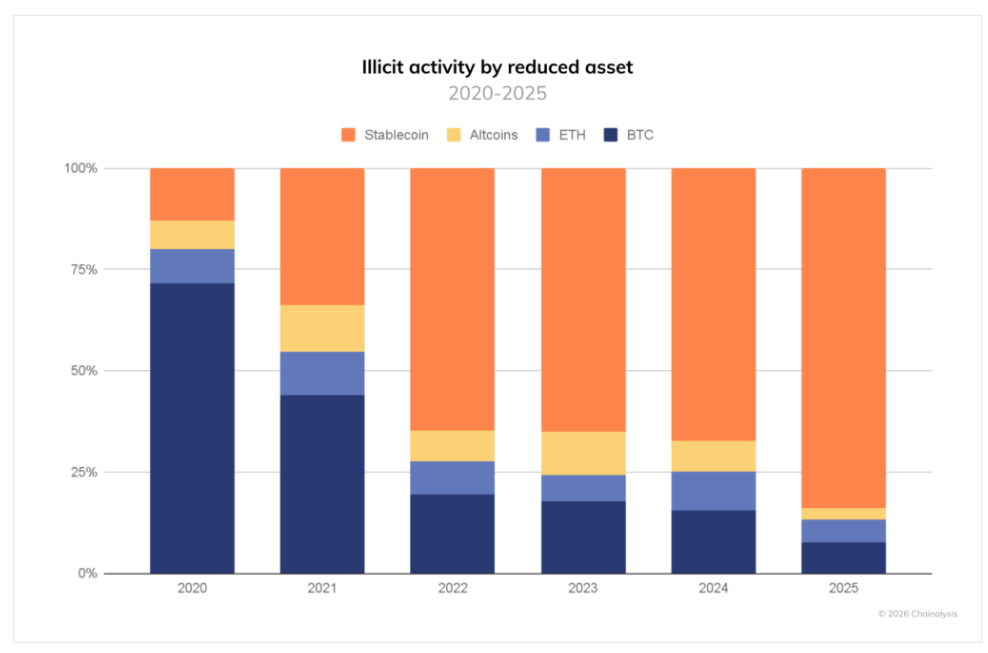
Further compounding the issue, a report published by blockchain intelligence firm TRM Labs in mid-February 2025 indicated that illicit entities received a record $141 billion in stablecoins during 2025, marking a five-year high. The report highlighted that overall stablecoin activity frequently surpassed $1 trillion per month last year, with sanctions-related activities comprising 86% of illicit virtual asset flows.
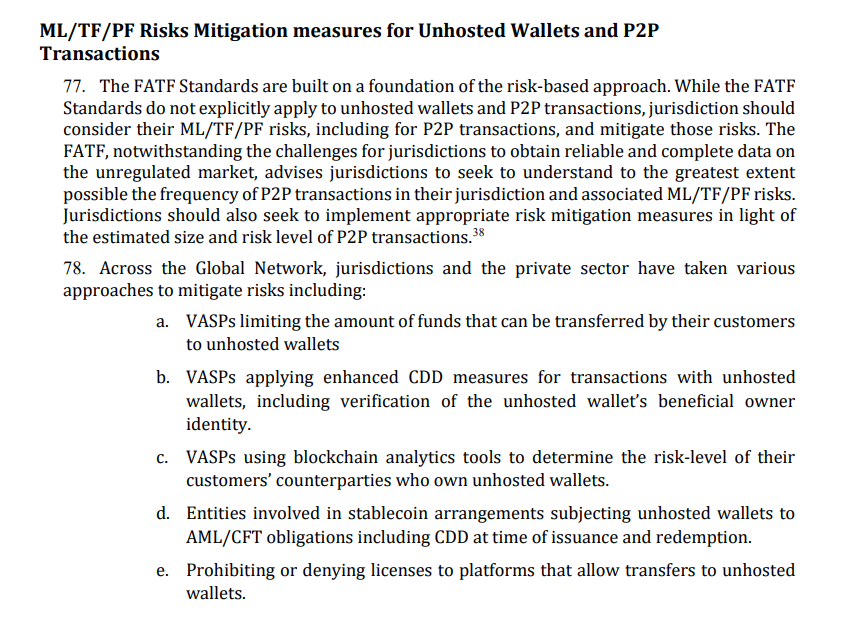
The reports underscore that malicious actors frequently exploit cross-chain technologies, decentralized exchanges (DEXs), and over-the-counter (OTC) brokers to obscure the origins of their funds. FATF specifically identifies peer-to-peer (P2P) transfers via unhosted wallets as a critical vulnerability. These transactions often occur in environments lacking robust anti-money laundering (AML) controls, making it exceedingly difficult for regulators to trace geographical locations and identify ultimate beneficial owners.
Global Stablecoin Market Surpasses $300 Billion: Urgent Need for Regulatory Harmonization
It is crucial to note that FATF is not advocating for a blanket ban on stablecoins. Instead, the organization strongly urges countries to extend AML obligations to stablecoin issuers and intermediaries.
FATF recommends that stablecoin issuers proactively utilize smart contract control features to establish whitelists and blacklists, thereby restricting transactions to and from specific wallets. Issuers should also possess the technical capability to intercept, freeze, and even destroy suspicious stablecoins on secondary markets. Addressing the challenges of cross-border operations, FATF encourages nations to establish international regulatory academies to enhance information sharing and facilitate joint supervision.
With the global stablecoin market now exceeding $300 billion in value and experiencing accelerated adoption alongside deeper integration with traditional finance, FATF emphasizes the critical need for global regulators to act swiftly. They must implement advanced blockchain analytics tools and close existing regulatory and compliance gaps without delay to safeguard the integrity of the financial system.
(The above content is an excerpt and reproduction authorized by our partner CryptoCity.)
Disclaimer: This article provides market information only. All content and views are for reference only and do not constitute investment advice. They do not represent the views or positions of the author or BlockCast. Investors should make their own decisions and transactions. The author and BlockCast will not bear any responsibility for direct or indirect losses incurred by investors’ transactions.