

Author: HIBIKI, CryptoCity
Amidst a prolonged cryptocurrency market downturn and the surging tide of artificial intelligence, the crypto ecosystem is witnessing a significant exodus of developers. Concurrently, AI projects are now dominating growth on GitHub, signaling a notable shift in the landscape of software innovation.
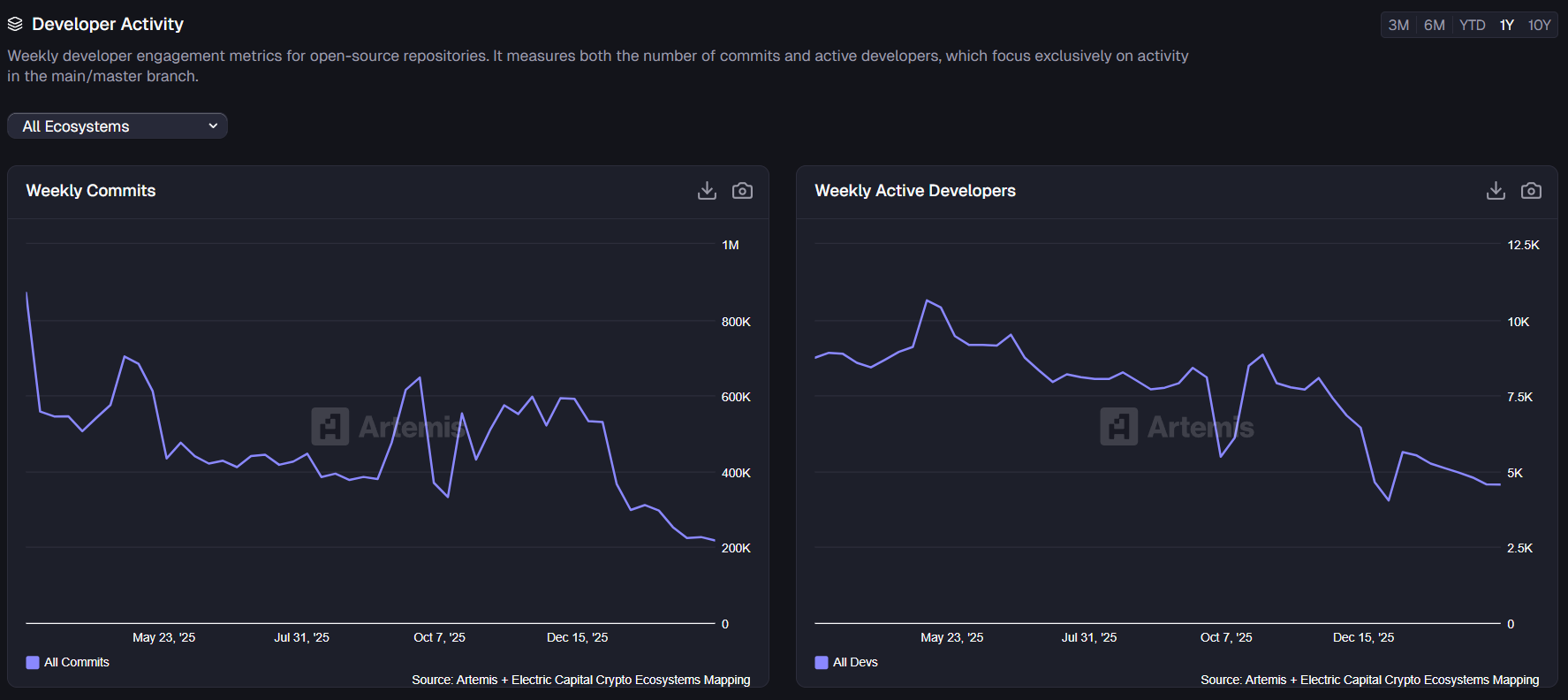
According to a CoinDesk report, citing data from Artemis, weekly code commits for cryptocurrency projects have plummeted by approximately 75% since early 2025, falling from an initial 850,000 to just 210,000. Over the same period, the number of active developers has decreased by a substantial 56%, settling at around 4,600 individuals.
Open-source code repositories are widely regarded as one of the clearest indicators of software innovation trends, as they track developer activity such as code writing, tool building, and new project launches. The current data unequivocally demonstrates that AI projects are now the primary drivers of growth on GitHub, eclipsing traditional crypto development.
AI Infrastructure Surges, Crypto Sector Contracts
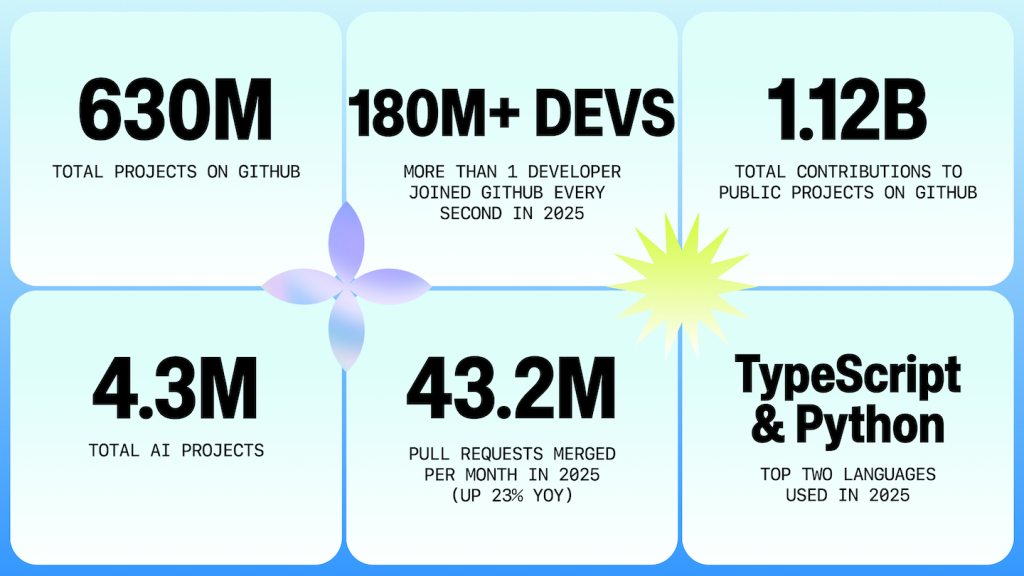
GitHub’s latest Octoverse report reveals an astounding surge in developer activity, with approximately 36 million new developers joining the platform in 2025 alone, pushing the global user count past 180 million. Across the entire platform, code commits grew by roughly 25% compared to the previous year.
This explosive growth is overwhelmingly channeled into the AI domain, with GitHub currently hosting over 4.3 million AI-related repositories.
Over the past year, the number of repositories integrating Large Language Model (LLM) software development kits (SDKs) has surged by approximately 178%, exceeding 1.1 million in total. Generative AI projects alone attract over 1 million contributors monthly.
Furthermore, Jupyter Notebooks repositories, commonly used for machine learning experiments, have grown by about 75%. Dockerfile repositories, essential for deploying AI applications, have seen a significant increase of approximately 120%. TypeScript, the programming language underpinning numerous AI tools, added over 1 million contributors within a year, solidifying its position as one of GitHub’s most frequently used languages.
Leading Public Blockchains Face Headwinds, Crypto Wallets Defy the Trend
In stark contrast to the exponential growth in AI development, core public blockchain development activity has experienced a substantial downturn.
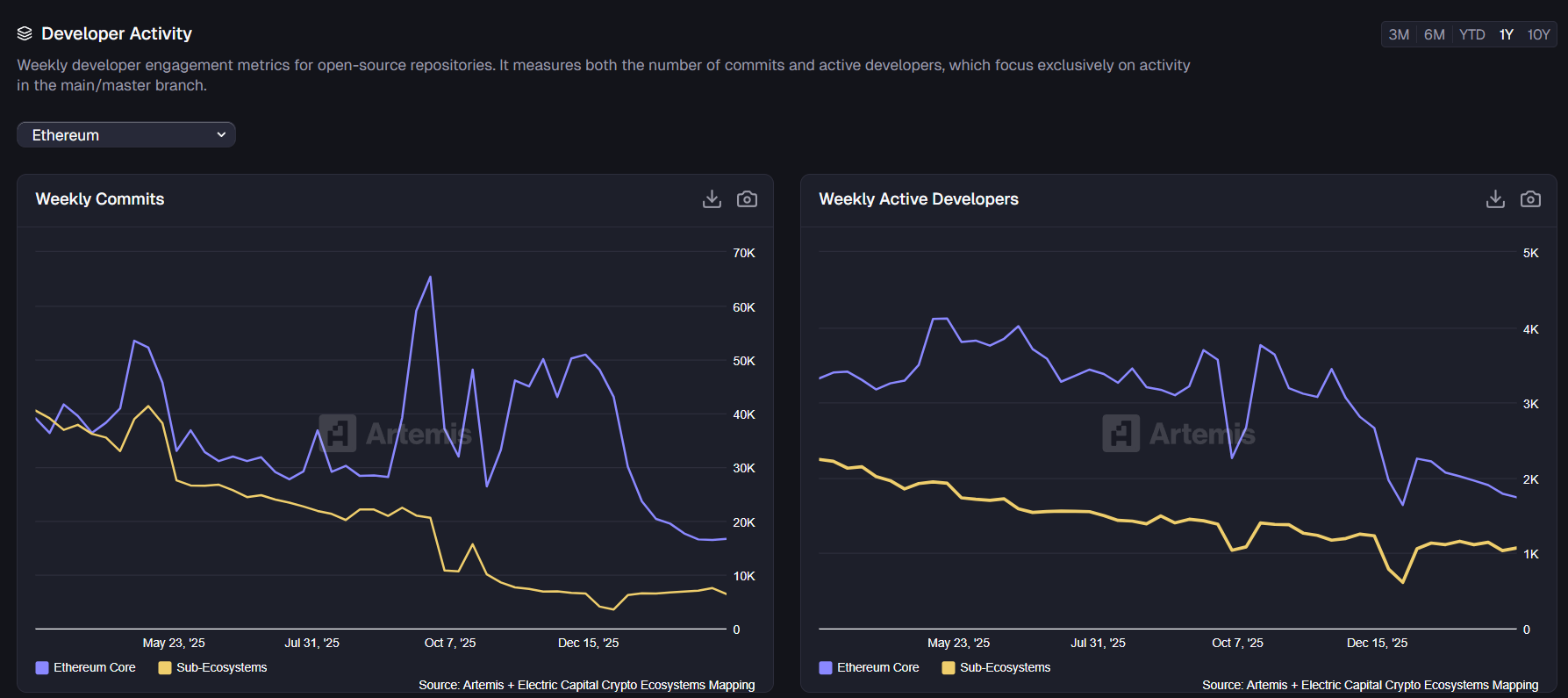
Artemis statistics highlight a 34% decline in Ethereum’s weekly active developers over three months, reaching 2,811. Solana saw a 40% reduction to 942, while Base lost 52% of its developers, now at 378.
Emerging public chains that attracted significant capital last year have been hit hardest: Aptos shed approximately 60% of its developers, BNB Chain’s commit volume plunged by 85%, and Celo experienced a 52% decrease.
The sole area maintaining growth and scale within the crypto space is wallet infrastructure, which has seen a modest 6% increase in weekly active developers, reaching 308.
This uptick in wallet activity may be linked to the industry’s current focus on applications like AI agent payments and stablecoin cross-border transactions. Aleo, a Layer-1 public chain, recently announced (March 12th) that the era of AI agent payments integrated with cryptocurrency technology is imminent, poised to become a “killer app” for the industry.
Shifting Demographics: Experienced Developers Stay, Newcomers Depart
Simultaneously, the structural composition of the crypto developer workforce is undergoing a transformation. The number of developers with over two years of experience has grown by approximately 27% compared to last year, now contributing roughly 70% of code commits. The significant loss of developer talent is primarily concentrated among newcomers with less than one year of experience, a demographic that has shrunk by 58%.
While cryptocurrency developer activity often fluctuates with market cycles, the current AI sector boasts substantial funding and clear commercial demand. The lingering question remains: if a bull market returns, will these departed talents make their way back to crypto? Only time will tell.
The Crypto Industry’s Evolution: Entering the Application Era
Beneath the surface of declining crypto development activity lies a deeper confluence of technological and strategic shifts. A report by BeInCrypto suggests that AI code assistants are dramatically enhancing developer productivity, rapidly handling repetitive tasks, debugging, and even generating complex code in short order.
This advancement has led to a reduction in publicly visible code commits, even as individual developer output soars. Development teams can now accomplish the same volume of work with fewer public records, explaining why surface-level activity metrics may decline while projects continue to advance effectively.
Furthermore, the cryptocurrency industry is transitioning into an “App Era.” Many new projects are now opting to build directly as real-world applications on existing platforms, or integrating infrastructure and applications from their inception. This strategic pivot may account for the observed decline in activity within open-source repositories focused purely on foundational infrastructure.
(The above content has been excerpted and reproduced with authorization from our partner ‘CryptoCity’. Original link here)
Disclaimer: This article is for market information purposes only. All content and views are for reference only and do not constitute investment advice. They do not represent the views and positions of BlockTempo. Investors should make their own decisions and trades. The author and BlockTempo will not bear any responsibility for direct or indirect losses incurred by investors’ transactions.




