
Authored by: Fenrir, CryptoCity
Ethereum Gas Fees Plummet to Historic Lows: A New Era for On-Chain Activity
For years, the Ethereum network grappled with the persistent challenge of high transaction fees, often hindering widespread adoption and accessibility. However, a dramatic shift is underway. Recent data from the on-chain analytics platform Etherscan reveals that the average Ethereum Gas price has plummeted to approximately 0.045 Gwei at the time of writing, marking an unprecedented low in recent memory.
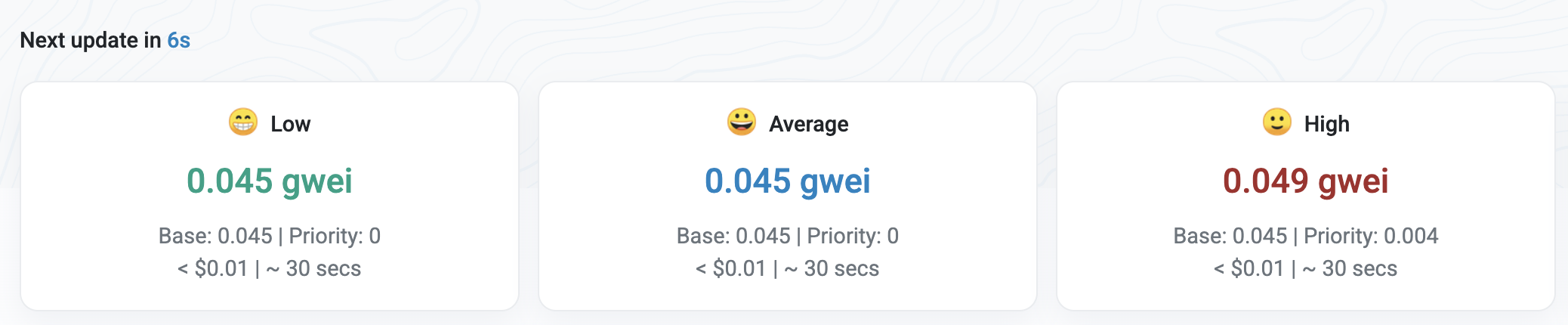
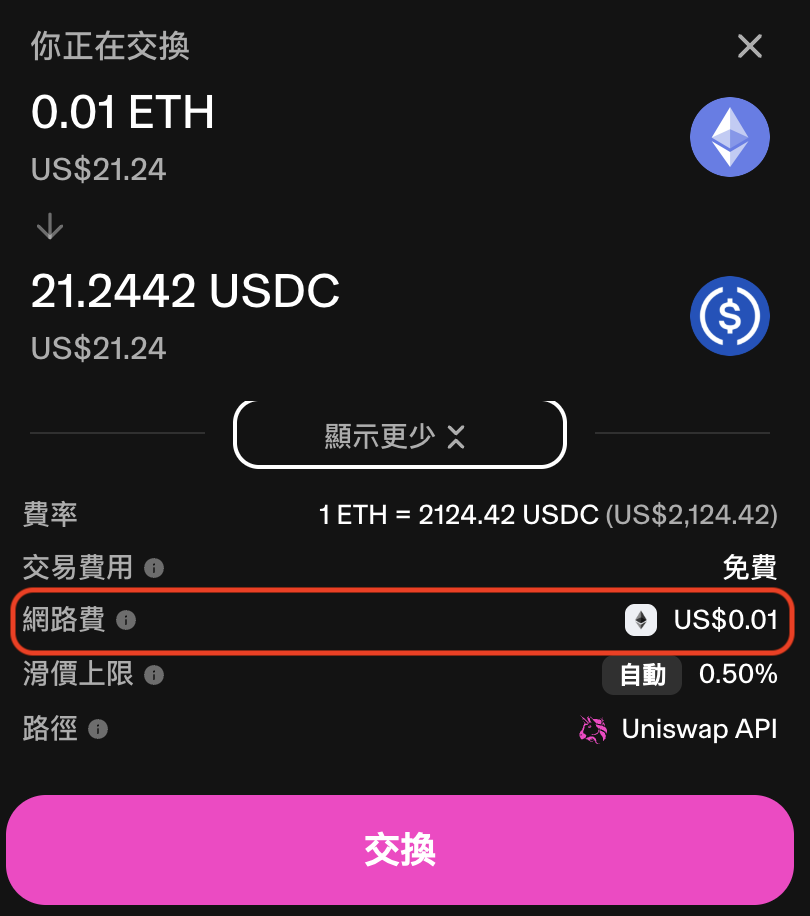
This remarkable reduction in transaction costs has made most on-chain operations exceptionally affordable. Practical tests conducted by CryptoCity on Uniswap demonstrated that a typical ERC-20 token swap now incurs a fee of merely $0.01, while simple transfers often cost less than $0.01. Even more complex operations, such as cross-chain bridging or DeFi lending, generally remain below $0.12, making the Ethereum ecosystem more accessible than ever before.
The long-term trend underscores the magnitude of this fee reduction. Over the past week, average Gas rates hovered between 0.5 to 0.6 Gwei. This stands in stark contrast to average rates from approximately a year ago, which were closer to 6 Gwei—a staggering decline of over 90% within a single year. For a network that once saw individual transaction fees soar past $200 during peak bull market periods, current fee levels represent a monumental shift and arguably a historical low.
Layer 2 Scaling and Upgrades: Redefining Ethereum’s Core Role
This dramatic decrease in Ethereum transaction fees is a direct consequence of strategic architectural adjustments and significant protocol upgrades. The rapid proliferation and maturation of Layer 2 (L2) scaling solutions have been pivotal, redirecting a substantial volume of daily transactions to networks like Arbitrum, Base, and Optimism. These L2s efficiently process transactions off the mainnet, alleviating congestion.
Further enhancing this scalability is the groundbreaking Dencun upgrade, completed in 2024. This upgrade introduced EIP-4844 (Proto-Danksharding), which drastically reduces the cost for Rollups to publish data on the mainnet. Looking ahead, the planned Fusaka upgrade in 2025 promises to further boost data throughput by increasing Blob capacity via PeerDAS technology.
Collectively, these technological advancements have enabled high-frequency trading, stablecoin transfers, and diverse DeFi operations to thrive on Layer 2 networks. As a result, the Ethereum mainnet is progressively evolving into a robust and secure settlement layer, while L2s handle the bulk of transactional activity. This transition is reflected in the current Ethereum mainnet block utilization, which stands at approximately 46%—a notable improvement compared to its historically congested state. For developers, this era of lower Gas fees significantly streamlines the process of testing smart contracts, deploying decentralized applications, and minting NFTs.
Navigating Market Dynamics: Usage Demand vs. Price Performance
While the reduction in transaction fees is a significant positive, the Ethereum market continues to contend with broader economic variables. The price of Ether (ETH) has recently fluctuated around $2,075, still considerably below its 2025 high. Market analysts attribute this subdued price performance to macroeconomic headwinds and sustained outflows from spot Ethereum ETFs, exerting downward pressure on the broader crypto market. However, on-chain data paints a more resilient picture regarding ecosystem activity.
Despite price fluctuations, the total number of transactions remains robust, largely propelled by the continuous growth in Layer 2 network transaction volumes. Moreover, stablecoin settlements and smart contract calls continue at an active pace. These metrics underscore persistent demand and utilization within the Ethereum ecosystem, albeit with a discernible shift of activity from the mainnet to its increasingly efficient scaling layers.
Re-evaluating Cross-Border Remittance Costs: The Evolving Edge of Stablecoins
A recent cross-border remittance study by Mega Financial Holding Co. suggested that stablecoin transactions typically involve a fixed fee of approximately 1 to 2 $USDT, complemented by a proportional fee of about 0.2%. Based on their findings, traditional bank remittances might prove more cost-effective for transfers exceeding roughly $7,000 (approximately NT$200,000).
However, this conclusion has sparked considerable debate within the crypto community, particularly when juxtaposed with current on-chain transaction fees. With Ethereum Gas fees at their nadir, an ERC-20 transfer on the mainnet now costs a mere $0.01 to $0.02, while the average DeFi swap transaction hovers around $0.11 to $0.14. This implies that even multiple on-chain operations would collectively incur a total cost significantly lower than the $1-$2 USDT fixed rate cited by Mega Bank. Furthermore, transactions on Layer 2 networks can often be completed for less than $0.01.
Consequently, many argue that Mega Bank’s cost model may not accurately reflect the rapidly evolving and significantly lower transaction costs prevalent across the Ethereum ecosystem today. As Ethereum’s scaling solutions mature and Gas fees continue their downward trend, the economic landscape for cryptocurrency payments and cross-border transfers is undergoing a fundamental redefinition, challenging conventional perceptions of blockchain transaction expenses.
(The above content is an authorized excerpt and reproduction from our partner “CryptoCity”, original link)
Disclaimer: This article is provided for market information purposes only. All content and views are for reference only and do not constitute investment advice, nor do they represent the views and positions of BlockTempo. Investors should exercise their own judgment and make independent trading decisions. The author and BlockTempo shall not be held responsible for any direct or indirect losses incurred by investors as a result of their transactions.