

The escalating geopolitical tensions surrounding the Strait of Hormuz have cast a significant question mark over financial markets: how would a prolonged disruption to this vital energy artery impact Bitcoin and the broader cryptocurrency landscape? As one of the world’s most critical energy chokepoints, approximately 20 million barrels of oil and petrochemical products transit through the Strait daily. A large-scale interruption to this flow could trigger a global energy supply shock with far-reaching consequences.
At the heart of the issue lies the severe lack of viable alternative routes. Pipeline capacities designed to bypass the Strait are extremely limited, and a substantial portion of global liquefied natural gas (LNG) trade also relies heavily on this single shipping lane. A significant reduction in maritime traffic would inevitably send oil and gas prices soaring, fueling inflationary pressures and consequently stifling global economic growth. Such an environment typically triggers a cascade of effects across financial markets: rising energy costs, heightened inflation expectations, central banks grappling with complex policy dilemmas, and a subsequent tightening of financial conditions, ultimately leading investors to reduce their exposure to risk assets.
For Bitcoin, these macroeconomic headwinds often translate into short-term downward pressure. Since 2020, Bitcoin has increasingly behaved as a risk asset rather than a traditional safe haven, frequently correlating with equity markets during periods of global crisis. Historical patterns suggest that initial geopolitical shocks tend to induce a liquidity-driven sell-off before markets gradually find their footing.
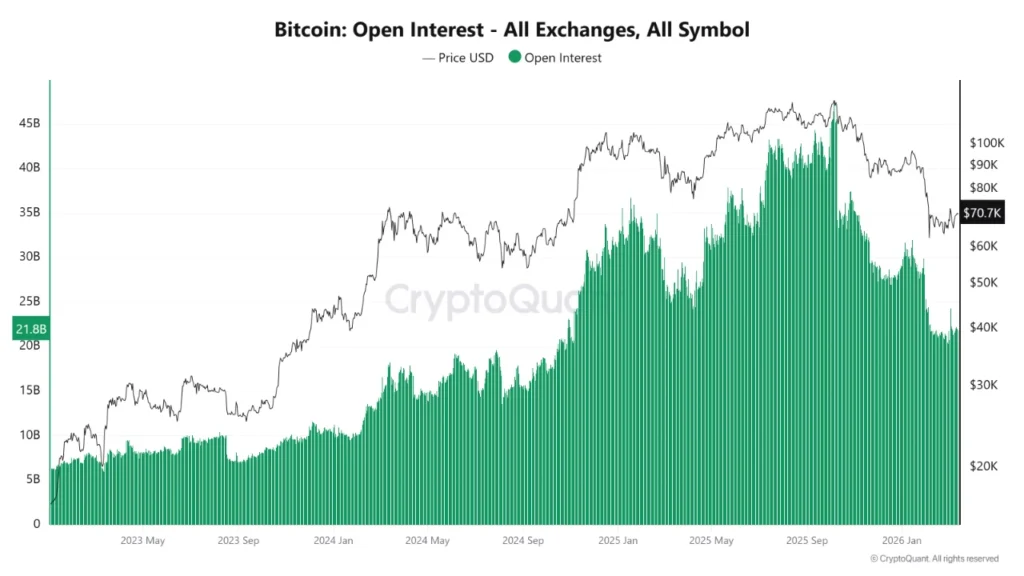
In this volatile context, the close monitoring of derivative indicators becomes paramount. Open Interest (OI), which quantifies the total number of outstanding futures contracts, provides insight into the scale of active leveraged capital within the market. Concurrently, perpetual contract funding rates signal whether bullish or bearish sentiment currently dominates. A simultaneous surge in Open Interest alongside extreme funding rates often serves as a red flag, indicating excessively crowded positions. This scenario significantly amplifies the risk of “cascading liquidations” should the market experience an abrupt shock.
In conclusion, the ultimate impact of a Strait of Hormuz disruption on Bitcoin may hinge less on the immediate energy shock itself and more on the evolving dynamics of global liquidity, the nature of national policy responses, and prevailing market leverage levels in the weeks and months to follow.
Disclaimer: This article is for market information purposes only. All content and views are for reference only and do not constitute investment advice, nor do they represent the views and positions of BlockTempo. Investors should make their own decisions and trades. The author and BlockTempo will not bear any responsibility for direct or indirect losses resulting from investor transactions.




