Trump Calls for Emergency Fed Rate Cut, Citing Economic Urgency
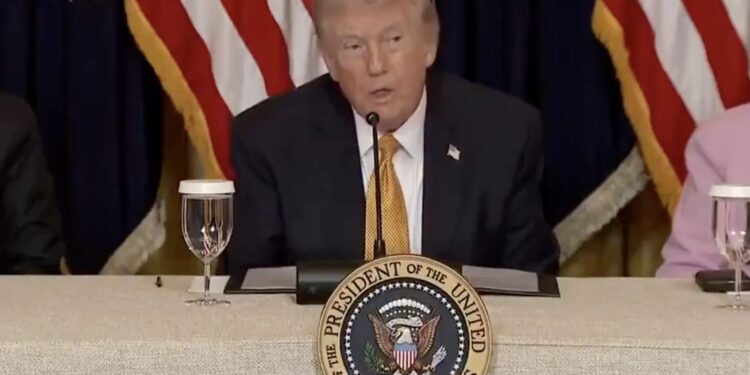
In a bold move that underscores the persistent tension between political leadership and central bank autonomy, former U.S. President Donald Trump publicly urged the Federal Reserve (Fed) on the 16th to convene an immediate “special meeting” to slash interest rates. Emphasizing that “now is the time to act,” Trump did not specify the desired magnitude of the cut, but his remarks, as quoted by the Wall Street Journal, made it clear he believes the Fed should not defer rate decisions to its scheduled meetings. He once again singled out Fed Chairman Jerome Powell, advocating for swifter, more accommodative monetary policies.
This renewed pressure from Trump comes on the eve of the Fed’s crucial March policy meeting, starkly highlighting the ongoing divergence between the White House’s economic vision and the central bank’s independent mandate. The pronouncements have reignited fervent market discussions surrounding the trajectory of U.S. interest rates and the critical issue of the Fed’s independence.

“Is there a better time to cut rates than now? A third-grade student would know that,” Trump asserted, reinforcing his call for immediate action.
🇺🇸 PRESIDENT TRUMP JUST SAID
“The Fed should hold a special meeting to cut interest rates right now.”
“What’s a better time to cut interest rates than now? A third-grade student would know that.” pic.twitter.com/lXpSbYYJWQ
— Ash Crypto (@AshCrypto) March 16, 2026
This is not an isolated incident; Trump has consistently advocated for lower rates. Last Thursday, on his Truth Social platform, he declared that the Fed Chairman “should immediately lower interest rates,” a sentiment he reiterated multiple times. Earlier in January, he contended that U.S. rates ought to be “substantially lowered” to become “the lowest in the world,” criticizing Powell for being “too late” and alleging that maintaining high rates was “damaging our country and its national security.”
Trump’s argument for reducing interest rates centers on several key benefits: mitigating the immense cost of servicing the U.S. national debt, which stands at a staggering $39 trillion, and stimulating broader economic growth, the housing market, and the stock market. Furthermore, lower rates typically encourage investors to allocate capital towards higher-risk assets like equities and cryptocurrencies. Reduced borrowing costs also enhance overall market liquidity, funneling more funds into speculative investments.
Market Anticipates No Rate Cut This Week
Despite Trump’s forceful pronouncements, the financial markets hold a vastly different expectation for the Fed’s upcoming two-day March meeting, which commences this week and is set to conclude with a rate decision announced early Thursday (19th). Data from CME Group’s interest rate futures indicates an overwhelming 99% probability that traders expect the Fed to maintain the federal funds rate within its current 3.50% to 3.75% target range. Even for the subsequent meeting on April 29th, the market assigns a 97% probability of no change.
In essence, while political calls for immediate action are loud, the prevailing sentiment in financial circles is that policymakers are more inclined to adopt a cautious “wait-and-see” approach rather than hastily pivot towards monetary easing.
Inflation and Geopolitical Risks Constrain Fed’s Hand
A primary factor underpinning the Fed’s reluctance to cut rates is the persistent uncertainty surrounding the inflation outlook. While U.S. inflation in February held steady at 2.4%, market forecasts suggest a potential rebound in March. In this environment, an premature easing of monetary policy could risk reigniting inflationary pressures.
Moreover, geopolitical tensions, particularly the escalating conflict involving Iran, have driven up oil prices. This surge directly translates to higher fuel and transportation costs, which can then ripple through supply chains, impacting prices for food and a broad spectrum of other goods. Consequently, the Fed not only lacks compelling reasons for an immediate rate cut but must also remain vigilant against renewed energy price surges that could exacerbate overall price pressures.
The market’s immediate focus is now on whether Trump’s political statements will influence the official signals emanating from the Fed this week. However, mainstream expectations suggest a low probability of the Fed resorting to an emergency rate cut in the short term. A recent Reuters analysis underscored this sentiment, noting that with energy prices elevated due to the Iran conflict, inflation risks lingering, and the U.S. economy slowing but not deteriorating sharply, investors largely anticipate the Fed will hold rates steady this week, rather than calling an unscheduled special meeting.
Trump’s latest comments have also thrust the critical issue of Fed independence back into the spotlight. This comes shortly after a Washington federal judge blocked a Justice Department subpoena targeting Chairman Powell, deeming the investigation to be imbued with overt political pressure. The context of that case, tied to Powell’s stance on interest rate policy, amplifies scrutiny on whether recent public criticisms from the White House will further erode market confidence in the U.S. central bank’s autonomy.
Crypto Market Outlook: No Rate Cut Not Necessarily All Bearish
For the cryptocurrency market, interest rate cuts are generally perceived as a bullish catalyst. Lower capital costs and increased liquidity typically encourage capital flows into higher-risk assets such as stocks and digital currencies. Reduced borrowing costs tend to boost overall market liquidity, enhancing investors’ willingness to allocate to riskier ventures.
However, it’s crucial to note that traders have largely factored in the expectation of “potentially zero rate cuts this year.” Therefore, while elevated oil prices complicate the inflation narrative, this also implies that the crypto market may not necessarily face significant additional downside pressure purely from the absence of a rate cut. For the time being, the Fed is more likely to prioritize waiting for greater clarity in the economic landscape rather than immediately reacting to political demands.
For participants in the crypto market, the true focus beyond this week’s potential inaction lies in any signals the Fed might convey regarding its policy path for the coming months. These signals, embedded within the Fed’s statement, the “dot plot” projections, and Chairman Powell’s post-meeting remarks, will hold more direct sway over the future trajectory of Bitcoin and broader risk assets than Trump’s immediate calls.
In the broader financial markets, Trump’s statements are largely being interpreted as a political signal rather than an indication of an imminent policy shift. Given the Fed’s scheduled two-day policy meeting this week, the market’s attention is squarely on the interest rate decision itself, along with Chairman Powell’s post-meeting commentary on economic growth, energy prices, and inflation risks. Should the Fed maintain rates while signaling a more cautious policy stance, market expectations for the number of rate cuts within the year could further contract.
Disclaimer: This article is for market information purposes only. All content and opinions are for reference only and do not constitute investment advice. They do not represent the views and positions of BlockTempo. Investors should make their own decisions and trades. The author and BlockTempo will not bear any responsibility for direct or indirect losses incurred by investors’ transactions.