
SEC Unveils Transformative Crypto Regulatory Framework: Charting a Clear Path for Digital Assets
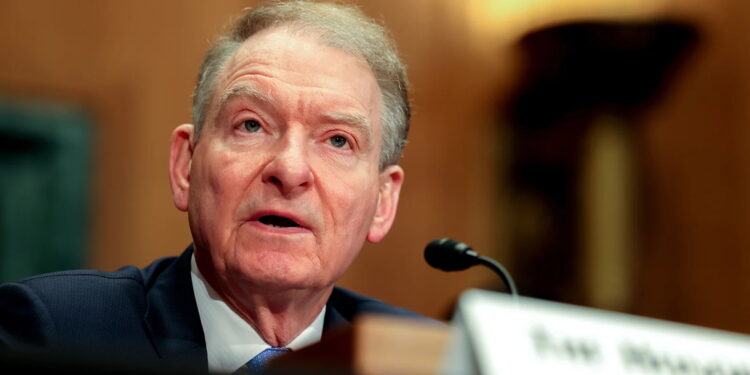
The U.S. Securities and Exchange Commission (SEC) is poised to usher in a new era for digital assets. SEC Chairman Paul Atkins recently announced a groundbreaking regulatory framework designed to resolve the long-standing debate over which crypto assets constitute securities. This initiative aims to provide unprecedented clarity for crypto enterprises seeking to raise capital and operate within the United States, leveraging token classification, nuanced interpretations of investment contracts, and innovative “safe harbor” arrangements.
Speaking at the DC Blockchain Summit in Washington, Atkins detailed the SEC’s evolving approach. The proposed framework establishes clear distinctions, classifying digital commodities, digital collectibles, digital tools, and payment stablecoins (compliant with the GENIUS Act) as assets generally not subject to securities laws. Conversely, the framework indicates that tokenized traditional securities will largely remain under the SEC’s purview. This foundational classification is crucial for developers and investors alike.

Defining the Exit Ramp: When a Token Sheds its Securities Status
A pivotal aspect of the new framework addresses a critical question: when does a crypto asset cease to be regulated as a security? Atkins clarified that even if an asset isn’t inherently a security, its initial issuance or sale might still qualify as an investment contract, thereby falling under federal securities law. However, the new guidelines will provide a much-needed “exit ramp,” explaining that once an issuer has completed or permanently ceased the promised key managerial efforts, the associated crypto asset can potentially transition out of securities law oversight.
The SEC’s revised interpretation will demand transparent disclosure from project teams regarding their commitments and representations to investors. Crucially, any managerial efforts that investors rely upon must be “clear and unambiguous.” This signifies a shift in regulatory focus, emphasizing the promises made, information disclosed, and managerial responsibilities during the asset’s issuance rather than solely on the asset’s inherent form.
Paving the Way for Innovation: The “Safe Harbor” Proposals
In a move that could significantly de-risk innovation, Atkins revealed that the SEC plans to release proposed rules for public comment in the coming weeks. These proposals are centered around three key mechanisms:
1. Startup Exemption: This time-limited registration exemption would apply to investment contract offerings involving specific crypto assets. Envisioned to last up to four years, it would provide developers a crucial window to mature their projects. This exemption could also permit startups to raise up to approximately $5 million within this period, requiring only a notice to the SEC and a final filing upon exiting the exemption.
2. Fundraising Exemption: The SEC is considering new issuance exemption rules that would allow eligible issuers to raise up to approximately $75 million within a 12-month period. This mechanism would also offer flexibility, allowing issuers to simultaneously utilize other existing securities law exemptions. Issuers would be required to submit comprehensive disclosure documents, including principal disclosures, financial condition statements, and financial statements.
3. Investment Contract Safe Harbor: Perhaps the most anticipated proposal, this arrangement would stipulate that certain crypto assets would no longer be considered “securities” once the issuer has fulfilled its previously promised core managerial responsibilities. This provides a much-needed, rule-based legal certainty for issuers, trading platforms, and investors, fostering a more predictable regulatory environment.
A Decisive Shift: SEC Embraces Institutionalized Clarity
Atkins’ introduction of these safe harbor proposals, designed to streamline token sales and capital raising for crypto firms, signals a profound institutionalization of the SEC’s approach to digital assets. This represents a marked departure from the enforcement-heavy, often ambiguous regulatory landscape of recent years.
“Compared to the U.S. crypto regulatory environment of the past few years, this statement marks a clear policy shift. Atkins frankly stated in his speech that market participants have lacked clear guidance for over a decade, and the SEC’s past failure to provide clear answers on key issues will now come to an end.”
Notably, Atkins explicitly acknowledged SEC Commissioner Hester Peirce, confirming that the current regulatory vision directly builds upon her “Token Safe Harbor” concept, first introduced in 2020. This recognition underscores the growing influence of voices within the SEC advocating for a more transparent, less enforcement-driven regulatory framework for crypto assets. The industry now looks forward to a future where regulatory clarity empowers innovation rather than stifles it.
Disclaimer: This article provides market information only. All content and views are for reference only and do not constitute investment advice. They do not represent the views or positions of the author or BlockTempo. Investors should make their own decisions and trades. The author and BlockTempo will not bear any responsibility for direct or indirect losses incurred by investors’ transactions.




