Bitcoin Navigates Choppy Waters as Fed Meeting Looms and Energy Prices Flare
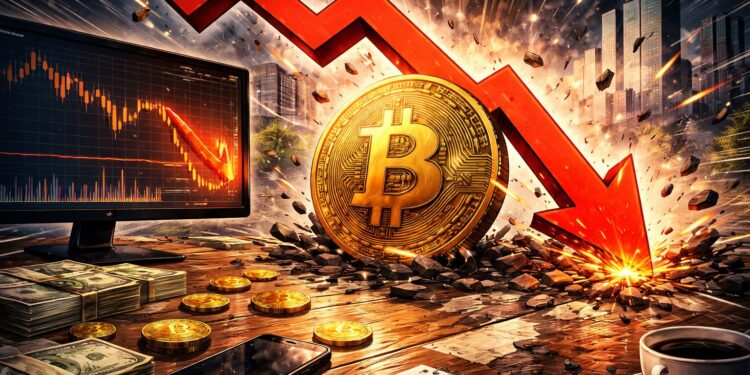
As the U.S. Federal Reserve’s (Fed) Federal Open Market Committee (FOMC) meeting concludes, Bitcoin experienced a fleeting surge past the $75,000 mark on Tuesday, only to quickly retreat below $74,000. This volatile price action underscores investor caution towards high-risk assets ahead of crucial monetary policy announcements.
The Fed’s Deliberation: Awaiting Powell’s Verdict
The highly anticipated Fed meeting statement is scheduled for release on March 18th at 2 PM ET (March 19th, 2 AM Taiwan time), followed by a press conference with Chair Jerome Powell. Analysts are closely watching for clues on the Fed’s future trajectory. Persistent strong employment growth, robust retail sales, and a resurgence of inflation — exacerbated by escalating Middle East tensions pushing oil prices higher — have collectively raised the bar for imminent rate cuts. This confluence of factors could delay the first rate reduction until September or even October at the earliest.
Powell’s post-meeting remarks will be pivotal, offering insights into the updated “dot plot” and the committee’s outlook for a potentially limited number of rate cuts throughout the year.
Bitcoin’s Brief Ascent: A Short Squeeze Story
Bitcoin’s recent upward momentum was partly fueled by a significant squeeze on bearish positions over the past two weeks. The options market had accumulated substantial hedging, while perpetual contract funding rates remained consistently negative. This market structure, characterized by a “bearish, hedged, and under-positioned” sentiment, made it ripe for a short-covering rally. Any upward price movement easily triggered a cascade of short liquidations, amplifying short-term gains.
However, the $75,000 level clearly remains a formidable resistance zone. Despite Bitcoin’s brief breach of this threshold earlier on Tuesday, the breakout was short-lived, with prices swiftly falling back below $74,000.
Energy Market Heats Up, Posing a Headwind for Crypto
Beyond technical resistance, a more unsettling factor for the market is the potential for geopolitical tensions and rising energy prices to reignite inflation. While Bitcoin has shown resilience since the onset of the Iran conflict, activity in the on-chain energy and commodity markets has been even more pronounced. Notably, oil-related commodity futures trading on decentralized perpetual contract platforms like Hyperliquid has surged, indicating a partial shift of capital towards energy and raw material narratives.
Refined energy products, such as gasoline and heating oil, currently offer superior expected Sharpe Ratios, tighter spot supply-demand dynamics, and a favorable term structure. Should oil prices continue their upward trajectory, investors may increasingly allocate capital to assets that benefit from inflation and supply chain risks, rather than solely chasing broad cryptocurrency exposure.
Market Shifts Focus: Rate Cut Expectations Recede
The prevailing market consensus anticipates the Federal Reserve will maintain interest rates at their current level this week. However, investor attention has decisively shifted from “if” rate cuts will occur to “when” they might materialize. Recent reports, including those from Reuters, suggest that Wall Street institutions are pushing back their expectations for the first rate cut of the year, citing the impact of Middle East tensions on energy prices and inflation risks. Market expectations for the 2026 rate cut path have also become noticeably more conservative.
Market pricing reflects a high degree of confidence in the status quo, with prediction platforms like Kalshi indicating over a 90% probability that interest rates will remain at their current levels.
Due to geopolitical risks driving up energy costs and stubbornly high inflation data, expectations for three rate cuts by the end of 2026 have plummeted from nearly 50% last week to approximately 20-30%. Traders are now meticulously scrutinizing the updated Summary of Economic Projections (SEP) and the infamous “dot plot” for any signs of a more hawkish stance. Even minor adjustments by a few FOMC members could signal “no rate cuts for the entire year.” A key indicator to watch is the 2-year U.S. Treasury yield, which could spike if rhetoric turns cautious, potentially exerting pressure on high-valuation technology stocks.
This evolving macroeconomic backdrop is not entirely detrimental for Bitcoin, but it certainly implies a limitation on its short-term valuation expansion. If rising oil prices fuel inflation expectations, the Fed may maintain a hawkish “wait-and-see” approach for an extended period, consequently slowing the pace of risk asset rallies. While Bitcoin’s performance remains robust, a “rapid ascent” in the near future may not be as easily achievable.
Technical Strength Persists, But a Confirmed Breakout Awaits
From a short-term structural perspective, the market has not turned bearish on Bitcoin. Analysts note that Bitcoin’s recent approach to $75,000 was primarily driven by strong technical signals and a significant liquidation effect in the derivatives market, which triggered approximately $124 million in liquidations, further propelling the rally. However, many market observers also suggest that the current price action more closely resembles high-level consolidation rather than a confirmed new breakout, with the $75,000 psychological barrier yet to be effectively sustained.
For investors, the true test moving forward will not only be whether the Fed holds steady but, more importantly, whether Chair Powell’s statements on inflation, oil prices, and the future interest rate path can reignite confidence in risk assets. Should the policy rhetoric lean hawkish, coupled with continued warming in the energy market, Bitcoin may likely remain in a high-level consolidation pattern in the short term.
Disclaimer: This article is for market information purposes only. All content and views are for reference only and do not constitute investment advice. They do not represent the views or positions of the author or Blockcast. Investors should make their own decisions and trades. The author and Blockcast will not bear any responsibility for direct or indirect losses incurred by investors’ transactions.