
US Bitcoin spot ETFs experienced a significant turnaround in March, recording a combined net inflow of $1.32 billion across all 12 funds. According to data from SoSoValue, this positive shift marks the first monthly net inflow since October last year, effectively ending a four-month streak of capital outflows from these prominent investment vehicles.
The preceding period was particularly challenging for the crypto market. Reflecting on October last year, Bitcoin reportedly reached a historic peak of $126,000, only to subsequently enter a volatile decline, retracing as much as 50% at one point. This downturn coincided with sustained withdrawals from Bitcoin ETFs. November last year saw the most substantial outflow, totaling $3.5 billion, followed by $1.1 billion in December and $1.6 billion in January. The pace of outflows finally decelerated in February, narrowing significantly to $206 million.
The return of capital in March has had a noticeable impact on Bitcoin’s price action. The cryptocurrency concluded five consecutive months of negative (bearish) monthly candles, achieving its first positive (bullish) monthly candle in half a year – indicating that the month’s closing price was higher than its opening price. This suggests a potential shift in market momentum and renewed investor confidence.
Despite the severe price volatility experienced during this period, the overall Asset Under Management (AUM) for Bitcoin ETFs demonstrated remarkable resilience. CheckonChain data reveals that Bitcoin ETF holdings, which peaked at 1.38 million BTC in October last year, saw a relatively modest decline to a low of 1.28 million BTC, representing approximately a 7% drop. Holdings have since recovered, now standing at around 1.31 million BTC.
However, the broader sentiment among ETF investors remains cautious, with many still in a “loss” position. The average cost basis for these investors is estimated to be around $84,000, which is still some distance from the current market price of approximately
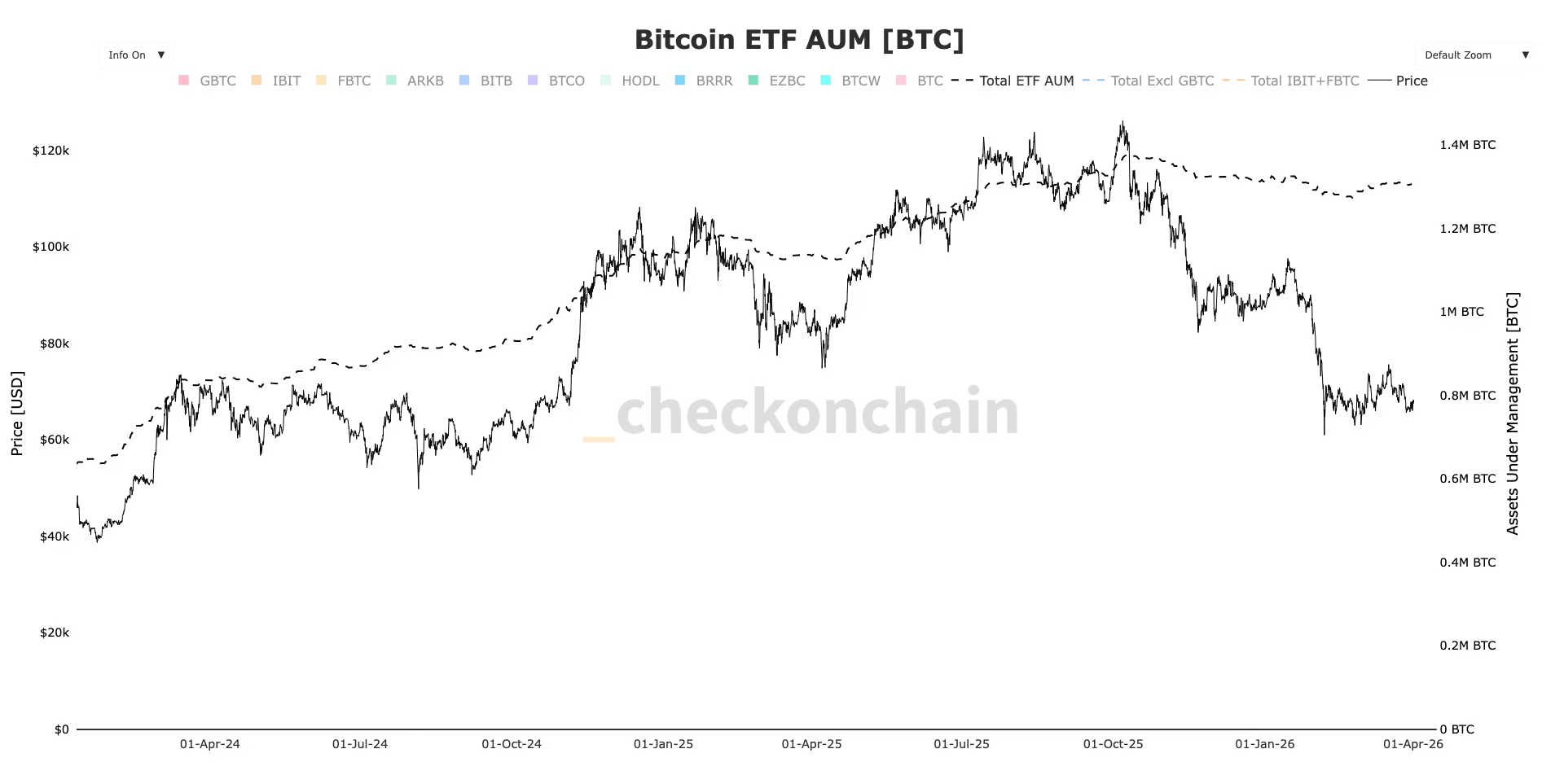 $66,000.
Disclaimer: This article is intended solely for market information purposes. All content and views are for reference only and do not constitute investment advice, nor do they represent the opinions or positions of BlockBeats. Investors should make their own investment decisions and transactions. The author and BlockBeats will not be held responsible for any direct or indirect losses incurred by investors as a result of their transactions.