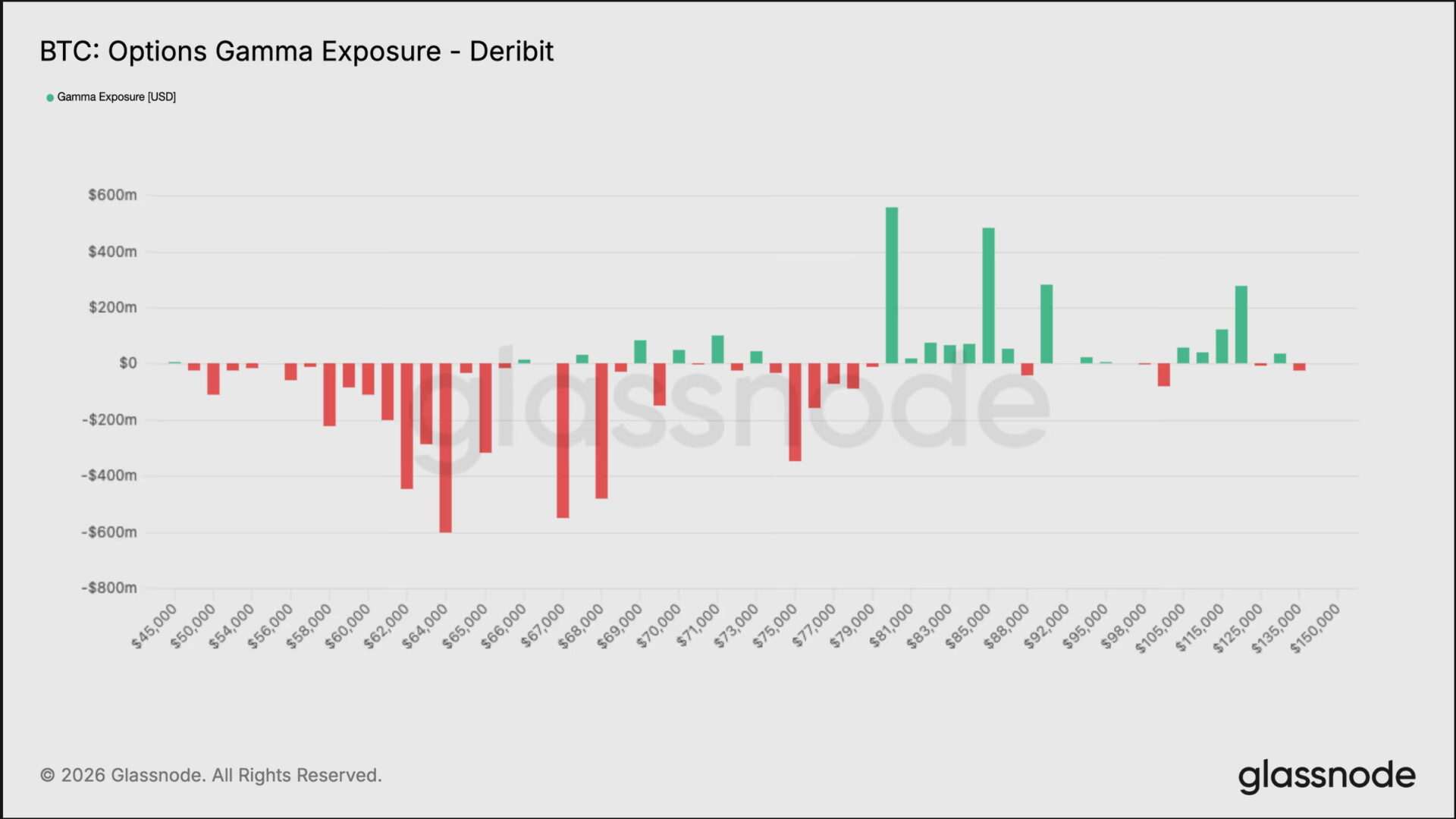

Bitcoin’s recent dip below the $67,000 mark, initially attributed to escalating geopolitical tensions following renewed threats from U.S. President Donald Trump against Iran, appears to be more than just a fleeting reaction to news. While external events often trigger market volatility, a closer examination of the derivatives market reveals a potent internal mechanism that could amplify downward price movements, potentially sending Bitcoin spiraling further.
The primary concern stems from the intricate flow of capital within the Deribit options market. Analysts are flagging a significant accumulation of defensive positions, particularly put options, at price levels below Bitcoin’s current valuation. This concentration suggests a latent risk: should Bitcoin decisively breach the critical $68,000 threshold, it could ignite a cascade of selling pressure, potentially driving the digital asset down to $60,000, with an outside chance of even touching $50,000.
In recent weeks, traders have aggressively acquired put options, essentially buying downside protection against a potential price drop. These defensive positions are heavily clustered with strike prices below $68,000, extending all the way down to $55,000. This heightened caution is understandable given the backdrop of ongoing Middle East conflicts, the long-term specter of quantum computing threats, and a lingering bearish sentiment that has persisted since late last year. In such an environment, market participants are naturally on edge.
However, when defensive positioning becomes overly concentrated, it creates what is known as a “Negative Gamma Zone.” In this scenario, market makers—the entities responsible for providing liquidity to exchanges—are compelled to adjust their hedges in response to price fluctuations. Crucially, these adjustments often serve to reinforce the prevailing market trend, meaning that in a falling market, their actions would exacerbate the decline.
Historical data shows that such dynamics in market structure have repeatedly magnified both bullish and bearish market movements in the past.