
The “King of Cryptocurrencies,” Bitcoin, stands on the cusp of a momentous historical milestone: the imminent mining of its 20 millionth coin. On-chain data from platforms like the Clark Moody Dashboard reveals that 19,996,979 Bitcoins are already in circulation, leaving approximately 3,000 coins until the 20 million mark is reached. At current block production rates, this landmark is anticipated within roughly seven days.
This achievement signifies that over 95% of Bitcoin’s total supply of 21 million will have entered circulation. Intriguingly, the final million coins are projected to take over a century to be fully mined, underscoring the asset’s inherent scarcity.
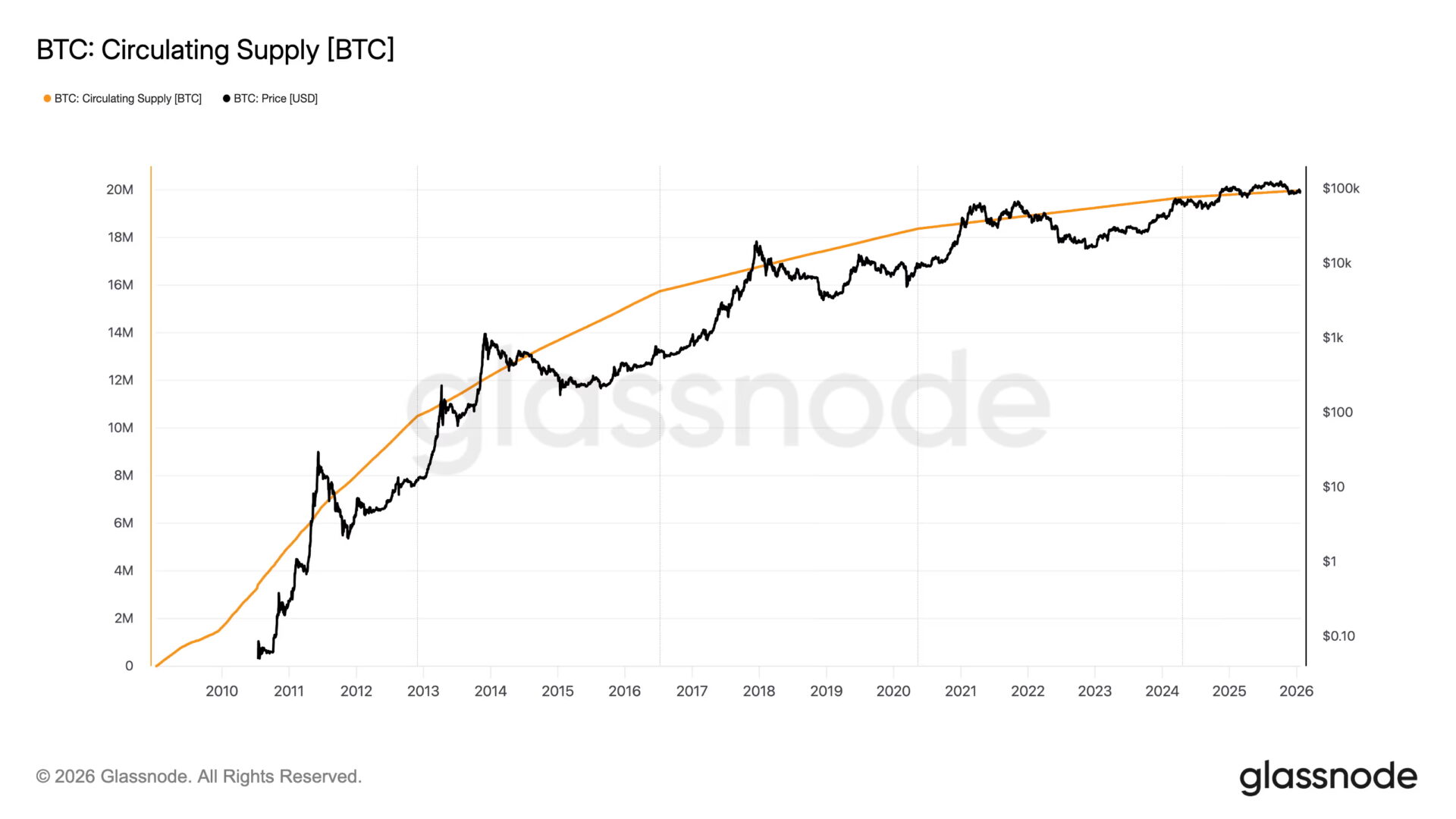
This fixed supply is no accident. Bitcoin’s pseudonymous creator, Satoshi Nakamoto, hardcoded the 21 million coin limit into its original protocol, intentionally crafting a form of money defined by “absolute scarcity.” This design stands in stark contrast to traditional fiat currency systems, where central banks possess the power to increase supply at will.
While Satoshi never publicly explained the precise rationale behind the 21 million figure, this unalterable ceiling has become an unshakeable tenet for Bitcoin maximalists. For them, any proposal to modify the supply cap would represent a fundamental betrayal of Bitcoin’s core value as “hard money.”
Bitcoin’s scarcity is frequently compared to precious commodities like gold or oil. However, a crucial distinction exists: in traditional markets, a surge in gold or oil prices often incentivizes producers to intensify extraction efforts or discover new reserves, thereby increasing supply to stabilize prices. Bitcoin operates differently. Its issuance schedule is transparent, immutable, and entirely independent of market demand or price fluctuations. Regardless of how high its market value soars, the rate at which new bitcoins are introduced cannot be accelerated.
This controlled release is governed by “halving events.” Approximately every four years, the block reward received by miners is cut in half, progressively slowing down the rate at which new bitcoins enter circulation. Consequently, Bitcoin’s inflation rate has already dipped below 1%, with only around 450 new coins mined daily.
Following this predictable schedule, 99% of the total supply is projected to be mined by January 2035, with the very last full Bitcoin expected to emerge around 2105. The remaining fractional amounts will continue to be issued in diminishing quantities until approximately 2140.
Once the entire 21 million supply has been issued, Bitcoin miners will no longer receive block rewards. Instead, their revenue will depend entirely on transaction fees. This pivotal shift means the long-term security and economic viability of the Bitcoin network will ultimately hinge on whether transaction demand is robust enough to sustain miner income, ensuring continued decentralization and protection.
Disclaimer: This article is for informational purposes only. All content and opinions are for reference only and do not constitute investment advice, nor do they represent the views and positions of BlockTempo. Investors should make their own decisions and trades. The author and BlockTempo will not bear any responsibility for direct or indirect losses incurred by investors’ transactions.