Iran Unveils “Hormuz Safe,” Targeting Key Maritime Insurance Market with Bitcoin Integration
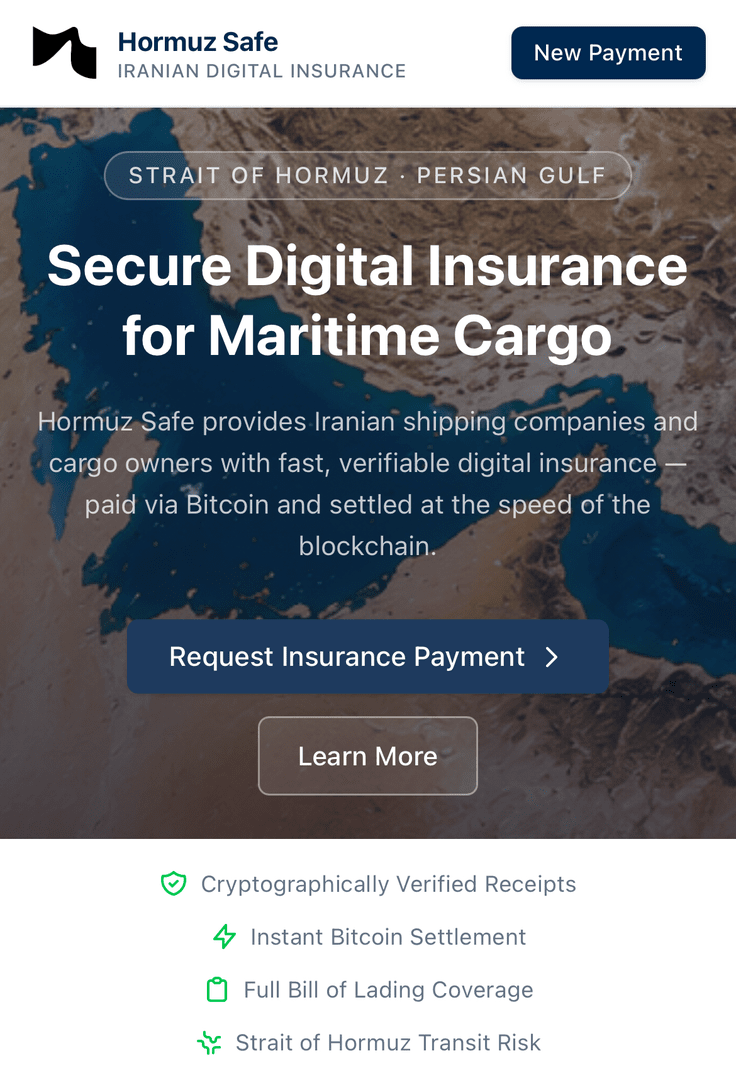
In a significant move reported by local media outlet Fars News, Iran is advancing a novel maritime insurance mechanism dubbed “Hormuz Safe.” This initiative has garnered considerable international attention, particularly for its groundbreaking inclusion of Bitcoin ($BTC) within the settlement framework for shipping operations through the Strait of Hormuz. According to various media outlets and Iranian sources, the program is designed to offer insurance services covering war risks, blockade risks, and general maritime security for oil tankers and merchant vessels transiting the Strait, with the option to settle a portion of these fees in Bitcoin.
The Strait of Hormuz has long been recognized as one of the world’s most critical energy arteries, facilitating the passage of approximately one-fifth of global crude oil shipments. Daily, vast quantities of oil and natural gas from Saudi Arabia, the UAE, Kuwait, and Iraq traverse these waters en route to markets in Asia and Europe. Recent escalations in Middle Eastern tensions—including US-Iran confrontations, Israeli military actions, and the Red Sea shipping crisis—have dramatically amplified risks across global shipping and energy markets, concurrently driving insurance premiums to unprecedented levels.
Iran’s introduction of a Bitcoin settlement mechanism is widely interpreted as an strategic effort to mitigate the impact of the US dollar-dominated financial system and international sanctions on its vital energy and maritime sectors. Based on currently available information, “Hormuz Safe” aims for an annual scale of up to $10 billion in the future, with aspirations to attract shipping and energy companies from Asia, the Middle East, and various emerging markets.
Bitcoin Emerges as an Alternative Settlement Tool Amidst Sanctions
Iran has long faced stringent restrictions due to US financial sanctions, particularly impacting its ability to conduct transactions in US dollars, access international insurance, and utilize the SWIFT financial system. In response, the Iranian government has consistently sought alternative financial instruments, exploring options such as gold, the Chinese Yuan, cryptocurrencies, and bilateral trade mechanisms. Several years ago, Iran already permitted some importers to use Bitcoin for overseas payments and actively promoted cryptocurrency mining as a source of foreign exchange.
In its analysis, CryptoSlate underscored that this development once again highlights Bitcoin’s characteristic as “Neutral Money.” As geopolitical conflicts intensify and access to the US dollar payment system becomes restricted, Bitcoin is increasingly being considered by some nations and corporations as a viable alternative for cross-border settlements. Its inherent independence from any single national financial system and its ability to bypass traditional banking networks make it particularly appealing to countries operating under sanctions.
However, Protos offered a skeptical perspective. The report suggested that merchant vessels not participating in this insurance and settlement scheme might face elevated risks and higher premium pressures in the future, leading some observers to characterize it as a form of “Strait passage protection fee.” Furthermore, the potential for the United States and Western nations to expand sanctions to include related Bitcoin addresses, entities, or settlement platforms remains a significant point of international concern.
Maritime Insurance and Cryptocurrency: A Historic Convergence
The traditional maritime insurance market has historically been dominated by London, European institutions, and major international insurance agencies, with claims, risk assessments, and reinsurance systems heavily reliant on the US dollar financial system. Iran’s current endeavor to establish an independent insurance settlement framework utilizing Bitcoin signifies a pivotal moment, marking cryptocurrency’s deeper integration into the conventional energy and shipping markets.
CoinDesk’s report indicated that, should this mechanism be formally implemented, it could fundamentally alter payment models for high-risk shipping routes. For sanctioned nations, gray trade zones, and energy export markets, cryptocurrencies offer a compelling alternative to traditional finance. Bitcoin’s capacity for rapid, cross-border transfers, unencumbered by conventional bank scrutiny, presents a distinct advantage for certain shipping and energy companies.
Moreover, this development reflects a broader trend: the evolving utility of cryptocurrencies beyond speculative assets to encompass geopolitical strategies, international trade, and cross-border financial industries. While Bitcoin was primarily viewed as “digital gold” in the past, it is now appearing in more complex financial scenarios such as insurance, energy, logistics, and international settlements. This shift is particularly pronounced amidst growing global discussions around de-dollarization, with countries like Russia, Iran, and several BRICS nations actively exploring alternative payment networks.
Middle East Tensions Elevate Cryptocurrency to the Geopolitical Forefront
The escalating geopolitical landscape in the Middle East, characterized by military and financial confrontations between Iran, the United States, and Israel, has exerted immense pressure on energy and shipping markets. The Strait of Hormuz, as a global energy lifeline, is inherently sensitive to issues of security and passage. Any blockade, military conflict, or surge in insurance risk can directly impact global oil prices and shipping costs.
By directly integrating Bitcoin into its maritime insurance and settlement mechanisms, Iran has propelled cryptocurrency into the very core of international energy security and geopolitical discourse. For the crypto industry, such events underscore a fundamental transformation in Bitcoin’s role. It is no longer merely a volatile asset within investment markets but is increasingly being recognized by nations and businesses as a practical financial instrument and a viable cross-border payment solution.
Currently, significant uncertainties persist regarding this proposed scheme, including the actual number of participating entities, the capacity for insurance claims, the extent of international recognition, and potential countermeasures from the United States. Nevertheless, as global geopolitical risks continue to mount, the intricate relationship between cryptocurrencies, international politics, energy finance, and cross-border payments is undeniably deepening.