Hawkish New Fed Chair Kevin Warsh Dashes Rate Cut Hopes, Signals Market Turbulence Ahead
A new era has dawned at the Federal Reserve. The U.S. Senate has formally approved Kevin Warsh as the next Chairman of the Federal Reserve Board, with a decisive 54-45 vote. Scheduled for swearing-in this Friday, Warsh’s appointment marks the departure of incumbent Chairman Jerome Powell from his leadership role (though he retains his board membership), ushering in what many are calling the “Warsh era” at the nation’s central bank.
A Challenging Mandate: Rate Cut Expectations Evaporate
Warsh steps into a formidable monetary policy landscape. Despite persistent public pressure from U.S. President Donald Trump to lower borrowing costs, financial markets are now signaling an almost negligible probability of rapid monetary easing. The consensus is clear: the era of anticipated rate cuts is over, at least for the foreseeable future.
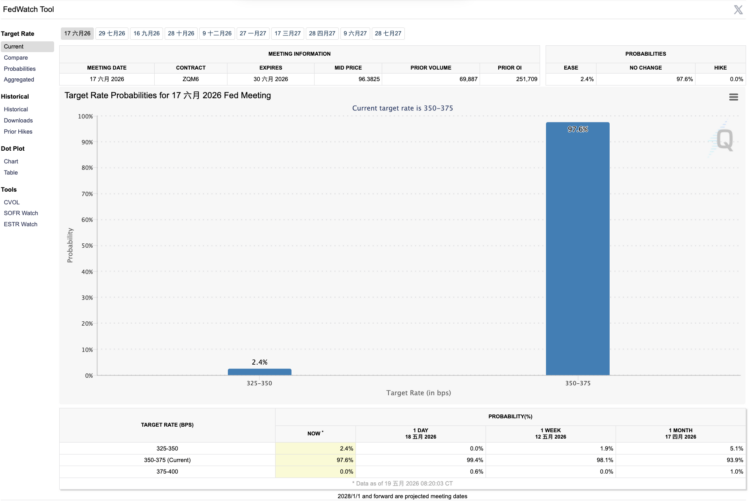
According to a Reuters report, various market indicators reveal a dramatic downward revision in investor expectations for 2026 rate reductions. Data from prediction market Kalshi shows the likelihood of a rate cut before 2027 has plummeted from a robust 96% in February to a mere 38.2%. Similarly, the CME FedWatch Tool underscores this sentiment, indicating over 97.6% and 97.9% probabilities of the Fed maintaining current interest rates in June and July, respectively.
Economists largely concur that Warsh is unlikely to yield to calls for aggressive rate cuts, especially given the persistent high inflation and escalating geopolitical uncertainties currently facing the global economy.
Inflationary Headwinds: High Rates Projected Through Year-End
A recent Reuters survey of 101 economists, conducted between May 14 and 19, reveals a significant shift in expert consensus. The majority now anticipate the Federal Reserve will hold its benchmark interest rate steady within the 3.50% to 3.75% range, a stability expected to last at least until the end of the third quarter. This marks a notable change from the previous month’s survey, where over two-thirds of experts predicted at least one rate cut this year. The latest findings show less than half now share this optimism, with nearly 50% foreseeing no rate cuts before 2027.
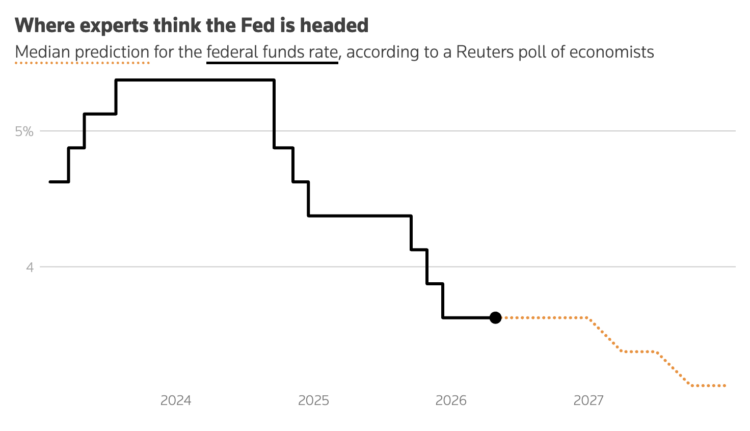
The primary catalyst for this dramatic shift in market sentiment is the inflationary pressure stemming from a surge in international energy prices, exacerbated by the recent conflict between the U.S. and Iran. The Fed’s preferred inflation gauge, the core Personal Consumption Expenditures (PCE) price index, has climbed to 3.5% year-over-year—its highest level since May 2023 and well above the official 2% target.
While 86% of economists believe this war-induced energy inflation is temporary, it represents the third consecutive month experts have revised their inflation forecasts upwards. The PCE index is now only expected to moderate to 3.4% by year-end. Concurrently, the U.S. 10-year Treasury yield has breached the 4.6% mark, reaching its highest point in over a year, reflecting persistent concerns about inflation and fiscal policy.
Liquidity Crunch Looms: A Historical Precedent for Crypto and Equities
As the market solidifies its “higher for longer” interest rate outlook, both the burgeoning cryptocurrency market, spearheaded by Bitcoin, and traditional stock markets are bracing for a significant tightening of liquidity. For crypto, a loose, low-interest-rate environment has historically provided cheap capital and ample liquidity, fueling speculative trading and blockchain innovation. A prolonged high-interest-rate environment, however, implies sustained dollar liquidity tightening, making speculative leverage prohibitively expensive and diminishing retail participation. Tokens driven purely by hype are likely to face severe challenges.
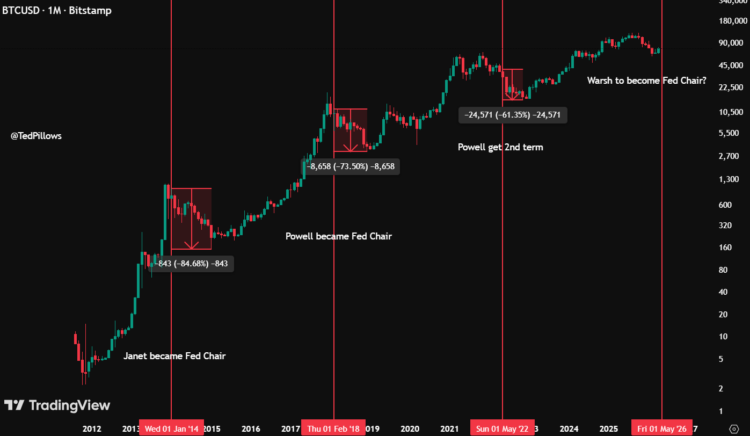
History offers a stark warning. Each transition to a new Federal Reserve Chair has often coincided with a period of intense volatility and correction for both the crypto market and U.S. equities:
- Following Janet Yellen’s appointment in 2014, Bitcoin experienced a staggering 84.68% decline.
- In 2018, under Jerome Powell’s initial tenure, Bitcoin plunged by 73.5%, while the S&P 500 (SPX) corrected by 20%.
- Powell’s reappointment in 2022 saw Bitcoin plummet by another 61.35%, with the S&P 500 sliding 24%.
With Kevin Warsh, known for his more hawkish policy stance, now at the helm, market participants are concerned that asset price corrections could accelerate.
Beyond Rates: Integrity Concerns and Crypto Regulatory Crossroads
Warsh’s challenges extend beyond monetary policy. His personal financial transparency has become a contentious issue in Washington. With an estimated net worth of at least $192 million, Warsh, in compliance with government ethics requirements, rapidly divested over $100 million in investments before assuming his role. This included offloading two equity stakes, each exceeding $50 million, from funds managed by the family office of legendary investor Stanley Druckenmiller.
However, Senator Elizabeth Warren, the ranking Democrat on the Senate Banking Committee, has raised strong objections, alleging that Warsh failed to disclose two assets valued between $250,000 and $500,000. She continues to press for details regarding the buyers and transaction terms, expressing concerns that his private holdings could pose conflicts of interest with the Trump family or Wall Street titans, potentially compromising the Fed’s crucial independence.
Amidst this leadership transition, the U.S. cryptocurrency regulatory landscape is also approaching a critical juncture. Congress is actively advancing the CLARITY Act, a legislative effort whose impending deadline is seen as a final opportunity to establish clear cryptocurrency guidelines. If enacted, the bill is expected to significantly expand the Commodity Futures Trading Commission’s (CFTC) oversight of the crypto spot market.
Yet, the CFTC itself is grappling with significant commissioner vacancies. The House Agriculture Committee has formally urged President Trump to swiftly nominate a full five-member committee to address the growing demands of crypto regulatory scrutiny and market volatility. Warsh’s inaugural steps under this dual pressure of interest rates and regulation will be closely watched, with his first major policy test anticipated at the Federal Reserve’s decision-making meeting on June 16-17.