Geopolitical Tensions Rock Markets: Bitcoin Dips Below Key Level Amid Inflation Fears
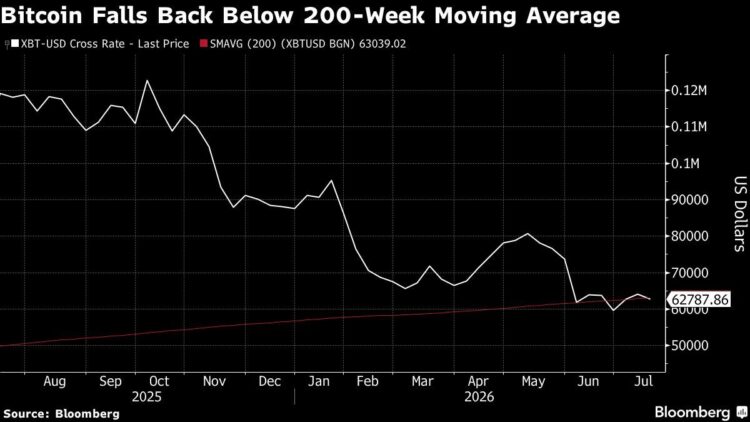
Global financial markets are on edge as escalating geopolitical tensions in the Middle East, fueled by recent U.S. military actions against Iran, have sent international oil prices surging. This renewed volatility has swiftly reignited fears of accelerating inflation, prompting a broad retreat from risk assets. Bitcoin, a prominent bellwether for speculative sentiment, briefly dipped below the $63,000 mark today (the 13th), reflecting a widespread shift towards safer havens.
Earlier, Bitcoin experienced a sharp decline of up to 2.4%, hitting a low of 62,565 USD. Notably, this downturn saw the cryptocurrency breach its crucial 200-week Moving Average (MA), a technical indicator often interpreted by analysts as a potential precursor to an extended bear market. In parallel, Ethereum, the second-largest cryptocurrency by market capitalization, also registered a 2.5% drop.
Richard Galvin, Executive Chairman of cryptocurrency investment firm DACM, attributed the broad market sell-off to a combination of factors: “This wave of selling closely tracked weakening U.S. stock futures, exacerbated by the soaring oil prices driven by heightened tensions surrounding Iran.”
The recent escalation follows Sunday’s large-scale U.S. airstrikes on Iranian military targets, launched in response to Iranian forces attacking merchant vessels traversing the Strait of Hormuz. This critical waterway, a choke point for global oil shipments, is now at the center of a dispute regarding its open navigation. Fears of potential energy supply disruptions sent Brent crude prices surging by 4.4%, pushing them past $79 per barrel.
The rekindling of conflict between the U.S. and Iran intensifies widespread concerns that soaring oil prices could reignite inflationary pressures, potentially forcing central banks to maintain or even raise interest rates. Against this backdrop, market attention this week will be laser-focused on two pivotal events: the release of crucial U.S. Consumer Price Index (CPI) data and Federal Reserve Chairman Kevin Warsh’s congressional testimony. Investors will scrutinize these for any indications regarding the future trajectory of the Fed’s monetary policy.
Tony Sycamore, an analyst at Australia’s IG Group, highlighted the stakes: “If the CPI data comes in higher than anticipated, it will undoubtedly strengthen market speculation of another Fed rate hike before year-end, which would be a significant blow to Bitcoin and other risk assets.”
Conversely, Sycamore added, “Should the inflation figures meet expectations or show signs of cooling, it would provide strong validation for Chairman Warsh’s earlier assertions that inflationary pressures are indeed easing.”
The pronounced volatility across financial markets underscores a collective investor apprehension: an expanded conflict leading to persistently high oil prices could compel the Fed to maintain a “higher for longer” interest rate environment.
This concern is echoed in the Fed’s June meeting minutes, which revealed that some policymakers had considered another rate hike, even though the committee ultimately opted to hold steady. This deliberation alone signals the Fed’s continued high vigilance against inflation risks.
A prolonged period of elevated interest rates would not only increase corporate financing costs but also push up U.S. real yields, thereby diminishing the appeal of non-yielding assets such as gold.
Consequently, as markets recalibrate their interest rate expectations, both gold and U.S. Treasuries have weakened, with risk assets, including cryptocurrencies, also feeling the ripple effect.
Despite the overarching macroeconomic gloom, a glimmer of optimism emerged in the cryptocurrency market last week. U.S. spot Bitcoin ETFs registered a net inflow of $197.4 million, marking their first weekly net inflow in nine weeks.
Looking ahead, market participants widely anticipate that two major upcoming events will be instrumental in determining the near-term direction for cryptocurrencies, technology stocks, and other risk assets.
First, the U.S. is set to release its June CPI data on July 14th, which will be crucial for assessing whether inflation is indeed re-accelerating due to rising energy costs. Second, the Federal Reserve’s interest rate decision meeting, scheduled for July 28th to 29th, is expected to provide clearer guidance on the future path of monetary policy.
Should inflation continue to cool, expectations for rate cuts could be rekindled, potentially paving the way for a rebound in risk assets. However, if inflation escalates again and the Fed signals a more hawkish stance, then risk assets, including Bitcoin and semiconductor stocks, may face renewed correctional pressure.
Disclaimer: This article is for market information purposes only. All content and views are for reference only and do not constitute investment advice, nor do they represent the views and positions of BlockTempo. Investors should make their own decisions and trades. The author and BlockTempo will not bear any responsibility for direct or indirect losses incurred by investors’ transactions.