Original Source: Ariel, CryptoCity
Japanese Retail Giant Lawson Pilots Multi-Stablecoin Payments, Integrates MetaMask
In a significant move poised to redefine retail payments, Japanese convenience store behemoth Lawson officially announced on August 3rd the launch of in-store stablecoin payment trials. Building on earlier plans to integrate the Japanese Yen stablecoin, JPYC, this expanded initiative now includes support for the popular cryptocurrency wallet MetaMask, alongside major US dollar-pegged stablecoins, USDC and USDT.
This latest announcement marks Lawson’s first disclosure of concrete timelines and partnership details since its initial July revelation regarding JPYC payments. Crucially, the scope of stablecoin acceptance has broadened from a single national currency-backed token to a diversified portfolio of currencies and wallet solutions, signaling a robust commitment to digital innovation.
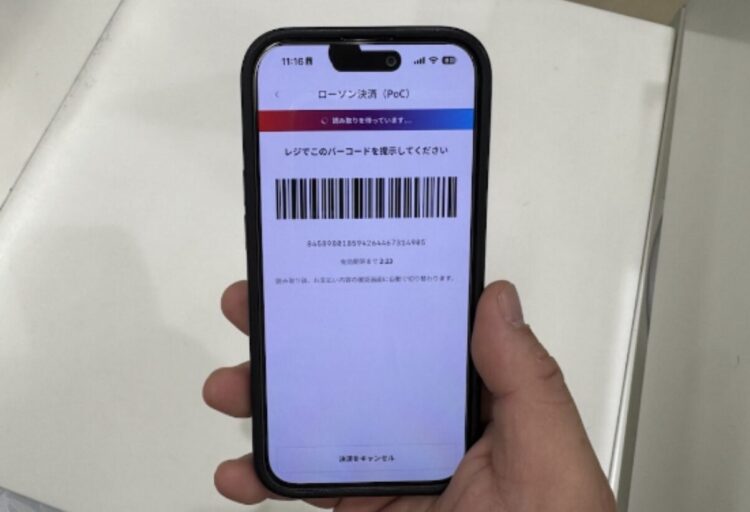
Lawson highlights a key innovation in this trial: unlike previous stablecoin payment setups that often necessitated dedicated terminals or QR code displays, this experiment allows customers to complete transactions by simply presenting a barcode on their smartphone. This barcode is then read directly by existing POS cash registers, with payment gateway and wallet providers facilitating the seamless backend process.
Crucially, this approach eliminates the need for any new, specialized checkout hardware at the store level. This makes it Japan’s first stablecoin payment trial to be fully integrated with standard POS systems, a pioneering effort supported by partners HashPort and Netstars.
Phased Rollout: Lawson’s Stablecoin Experiment Schedule
Lawson’s stablecoin payment trials are structured into two distinct phases, designed to rigorously test different aspects of the technology and user experience:
- Phase One: August 6th (Thursday)
Location: Lawson Takanawa Gateway City store.
Participants: Exclusively internal employees from affiliated companies.
Wallet: HashPort Wallet.
Stablecoin: JPYC (Japanese Yen stablecoin). - Phase Two: August 17th (Monday)
Location: Lawson Gate City Osaki Atrium store.
Participants: Also limited to internal personnel.
Wallet: MetaMask.
Stablecoins: USDC, USDT, and JPYC.
Blockchain Networks: USDC and USDT will be supported on Solana, Morph, and Polygon chains, while JPYC will utilize the Polygon chain. Preliminary testing for this phase was successfully completed on August 3rd.
Both experimental phases leverage PAYTREE, a multi-barcode payment gateway service provided by Canal Payment Services, to ensure seamless financial integration. Notably, the August 17th trial will see Netstars contribute its Stablecoin Pay service, built upon its proprietary StarPay gateway.
Lawson emphasized that the core objectives of these trials are to validate the efficiency of POS system integration, streamline the checkout process, and measure transaction speeds. The company also indicated plans for additional trial sessions to be conducted later in August, suggesting an ongoing commitment to refining the system.
A Seamless Checkout: How Stablecoin Payments Work at Lawson
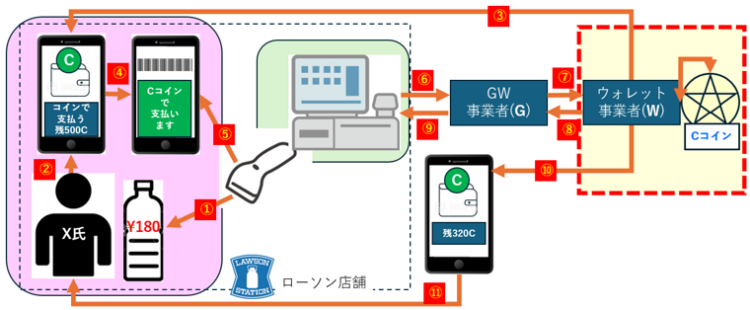
Lawson has outlined a straightforward process for customers utilizing stablecoins for in-store purchases, designed for speed and convenience:
- Scan Products: The store clerk scans item barcodes using the POS system to determine the total amount due.
- Access Wallet: The customer opens their mobile cryptocurrency wallet app (e.g., MetaMask) to view their stablecoin balance.
- Generate Payment Barcode: The customer generates a unique payment barcode within their wallet app and presents it to the clerk.
- POS Scan & Gateway Processing: The clerk scans the payment barcode with the POS scanner. The POS system then transmits the transaction details to the payment gateway provider, which in turn communicates with the customer’s wallet provider to confirm sufficient funds.
- Transaction Confirmation: Upon verification, the wallet provider confirms the transaction’s executability, relays this information back to the POS system, and updates the customer’s in-app stablecoin balance.
- Final Confirmation: The customer receives a final confirmation of the completed payment and their updated balance on their mobile device, concluding the transaction.
Japan’s Retail Revolution: Stablecoins Paving the Way for Everyday Payments
The landscape for stablecoin adoption in Japan has been significantly reshaped following the June 2023 revision of the Payment Services Act. This landmark legislation officially recognized compliant fiat-backed stablecoins as ‘electronic payment instruments,’ creating a more favorable and regulated environment for their issuance and use. Consequently, self-custodial wallets have emerged as a crucial conduit for bringing stablecoins into mainstream public use.
Beyond Lawson’s pioneering efforts, the Japanese Yen stablecoin (JPYC) is already making considerable inroads. It boasts a network of 56 physical locations across Japan, with a total of 78 integrated scenarios including online services and mobile vendors. Earlier this year, in April, JPYC successfully underwent trials at two Chibo stores in Osaka. Enthusiasts can explore the growing ecosystem of JPYC-supporting venues via the Japan JPYC map.
International stablecoins are also gaining traction within the Japanese market. In late January, Netstars collaborated with Japan Airport Terminal Co. to conduct a USDC payment experiment at duty-free shops in Haneda Airport’s Terminal 3. This trial enabled travelers to complete purchases within a swift 30 seconds by simply scanning a QR code using their MetaMask wallet.
- Related Report: Stablecoins for Travelers: Haneda Airport Shops Pilot USDC Payments, Supporting MetaMask
Further demonstrating this trend, a collaborative effort between Digital Garage, JCB, and Resona saw a week-long stablecoin payment test take place at Shibuya PARCO building in late February. This pilot supported USDC on the Base chain and JPYC on the Polygon chain, showcasing interoperability and diverse blockchain integration.
With the Japanese government consistently fostering a progressive regulatory environment, stablecoins are increasingly poised to transcend their role as online financial instruments. The clear trajectory points towards their widespread integration into everyday physical retail consumption, fundamentally transforming how transactions are conducted across the nation.
(This article is an authorized excerpt and reproduction from our partner, CryptoCity.)
Disclaimer: This article is intended solely to provide market information. All content and opinions are for informational purposes only and do not constitute investment advice. They do not represent the views or positions of the publisher. Investors are advised to make their own decisions and conduct their own due diligence. The author and publisher shall not be held responsible for any direct or indirect losses incurred from investment decisions based on this information.