
CFTC Poised to Forge Independent Crypto Regulations Amidst Congressional Gridlock
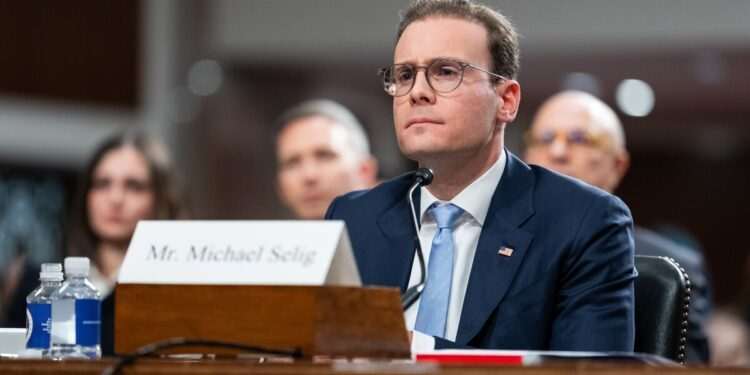
In a significant move signaling Washington’s evolving approach to digital assets, Commodity Futures Trading Commission (CFTC) Chairman Mike Selig announced Thursday that the agency is prepared to establish its own regulatory framework for the burgeoning cryptocurrency market. This proactive stance comes with a clear caveat: if Congress fails to pass the crucial Digital Asset Market Clarity Act (CLARITY Act), the CFTC will leverage its existing authority to fill the void.
Speaking at the inaugural meeting of the Innovation Advisory Committee, Selig outlined a contingency plan. Should the Senate falter in advancing the CLARITY Act, the CFTC intends to create a specialized regulatory designation for Crypto Asset Market (CMA) companies. This new classification would conceptually mirror the CFTC’s established “Designated Contract Market (DCM)” system, providing a tailored oversight mechanism for the unique challenges and opportunities presented by digital assets.
“If the CLARITY Act remains stalled due to Democratic obstruction, the CFTC will utilize its inherent authority to proactively construct a robust regulatory framework for the crypto asset market,” Selig asserted, underscoring the agency’s resolve.
He further emphasized the CFTC’s commitment to aligning with President Trump’s vision: to develop a forward-thinking digital asset market structure designed to be resilient against potential challenges from “crypto opponents.”
CFTC Charts a New Regulatory Path for US Crypto Innovation
To realize this ambitious goal, Chairman Selig pledged swift action. He has directed his staff to immediately begin drafting new rules, aiming to formalize the crypto market’s structure under existing CFTC powers. Crucially, the team is also tasked with collaborating closely with blockchain developers. The objective is to craft regulations that empower developers to “legally and compliantly offer protocols in the United States,” thereby establishing a foundation of long-term legal certainty for innovators.
This development unfolds against a backdrop of increasing regulatory activity. Earlier this week, the U.S. Securities and Exchange Commission (SEC) unveiled its first dedicated cryptocurrency regulatory proposal, “Regulation Crypto Assets.” This initiative aims to streamline the capital-raising process for emerging crypto startups by lowering regulatory barriers.
Prior to these individual actions, the CFTC and SEC had jointly issued a policy statement, providing initial guidance on classifying various digital assets and defining their respective regulatory scopes. While a significant step, these were policy directives rather than formal regulations.
Despite both agencies pushing forward with their distinct frameworks, SEC Chairman Paul Atkins highlighted on Wednesday that the immediate priority remains congressional action on the CLARITY Act. He stressed that only through legislative enactment can the long-term stability of U.S. cryptocurrency policy be truly assured.
The CLARITY Act’s Ticking Clock: A Three-Week Window
The fate of the CLARITY Act ultimately rests with the U.S. Senate. With time rapidly dwindling, the bill’s chances of passage are diminishing. The Senate faces a critical three-week window, during which it must secure the necessary 60 votes to complete this pivotal legislative process.
However, bipartisan senators, particularly within the Democratic caucus, continue to express reservations about the current draft. A major sticking point revolves around the White House’s willingness to accept a revised “ethics clause,” proposed by bipartisan Senators Ruben Gallego and Thom Tillis.
Beyond cryptocurrency, the CFTC Innovation Advisory Committee’s Thursday session also delved into other critical emerging technologies, including artificial intelligence (AI) and prediction markets.
Chairman Selig has been a prominent figure in recent months, actively championing the CFTC’s jurisdiction over prediction markets. He is currently engaged in legal proceedings with multiple state governments, vigorously defending the federal agency’s “exclusive jurisdiction” in this area.
In parallel, the CFTC has already initiated the development of relevant regulatory systems and has proposed specific rules for prediction markets.
Selig further revealed that the CFTC plans to introduce additional rules. These include updating corporate governance and listing regulations for existing Designated Contract Markets (DCMs), establishing a comprehensive regulatory framework for event contracts, and integrating robust consumer protection requirements.
Disclaimer: This article is intended for market information purposes only. All content and views are for reference only and do not constitute investment advice, nor do they represent the views and positions of the publisher. Investors should make their own decisions and transactions. The author and publisher will not bear any responsibility for direct or indirect losses incurred by investor transactions.




