
Jiang Zhuoer Recalibrates: Ethereum Crowned the Engine of the Crypto Bull Market
A prominent figure in the cryptocurrency space, Jiang Zhuoer, founder of Bitcoin mining pool BTC.TOP, has openly admitted to a “grossly inaccurate” bearish market prediction. He confessed on the X platform that his ability to capitalize on the recent market surge was purely a stroke of luck.
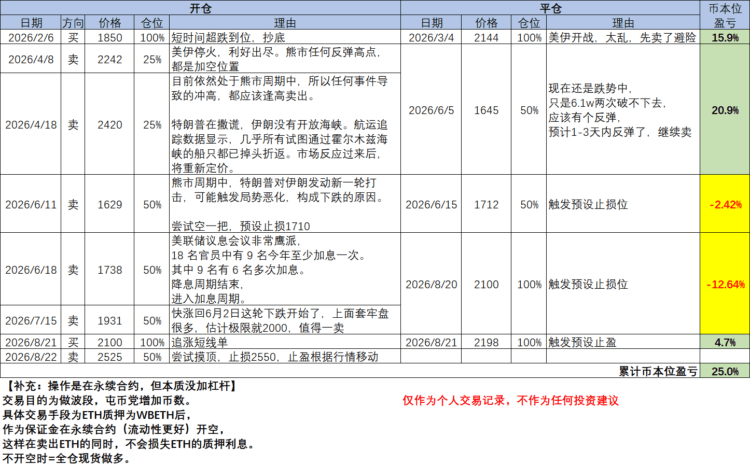
Zhuoer revealed that he shifted to swing trading in February of this year, prompted by a slowdown in Bitcoin’s upward momentum. It wasn’t until Ethereum ($ETH) breached the $2,000 mark that he recognized the true onset of the rally.
Crucially, Jiang Zhuoer highlighted a powerful second wave of appreciation in the Ethereum-to-Bitcoin (ETH/BTC) exchange rate. This, he asserts, signifies that Ethereum has become the “true engine” of the current bull market, no longer merely trailing Bitcoin’s lead. He now holds a 90% conviction that the bear market has concluded and anticipates Ethereum’s performance will surpass that of Bitcoin.
He attributes this recent market upswing to former U.S. President Donald Trump’s embrace of blockchain technology, which is driving a trend towards the tokenization and on-chain integration of U.S. financial assets.
Jiang Zhuoer’s Trading Log: A Glimpse into His Dynamic Strategy
Jiang Zhuoer also made public his investment operations. He disclosed that Ethereum previously sold within the $1,738 to $1,931 range was bought back at a stop-loss price of $2,100. Subsequently, he sold 50% of his spot holdings at $2,525 in an attempt to “top-tick” the market, setting a stop-loss at $2,550 (approximately a 1% range) and adjusting his take-profit points downwards with market movements.
Zhuoer detailed his arbitrage strategy: staking a portion of his Ethereum as Wrapped Beacon ETH (WBETH) to serve as collateral, while simultaneously opening an equivalent short position in the perpetual futures market. This allows him to concurrently earn both staking interest and funding rates.
He further shared that he retains 20-30% of his capital. Should Bitcoin retrace to the $67,000 to $72,000 range, he plans to deploy all remaining funds. Otherwise, he intends to make a market purchase no later than the end of October.
MicroStrategy’s Bitcoin Holdings: A Divergence from Previous Predictions
However, Jiang Zhuoer’s earlier optimistic assessment regarding MicroStrategy (MSTR), the world’s largest corporate holder of Bitcoin, has shown a notable discrepancy.
In June, he had analyzed that MicroStrategy’s debt constituted only about 5% of its assets. He projected that even if Bitcoin plummeted to $30,000, the debt ratio would only rise to around 10%, allowing the company to maintain operations without selling any Bitcoin.
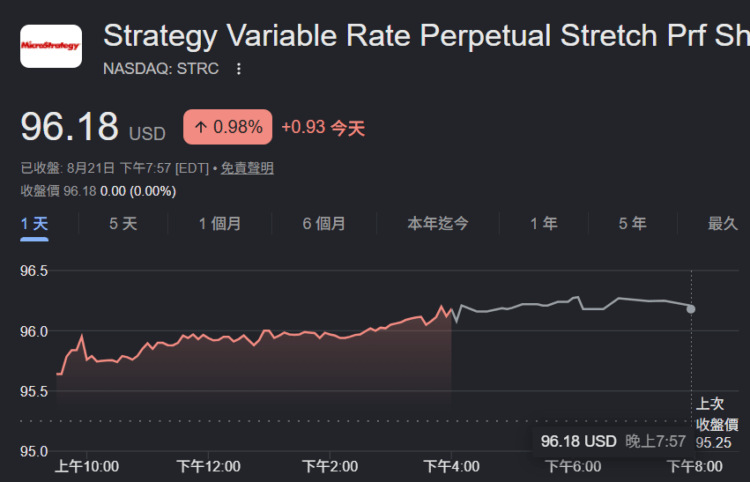
Yet, despite Zhuoer’s belief that MicroStrategy would uphold its “never sell Bitcoin” image, the company’s preferred shares (STRC) have significantly fallen below their $100 par value in recent months. Facing considerable cash reserve pressure, MicroStrategy has initiated its first sale of Bitcoin since 2022, specifically to cover preferred stock dividends.
Currently, STRC’s price has recovered to $96.18 but has not yet fully returned to its par value.
ETF Capital Inflows Surge: Can the Momentum Be Sustained?
The recent rally in the cryptocurrency market is primarily fueled by robust ETF capital inflows.
Data from SoSoValue indicates that U.S. spot Bitcoin and Ethereum ETFs collectively recorded a staggering net inflow of $2.6 billion last week. This marks the largest weekly net inflow in nearly a year.
Specifically, Bitcoin ETFs saw $1.9 billion in net inflows, while Ethereum ETFs attracted $697 million, with both setting new weekly highs for this year.
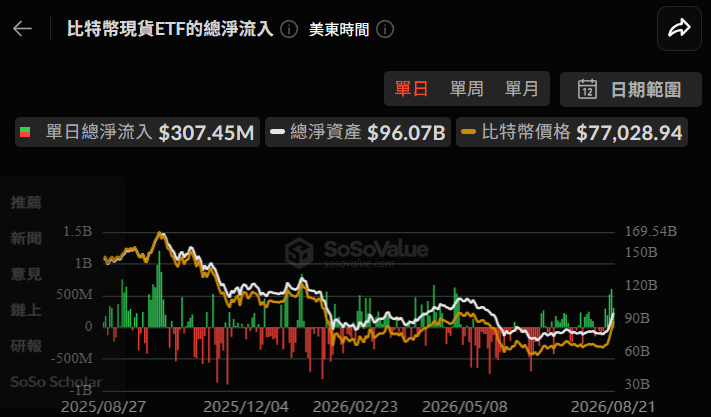
However, as reported by Decrypt, James Butterfill, Head of Research at CoinShares, cautioned that while the overall market environment has improved, the additional buying power from large institutional holders remains limited. He suggests it is not yet sufficient to confirm the bull market’s sustained trajectory. For Bitcoin to firmly establish itself above the $80,000 threshold, clearer signals of a monetary policy shift from the Federal Reserve are still awaited.