Japan Unveils Ambitious National Blockchain Initiative for Real-Time Financial Settlement
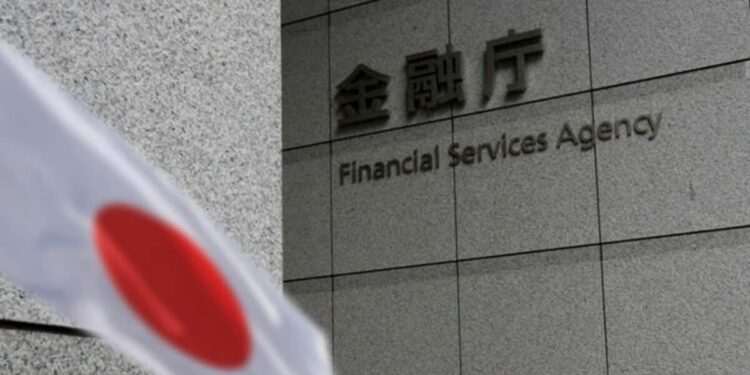
Japan is poised to revolutionize its financial landscape with a groundbreaking national blockchain settlement infrastructure. According to a Nikkei report, a powerful alliance comprising the nation’s financial regulators, the Bank of Japan (BOJ), and leading domestic financial institutions is collaborating to build a state-of-the-art system. This innovative platform is set to transform the settlement of both stock and Japanese Government Bond (JGB) transactions, ushering in an era of unprecedented efficiency.
A Coordinated National Effort Towards Financial Modernization
This monumental undertaking will see the Financial Services Agency (FSA), the Ministry of Finance, and the Bank of Japan (BOJ) establish a dedicated project task force this summer. Construction of the infrastructure is slated to commence in early 2027. Should trials and regulatory approvals proceed smoothly, this cutting-edge on-chain settlement system could go live as early as the beginning of the 2030s.
At the heart of this system lies the concept of “wholesale Central Bank Digital Currency (Wholesale CBDC).” Commercial banks will convert a portion of their reserves held at the BOJ into digital tokens. This specialized CBDC is designed exclusively for large-value settlements between financial institutions, ensuring robust and secure transactions without being accessible to the general public.
Transforming Settlement Speed and Market Efficiency
Currently, Japan’s financial system relies on the BOJ’s reserve accounts for interbank payments. Securities trading in Tokyo operates on a “T+2” settlement cycle (two business days after the trade date), while JGBs settle on a “T+1” basis. The introduction of this new blockchain infrastructure promises a dramatic reduction in settlement times, pushing them towards near real-time.
This acceleration will empower investors to reallocate or reinvest capital almost instantly after a transaction, significantly boosting market liquidity and overall capital efficiency. The implications for Japan’s financial markets are profound, enabling faster asset turnover and more dynamic investment strategies.
Addressing Global Competition and Preventing Capital Flight
The urgency behind Japan’s initiative is underscored by global trends. A recent survey by Nomura Securities and Laser Digital in April revealed that nearly 80% of Japanese institutional investors plan to allocate to cryptocurrencies within three years. As Nikkei highlights, European and American markets are aggressively pursuing modernization through “asset tokenization,” with Wall Street even envisioning “24/7 stock trading.” Without swift action, Japan risks seeing significant institutional capital migrate overseas to more advanced, efficient markets.
Private Sector Paves the Way, Central Bank Follows Suit
Japan’s private sector has already been at the forefront of this transformation. Earlier this month, Mitsubishi UFJ Financial Group (MUFG) announced plans for a “Proof of Concept (PoC)” for on-chain JGB settlement utilizing the Canton blockchain. Furthermore, Japan’s three banking giants – MUFG, Sumitomo Mitsui (SMBC), and Mizuho – have collectively embarked on pilot tests for tokenized stocks and government bonds.
In a move to support and integrate these private sector advancements, the Bank of Japan expanded its blockchain settlement sandbox program in March. This initiative continues to drive CBDC and blockchain technology research and development, ensuring seamless interoperability between these nascent technologies and existing interbank and securities settlement systems.
International Collaboration for a Global Digital Future
Japan’s commitment extends beyond its borders. The Bank of Japan is an active participant in “Project Agorá,” a pivotal initiative led by the Bank for International Settlements (BIS). This ambitious project unites seven central banks and over 40 financial institutions globally to collaboratively test tokenized cross-border payments, positioning Japan at the forefront of the international digital finance revolution.
Disclaimer: This article is for market information purposes only. All content and views are provided for reference and do not constitute investment advice. They do not represent the opinions or positions of Blockcast. Investors should make their own decisions and conduct their own trades. The author and Blockcast will not be held responsible for any direct or indirect losses incurred by investors’ transactions.