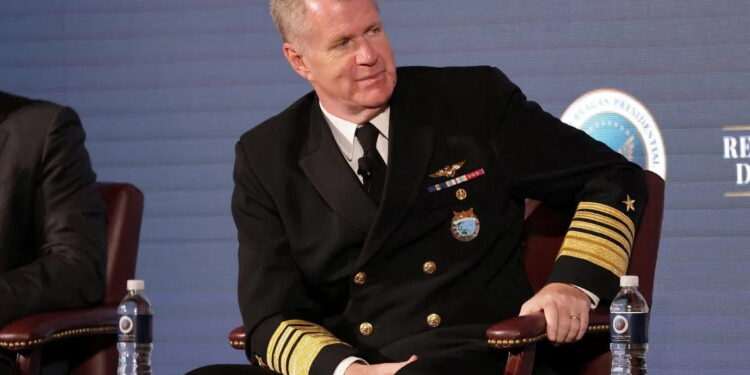
In a landmark moment for digital assets and national defense, Admiral Samuel Paparo, Commander of the U.S. Indo-Pacific Command (INDOPACOM), recently confirmed during a Senate Armed Services Committee hearing that the U.S. military is actively operating Bitcoin nodes. These operations are part of a series of “operational tests” specifically designed to bolster cybersecurity capabilities.
This revelation marks a historic first: a sitting combatant commander publicly acknowledging Bitcoin as a “national security asset” before Congress. The move signals a significant strategic pivot, recognizing the digital currency’s potential far beyond its monetary implications.
Bitcoin: A “Zero-Trust” Asset for National Power
Responding to inquiries from Senator Tommy Tuberville, Admiral Paparo characterized Bitcoin as a “peer-to-peer, zero-trust” mechanism for value transfer. He emphasized that any tool capable of enhancing national power is inherently “beneficial to the nation.” This perspective reframes Bitcoin not merely as a financial instrument but as a foundational technology with strategic utility.
Paparo clarified that the military’s primary focus isn’t on “monetary policy” but on “computer science.” He highlighted the critical application of Bitcoin’s underlying “Proof-of-Work (PoW)” consensus mechanism in the realm of cybersecurity. PoW, he explained, is invaluable for safeguarding data integrity and significantly increasing the cost and complexity for adversaries attempting to launch cyberattacks.
“We are currently running a node on the Bitcoin network and conducting a series of operational tests aimed at utilizing the Bitcoin protocol to strengthen and protect our cybersecurity,” Admiral Paparo stated, underscoring the practical, hands-on approach the military is taking.
Aligning with Broader Federal Strategy
Admiral Paparo’s statements resonate with a broader, evolving strategic shift within the U.S. federal government concerning Bitcoin. Congress is currently deliberating a “Bitcoin Act,” and there have been reports of past executive actions, including an executive order to establish Bitcoin strategic reserves, indicating a growing recognition of Bitcoin’s geopolitical significance.
Senator Tommy Tuberville further contextualized the discussion within the framework of U.S.-China competition. He pointed out that China’s leading monetary think tanks have already published extensive strategic research reports on Bitcoin, suggesting that Beijing is equally aware of and exploring the technology’s potential implications.
INDOPACOM: On the Frontline of Digital and Geopolitical Competition
INDOPACOM, with its command over approximately 380,000 personnel spanning the vast Indo-Pacific and Indian Ocean regions, stands as the strategic frontline of U.S.-China competition. The integration of Bitcoin into its operational tests underscores the command’s proactive stance in leveraging cutting-edge technology for defense.
While the U.S. Department of Defense (DoD) has not yet disclosed specific details regarding the scale or scope of these tests, Admiral Paparo confirmed that a classified briefing on the relevant test details could be provided to Congress if requested. This indicates the sensitive and strategic nature of these operations.
Disclaimer: This article is for market information purposes only. All content and views are for reference only, do not constitute investment advice, and do not represent the views and positions of BlockTempo. Investors should make their own decisions and trades. The author and BlockTempo will not bear any responsibility for direct or indirect losses resulting from investor transactions.