US CLARITY Act: Stablecoin Yield Breakthrough Sparks New Battles Over Illicit Finance and Political Ethics
After months of intense negotiations, a significant breakthrough has been achieved regarding the most contentious issue within the US crypto market structure bill, the CLARITY Act: stablecoin yields. Sources close to the discussions indicate “smooth progress” in recent talks. However, several critical issues remain unresolved, including illicit financial activities and potential conflicts of interest involving Donald Trump and the cryptocurrency industry. These will be crucial hurdles for the bill to clear before its ambitious May-end deadline.
Compromise Emerges on Stablecoin Yields
The core legislative deadlock has revolved around whether stablecoins should be permitted to offer yield. While last year’s GENIUS Act prohibited issuers from distributing interest to users, it notably did not prevent “third-party platforms” like DeFi protocols and exchanges from offering yield rewards. This loophole drew significant ire from the banking sector, which has been pushing for a comprehensive ban on all potential yield-generating pathways in the CLARITY Act.
Banking representatives voiced concerns that allowing stablecoins to provide interest-like returns would trigger widespread “deposit flight,” subsequently weakening regional banks’ lending capacity and jeopardizing financial stability. Conversely, the cryptocurrency industry argued that stifling yield mechanisms would stifle financial innovation and diminish the United States’ competitive edge in the global digital asset landscape.
To bridge this divide, the White House has convened multiple coordination meetings. Democratic Senator Angela Alsobrooks and Republican Senator Thom Tillis have also actively championed a compromise version of the bill’s provisions in recent weeks.
The emerging compromise suggests a likely prohibition on “passive yield” — returns generated solely from holding stablecoins, akin to bank deposit interest. However, to foster industry vitality, the framework aims to preserve “legitimate rewards” tied to actual transactional activities or native blockchain mechanisms. [IMAGE-PLACEHOLDER-1]
Insiders reveal this intricate compromise took over three months of arduous negotiations to materialize, warning that substantial further modifications could plunge the entire discussion back into deadlock.
Next Battlegrounds: Illicit Finance and Political Ethics
With the stablecoin yield issue nearing resolution, market attention has rapidly shifted to two equally sensitive areas: illicit finance prevention and political ethics.
Some senators are concerned that provisions within the bill classifying “non-custodial developers” as distinct from money transmitters could inadvertently weaken law enforcement’s ability to combat financial crime effectively.
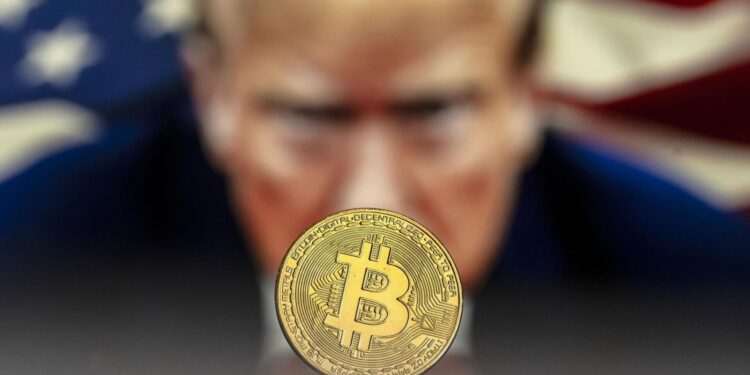
Concurrently, the interwoven interests between the US political establishment and the cryptocurrency industry continue to fuel ethical debates. Scrutiny has intensified around Donald Trump and his family’s extensive commercial footprint in the crypto space, which includes the DeFi project World Liberty Financial, various mining companies, and the TRUMP and MELANIA memecoins. [IMAGE-PLACEHOLDER-2]
Estimates suggest that crypto-related ventures have generated approximately $1.4 billion in revenue for the Trump family, prompting several members of Congress to question potential conflicts of interest and demand further investigation and regulation.
Meredith Happy, spokesperson for Democratic Senator Angela Alsobrooks, revealed that negotiations are progressing well, with the goal of ensuring the bill “successfully completes bipartisan committee review.” She noted that while significant strides have been made on the most contentious stablecoin yield issue, critical matters such as “illicit finance” and “official ethics regulations” still await resolution.
Legislative Timeline Pressure Mounts Amid Congressional Uncertainty
As the congressional calendar tightens, uncertainty looms over whether the bill can complete its review and be put to a vote in the near term. Republican Senator Thom Tillis previously indicated that he did not anticipate the committee holding a hearing or vote on the CLARITY Act in April. [IMAGE-PLACEHOLDER-3]
Ohio Republican Senator Bernie Moreno echoed this sentiment, stating, “If it doesn’t pass by May, this bill might be dead for the foreseeable future.”
Despite these warnings from political figures, market sentiment appears relatively stable. According to CoinDesk, citing Senate staff sources, while the bill’s progress might be delayed by several weeks, these delays are not expected to be devastating to its ultimate outcome.
Disclaimer: This article provides market information only. All content and views are for reference only and do not constitute investment advice. They do not represent the views or positions of the author or BlockTempo. Investors should make their own decisions and trades. The author and BlockTempo will not bear any responsibility for direct or indirect losses resulting from investor transactions.