The decentralized finance (DeFi) landscape has once again been rocked by a significant security breach. Cross-chain liquidity protocol Thorchain fell victim to a sophisticated hack earlier today, resulting in the theft of approximately $10.8 million. The incident was swiftly brought to light by prominent on-chain detective ZachXBT. In an immediate response to mitigate further losses, the Thorchain team has enacted an emergency protocol, temporarily halting all transactions and signing operations across its network.
RUNE Plunges as Market Reacts to Breach
The ramifications of the exploit were immediately felt across the market. Thorchain’s native token, RUNE, experienced a sharp decline, plummeting by as much as 12% in the wake of the news. At the time of this report, RUNE was trading at approximately $0.5146, reflecting significant investor apprehension.
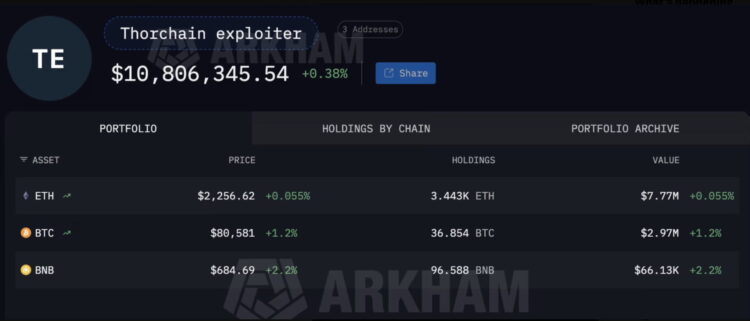
Meanwhile, tracking data from Arkham Intelligence provides a clear picture of the hacker’s current holdings. The perpetrator’s wallet is reported to contain 3,443 Ethereum (valued at approximately $7.77 million), 36.85 Bitcoin (worth around $2.97 million), and 96.6 BNB (estimated at $66,000). The swift movement of these assets underscores the urgency of the situation.
Emergency Protocols Activated: Thorchain Network Halted for Investigation
In a critical move to contain the breach and prevent further asset drain, Thorchain leveraged its robust governance module, known as “Mimir,” to initiate an immediate network shutdown. This decisive action involved pausing all transaction and signing functionalities. Commencing from block height 26190429, the entire Thorchain network entered a forced downtime, which is expected to last approximately 12 hours and 42 minutes. This crucial period allows the core team to conduct a comprehensive forensic analysis of the exploit and implement necessary security patches.
Thorchain stands out in the DeFi ecosystem as a pioneering decentralized cross-chain liquidity protocol. It empowers users to directly swap native assets—such as exchanging Bitcoin for Ethereum—across disparate blockchains without the need for asset ‘wrapping’ or reliance on centralized intermediaries or cross-chain bridges. This unique approach, while offering unparalleled interoperability, also exposes it to distinct security challenges, as highlighted by this recent incident.
Cross-Chain Bridges: DeFi’s Persistent Achilles’ Heel
The pursuit of ultimate interoperability, while a cornerstone of DeFi’s vision, inherently introduces elevated security vulnerabilities. This latest incident with Thorchain sadly reinforces a troubling trend within the decentralized ecosystem. According to comprehensive data from on-chain analytics firm Chainalysis, cross-chain protocols and liquidity pools consistently rank among the most attractive targets for malicious actors.
Alarmingly, since 2021, the cumulative value of assets stolen through exploits related to cross-chain bridges has surged to an astounding $2.8 billion. This statistic underscores the critical need for enhanced security measures and rigorous auditing in this specialized sector of DeFi.
As the Thorchain team works diligently to understand the full scope of the breach, the official post-mortem report is eagerly awaited by the community. Details regarding the precise attack vector and the methods employed by the hacker to circumvent Thorchain’s defenses have yet to be publicly clarified.
Disclaimer: This article is provided for market information purposes only. All content and opinions are for reference only, do not constitute investment advice, and do not represent the views and positions of the author or publisher. Investors should make their own decisions and trades, and the author and publisher will not bear any responsibility for direct or indirect losses incurred by investor transactions.