

By Jae, PANews
Hyperliquid’s Strategic Leap: USDC Integration, Pre-IPO Triumph, and HYPE Token’s Ascendancy
In a series of groundbreaking announcements on May 14th, Hyperliquid, a frontrunner in the Perpetual Decentralized Exchange (Perp DEX) landscape, unveiled strategic shifts poised to redefine its ecosystem and bolster its native HYPE token. The most significant development saw its native stablecoin, USDH, transition to a new operational model under Coinbase’s purview, with USDC officially becoming Hyperliquid’s Aligned Quote Asset (AQA).
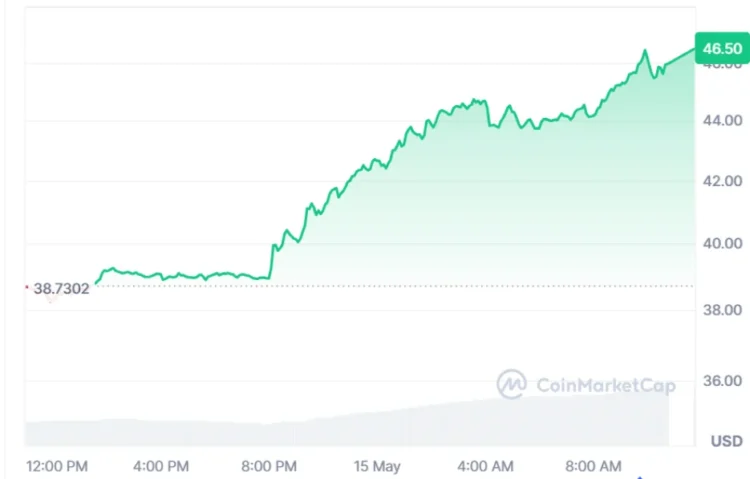
Concurrently, the platform’s inaugural Pre-IPO perpetual contract for Cerebras Systems (CBRS) ignited immense interest, demonstrating efficient price discovery and driving a surge in trading volume. These cumulative bullish catalysts propelled the HYPE token past the $40 mark, registering an impressive over 20% gain within 24 hours and attracting substantial whale positions.
USDH Yields to USDC: A Strategic Power Play for Hyperliquid
As an undisputed leader in the Perp DEX arena, Hyperliquid’s immense user base and trading scale naturally position it as a coveted partner for industry giants. The decision to pivot away from USDH and embrace a deeper integration with Coinbase and Circle’s USDC is a calculated strategic move with profound implications.
This collaboration grants Hyperliquid access to mature deployment technologies and significantly reduces the operational overhead associated with stablecoin issuance, regulatory compliance, and reserve management. While USDH was initially conceived as Hyperliquid’s native stablecoin—aiming to reduce reliance on external USDC, capture reserve yield, and enhance the on-chain trading experience—it struggled to achieve critical mass since its September 2023 launch. Despite platform support, USDC maintained its ecosystem dominance, leading to fragmented liquidity and a suboptimal user experience for USDH.
To address this, Native Markets, the issuer of USDH, partnered with Coinbase. Under the agreement, Coinbase will acquire the USDH brand assets, facilitating a gradual phase-out of USDH. Users are offered a fee-free transition period to convert their USDH to USDC or directly redeem it for fiat currency.
Crucially, this alliance carries substantial financial benefits for Hyperliquid. The official AQA documentation mandates that stablecoin deployers funnel 90% of their reserve yield directly back to the protocol. This substantial revenue stream is earmarked for HYPE token buybacks and broader ecosystem incentives.
As of May 15th, the USDC circulation on Hyperliquid surpassed an impressive $5 billion. Based on a 3.6% federal funds rate, this translates to an estimated annual protocol income of $180 million, or approximately $490,000 in continuous daily net inflow. Furthermore, following its initial purchase last September, Circle is set to stake another 500,000 HYPE tokens, further solidifying the alignment of interests between the two entities. For Circle, this collaboration represents a strategic trade-off, sacrificing marginal profits for enhanced network effects and a long-term competitive advantage.
Pioneering Price Discovery: CBRS and the Expanding HIP Markets
On the same pivotal day, Hyperliquid also captured significant attention with the launch of its Pre-IPO perpetual contract for Cerebras Systems (CBRS), an AI chip company. Introduced by TradeXYZ on the platform, this contract enabled efficient price discovery well before the company’s official IPO.
Cerebras Systems eventually listed with an IPO price of approximately $185, surging to nearly $386 on its first trading day. Remarkably, prior to its public listing, the perpetual contract price on Hyperliquid had already climbed into the $270-$350 range, effectively front-running and reflecting the anticipated post-listing premium.
This early price action established CBRS as a highly sought-after trading instrument on the platform, fueling discussions around Hyperliquid’s burgeoning role in IPO price discovery. According to ASXN data, CBRS recorded over $280 million in trading volume within 24 hours, positioning it as the ninth-largest trading asset on the platform.
The demand for on-chain perpetual contracts for Real World Assets (RWA) such as oil, gold, and the S&P 500 index has surged amidst volatile global macroeconomic conditions. Hyperliquid’s HIP-3 market has adeptly capitalized on this trading frenzy. During the escalation of conflict in the Middle East, the platform’s crude oil perpetual contracts briefly exceeded $1 billion in 24-hour trading volume. Artemis data indicates that Hyperliquid’s HIP-3 holdings have surpassed $2.5 billion, consistently reaching new highs, with over $2 billion added since the start of the year. HypeStats further reveals that RWA perpetual contracts consistently contribute approximately 30% of the platform’s total holdings.
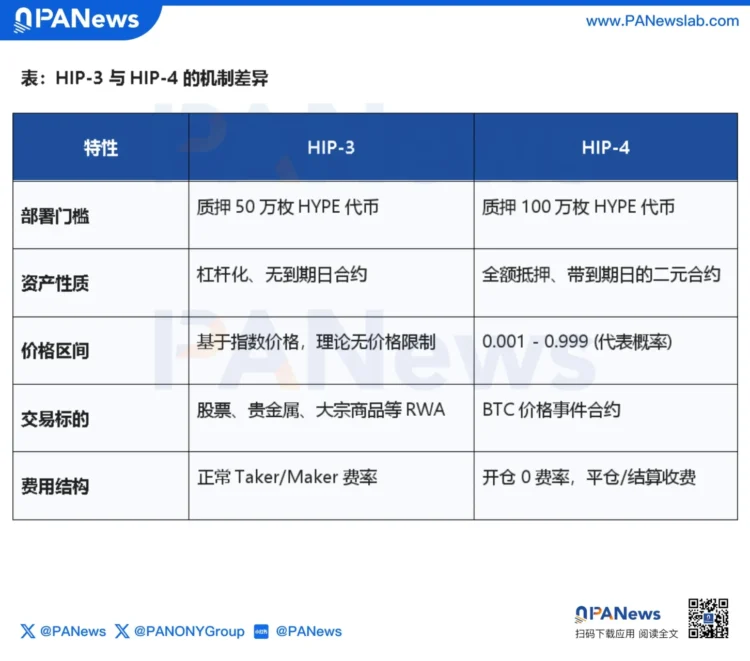
Expanding its market offerings, Hyperliquid officially launched HIP-4 (Outcome Trading) on May 2nd, marking its foray into the prediction market sector to compete with pioneers like Polymarket and Kalshi.
HIP-4 distinguishes itself from traditional prediction markets with two key competitive advantages:
- Unified Margin: Traders can theoretically hold positions in both perpetual and event contracts using a single margin account, leading to significantly enhanced capital efficiency.
- On-chain CLOB Matching: Unlike Polymarket’s partially off-chain matching logic, HIP-4’s order book is entirely on-chain, ensuring complete transparency and verifiability for every event contract trade.
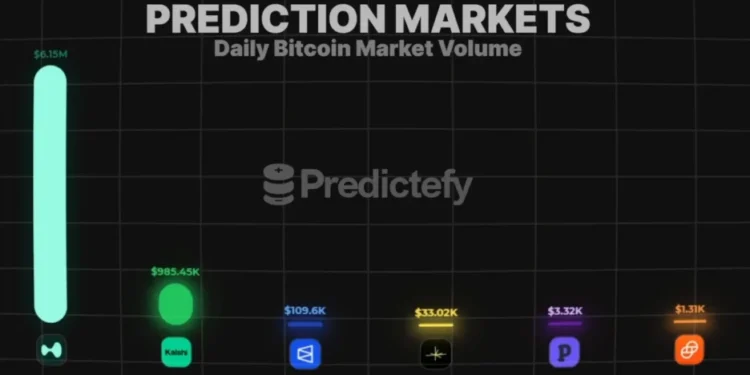
Predictefy reported that the HIP-4 BTC price event contract recorded an impressive $6.15 million in trading volume on its launch day. While this figure significantly surpasses comparable markets on competitors like Polymarket and Kalshi, it still represents a modest 0.7% share of the overall prediction market landscape.
Currently, deploying a HIP-4 market requires staking 1 million HYPE tokens. This substantial capital requirement may be a limiting factor, as the HIP-4 market predominantly features BTC price event contracts and has yet to encompass traditional prediction market themes such as politics, sports, or entertainment, resulting in a relatively limited range of trading instruments.
HYPE Token’s Ascendancy: Fundamentals, Growth, and Landmark ETF Integration
Bolstered by recent positive news, market confidence in HYPE’s underlying fundamentals has markedly strengthened. The surge in trading volume and the protocol’s share of reserve yields provide significant growth potential for Hyperliquid’s revenue, thereby offering robust support for HYPE’s valuation.
Hyperliquid’s performance directly correlates with the value capture of the HYPE token, thanks to the protocol’s highly proactive revenue distribution policy. Over 97% of the platform’s fee revenue is channeled into the Assistance Fund, which is then used to daily repurchase and burn HYPE tokens on the open market.
- Cumulative Buyback Scale: As of May 15th, the Assistance Fund has cumulatively repurchased and held over 44 million HYPE tokens, valued at more than $2 billion, with an average buyback price of approximately $45.
- Annualized Revenue: Based on current fee rates, Hyperliquid’s annualized revenue is projected to exceed $600 million, positioning it as the most profitable crypto protocol in the entire market, excluding stablecoin issuers.
- Deflationary Pressure: The consistent influx of funds from organic trading activity for buybacks provides powerful underlying support for the HYPE token, translating into direct buying pressure.
However, it is crucial to acknowledge that while the HYPE token benefits from a robust burning mechanism, its future unlock schedule remains a “Sword of Damocles” hanging over its price:
- Unallocated Supply: Approximately 38.9% of the total supply is still held in the treasury, reserved for future emissions and community incentives. This implies a Fully Diluted Valuation (FDV) of up to $17.5 billion, significantly higher than HYPE’s current market capitalization of less than $12 billion.
- Team Lock-up: Around 17.6% of tokens held by core contributors will continue to unlock in batches. While previous large-scale unlocks have been smoothly absorbed by the market, a potential future low-volatility period could introduce sustained selling pressure.
Beyond its on-chain dynamics, HYPE is also making significant strides into mainstream capital markets through the launch of Exchange Traded Funds (ETFs).
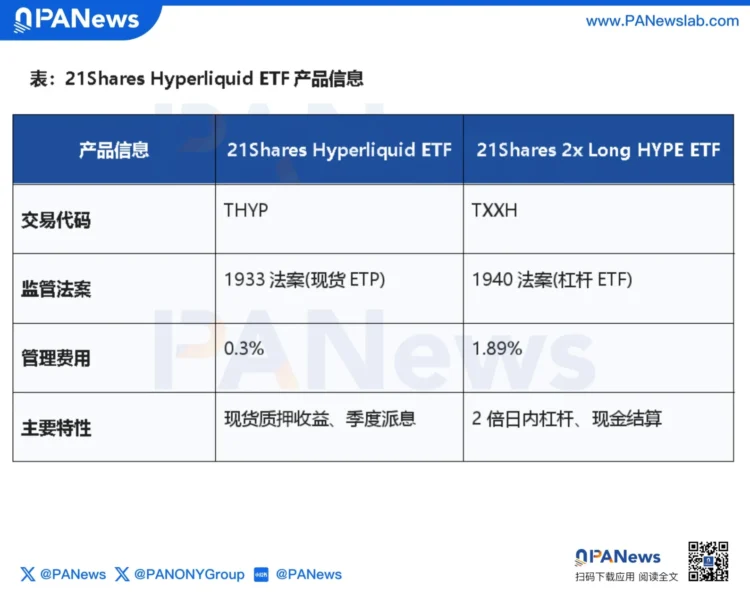
On May 12th, 21Shares, a prominent crypto asset management firm, listed two Hyperliquid-related ETF products on the Nasdaq exchange. This move signifies growing institutional recognition of the protocol and substantially lowers the barrier for traditional investors to participate in the Hyperliquid ecosystem.
- 21Shares Hyperliquid ETF (THYP): A spot Exchange Traded Product (ETP) that integrates native staking yield. The product’s trust will stake its HYPE token holdings with professional validators like Figment, distributing approximately 70% of the generated rewards as quarterly dividends to investors, with the remaining 30% allocated to service providers.
- 21Shares 2x Long HYPE ETF (TXXH): A leveraged ETF designed to provide investors with twice the daily price movement of the HYPE token through derivatives, catering to short-term trading strategies.
Bitwise swiftly followed suit, with its staking ETF, BHYP, commencing trading on the New York Stock Exchange on May 16th. Grayscale has also submitted an application for GHYP. This emerging “ETF race” underscores the perception of the HYPE token by traditional financial institutions as an asset with inherent yield-generating capabilities.
According to 21Shares, THYP recorded a trading volume of $1.8 million and a net inflow of $1.2 million on its inaugural listing day. However, when compared to the initial performance of other altcoin spot ETFs—the first XRP spot ETF achieved a staggering $58 million in trading volume on its debut, and the first SOL spot ETF followed closely with approximately $57 million—THYP still has a considerable gap to bridge. While Hyperliquid has undoubtedly secured its “ticket to Wall Street,” achieving widespread investor acceptance remains a significant long-term endeavor.
Hyperliquid’s Dominance: A Masterclass in On-Chain Revenue Generation
Hyperliquid’s valuation is fundamentally revenue-driven, with the majority of its income stemming from perpetual contract trading. The inherently high-leverage nature of derivatives trading means its nominal transaction volume typically dwarfs spot trading volumes by several to tens of multiples, consequently generating substantially higher spreads and fee revenue for comparable levels of activity.
As of May 15th, Hyperliquid commanded an impressive approximately 38% share of the entire on-chain perpetual contract market.
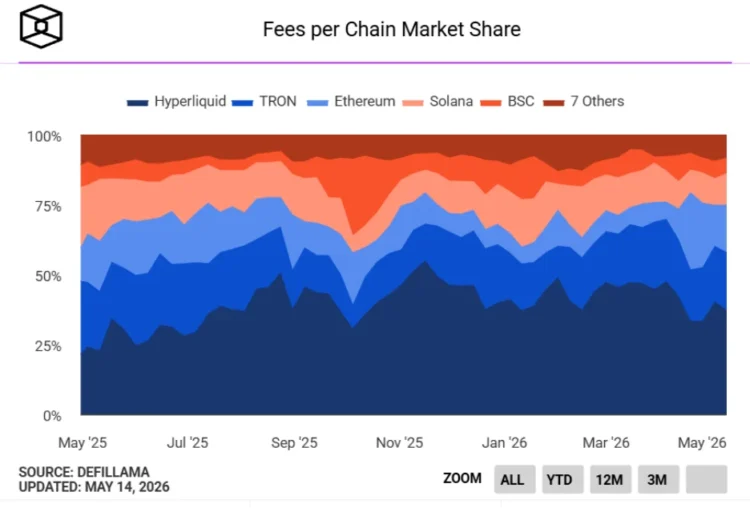
Historically, Ethereum reigned supreme in fee revenue due to its robust application ecosystem. The Dencun upgrade, with its introduction of PeerDAS, was hailed as a significant technological leap, further reducing data availability costs for Layer 2 (L2) solutions.
However, this fee compression has inadvertently led to a “depression period” for Ethereum’s mainnet fees. As a substantial volume of transactions migrated to L2s, the mainnet’s ability to capture Gas revenue significantly diminished, with its share in application-layer revenue distribution shrinking from 50% at the start of 2024 to approximately 25% by the end of 2025.
Within the Ethereum ecosystem, fees generated from a Perp DEX transaction are fragmented and distributed across various layers: the L2, sequencers, validators, and the mainnet. This decentralized and fragmented profit distribution mechanism struggles to compete with Hyperliquid’s “vertically integrated” structure in terms of revenue generation efficiency. Hyperliquid’s application-sovereign chain model ensures that every dollar of fees directly flows back into its ecosystem.
Solana, on the other hand, has leveraged the meme coin frenzy to sustain its trading volume and activity. However, its revenue structure is heavily reliant on low-unit-price, high-frequency speculative spot transactions. When market conditions stabilize, the fee cap on spot trading becomes a limiting factor for its overall revenue potential.
Moreover, while Solana exhibits excellent capabilities in handling high-concurrency transactions, Hyperliquid’s trading engine offers a superior trading experience for high-frequency order book matching, boasting a remarkable 0.07-second finality.
In essence, while Ethereum and Solana grapple with the challenges of thin margins, Hyperliquid stands out, driven by its robust cash flow generation.
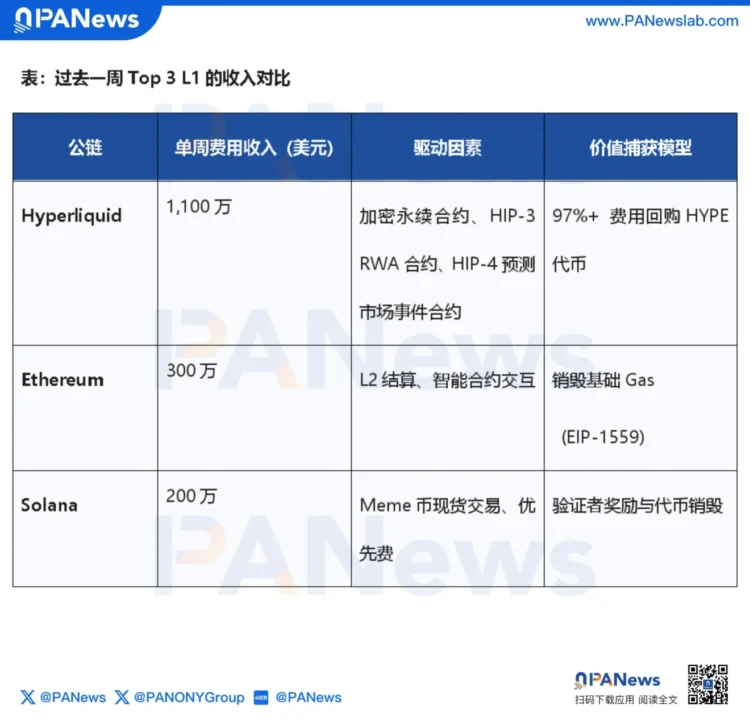
Hyperliquid’s revenue explosion is inextricably linked to its rapid product iteration. Through the development of a series of HIP markets, the protocol has expanded its business scope from crypto derivatives to Real World Assets (RWA) and prediction markets, steadily evolving into a comprehensive, full-asset trading platform.
Throughout this expansion, Hyperliquid’s valuation logic has fundamentally shifted to a “revenue-defined valuation” paradigm. The protocol is leveraging its tangible, high cash flow to actively erode the fee-based competitive advantages (moats) of platforms like Ethereum and Solana.
In the evolving landscape of decentralized finance, protocols that consistently generate sustained value and returns for their users will ultimately emerge as the true long-term value assets.
(The above content is an authorized excerpt and reproduction from our partner PANews. Original Article Link)




